Introduction to Solar Warranties and Maintenance
Solar energy systems represent a significant investment, promising decades of clean power and cost savings. However, maintaining peak performance requires a strategic approach to warranties and upkeep. Warranties typically cover manufacturing defects and performance guarantees, but they do not eliminate the need for regular care. Homeowners often face choices between professional services and self-managed tasks, each with implications for costs and system longevity.
Understanding these elements helps avoid unexpected expenses. For instance, neglecting basic maintenance might lead to reduced output, while over-relying on professionals can inflate bills unnecessarily. This guide examines how to integrate warranty protections with practical DIY efforts, focusing on 2026 trends where rising energy demands and advanced panel technologies heighten the importance of informed decisions.
Key Considerations for Solar System Care
Before diving into specifics, evaluate your setup. Factors such as roof pitch, panel accessibility, local climate, and system age influence maintenance needs. Steep roofs or elevated installations pose safety risks, making professional intervention essential. In such cases, hiring certified technicians for cleaning costs around $150 to $250 per session, a modest price for avoiding falls or damage.
Conversely, ground-mounted or low-access systems suit DIY approaches. Always prioritize safety: use stable ladders, non-slip footwear, and avoid working in adverse weather. Document all activities, including dates and methods, to support warranty claims if issues arise later.
Maintenance Routines and Best Practices
Solar panels require minimal intervention due to their robust design, yet consistent care prevents efficiency losses. In dusty environments or regions with high pollen counts, schedule cleanings twice annually. Areas with frequent rainfall often suffice with one thorough session per year, as natural precipitation handles much of the debris removal.
Essential Inspection Checklist
Perform visual and basic functional checks quarterly to catch problems early. Follow this structured list:
- Inspect for obstructions like bird nests, accumulated leaves, or overhanging branches that create shade and lower output.
- Examine panel surfaces for cracks in the glass, discoloration on cells, or signs of delamination.
- Verify that mounting brackets remain secure, free from rust, and properly aligned to withstand weather exposure.
- Monitor the inverter display for error codes, unusual noises, or indications of diminished power production.
- Test connections for looseness or corrosion, using insulated tools to prevent electrical hazards.
- Review overall system performance against expected monthly generation, adjusting for seasonal variations.
Adhering to these steps maintains optimal function. Clean panels with soft brushes and mild soap solutions, rinsing thoroughly to avoid chemical residues. Such routines can boost energy yield by 5 to 10 percent, while also prolonging the life of components like frames and seals.
Understanding Warranty Coverage
Most solar warranties span 25 years for panels, guaranteeing at least 80 to 90 percent output by the end. Inverters, however, carry shorter terms, often 10 to 12 years, necessitating budget planning for replacements costing $1,000 to $3,000. Performance warranties ensure minimum energy production, with remedies including panel swaps or prorated reimbursements if thresholds fall short.
Product warranties address defects in materials or workmanship, excluding damage from improper installation or neglect. Read terms carefully: some exclude acts like using abrasive cleaners, which could void coverage. Register your system promptly with the manufacturer to activate protections and track expiration dates.
Age plays a critical role. Newer systems under five years enjoy fuller coverage, while older ones may shift toward out-of-pocket repairs. In 2026, expect enhanced warranties from leading brands, incorporating smart monitoring for proactive alerts on potential failures.
Comparing Costs: Warranty Claims vs DIY Efforts
Professional services provide peace of mind but add up. Annual inspections by experts run $200 to $500, including advanced diagnostics like thermal imaging to spot hot spots or micro-cracks invisible to the eye. Major repairs under warranty, such as inverter swaps, incur minimal fees if covered, saving thousands.
DIY saves money on routine tasks. Basic cleaning supplies cost under $50 yearly, and inspections require no special equipment beyond a multimeter for simple voltage checks. However, weigh risks: improper handling might lead to warranty disputes or safety incidents, potentially costing more in the long run.
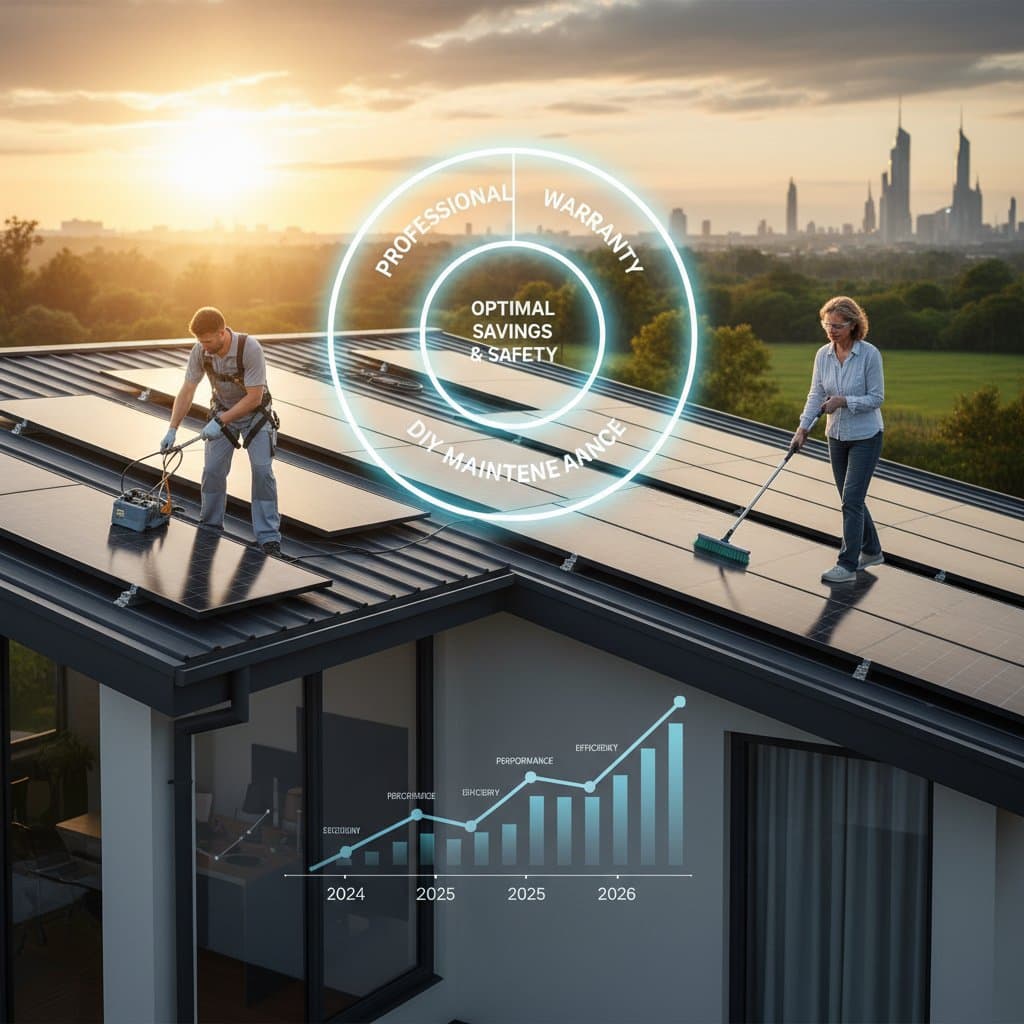
For 2026 projections, factor in inflation and supply chain shifts. Maintenance costs may rise 5 to 7 percent, making hybrid strategies ideal. Use warranty for structural or electrical work, reserving DIY for surface-level care to balance expenses effectively.
FAQs on Solar Warranties and Maintenance
How can I verify if my solar warranty remains active?
Consult installation documents or reach out to the original provider. Many manufacturers maintain online portals for warranty registration, allowing quick checks on status and end dates.
Is tap water suitable for cleaning solar panels?
It works in most cases, though hard water may leave mineral deposits. If spots appear after drying, switch to distilled water and employ a squeegee for streak-free results.
Will performing DIY cleaning invalidate my warranty?
Generally no, provided you adhere to guidelines from the manufacturer and steer clear of aggressive tools or chemicals. Keep records of your actions to substantiate compliance during claims.
What elements does a solar performance warranty include?
This coverage assures a defined output level over time. Should production dip below specified percentages, the provider might repair, replace, or compensate for impacted panels.
Is a professional inspection necessary if my system appears operational?
Absolutely, schedule one every three to five years. Experts deploy tools like thermal cameras and load testers to uncover latent problems that could compromise efficiency or safety.
How often should I replace my solar inverter?
Plan for one replacement within the panel's lifespan, typically after 10 to 15 years. Monitor for signs like frequent faults or efficiency drops to time it correctly.
Building Your Maintenance Strategy
Develop a personalized plan by first scrutinizing warranty documents for covered services and exclusions. Identify safe DIY tasks, such as panel wiping and visual scans, which demand only basic tools and a few hours quarterly. Delegate electrical diagnostics, roof repairs, or firmware updates to qualified professionals to mitigate liabilities.
Integrate monitoring apps from your system provider for real-time insights, alerting you to anomalies before they escalate. Budget annually: allocate $100 to $300 for DIY supplies and minor pros, leveraging warranty for substantial interventions. This method sustains high output, averts downtime, and maximizes return on your solar outlay.
Proactive habits ensure your system delivers reliable power for 25 years or more. By combining informed warranty use with hands-on care, you control costs and enjoy sustainable energy benefits well into the future.