Solar Panel Maintenance Costs in 2026: A Comprehensive Warranty Guide
Solar panel maintenance sustains optimal system performance, prolongs equipment durability, and maximizes return on investment. Professional services generally range from $150 to $700 per visit, with a typical expense of $400 for routine cleaning and inspection. These investments ensure consistent power generation and avert costly repairs from overlooked problems.
Key elements shaping maintenance expenses include system size, panel location, and warranty provisions. Larger installations demand extended labor, elevated or angled roofs call for safety measures, and certain warranties offset inspection fees. Data indicates that consistent upkeep can elevate solar output by as much as 20 percent over unmanaged systems. Such practices frequently allow panels to outlast their expected service life, positioning maintenance as a prudent choice for enduring energy benefits.
Cost Breakdown by Component
Maintenance fees operate on a per-panel basis or by service category. Basic cleaning runs $15 to $25 per panel, whereas thorough inspections span $150 to $300. Providers often impose a $200 minimum for modest setups. Across the nation, expenses align at $150 for the lower quartile, $400 for the median, and $700 for the upper quartile, encompassing cleaning alongside performance evaluations.
Impact of System Scale
The scale of the installation profoundly affects pricing. Cleaning a 10-panel residential setup might total $250, whereas a 30-panel array could surpass $600. Additional coverage of 100 square feet typically incurs $40 to $60 in labor and supplies. For expansive home or modest commercial arrays, annual plans may bill $0.10 to $0.25 per watt.
Contractor reports reveal that servicing a 6-kilowatt system averages $350, incorporating visual checks and decontamination. Ground-based arrays prove simpler to reach, trimming labor by up to 15 percent relative to sloped rooftop configurations.
Panel Quality and Upkeep Needs
The caliber of panels dictates cleaning intervals. Basic options from manufacturers like Renogy or Rich Solar lack robust coatings, necessitating regular attention at $15 per panel. Intermediate selections from Canadian Solar or Qcells feature dust-repelling layers, diminishing cleanings and yielding annual savings of $100.
High-end panels by SunPower or REC incorporate water-shedding surfaces and robust guarantees. Initial costs rise, yet maintenance drops, with visits spaced every two to three years. Warranties frequently encompass repairs for output declines, delivering substantial ongoing worth.
Factors Adding Complexity
Reachability elevates expenses notably. Multi-level or pitched roofs demand rigging and protective tools, appending $100 to $200 per session. Configurations with distributed inverters or energy storage demand extended reviews, boosting labor by 10 to 20 percent.
Location plays a role too. Metropolitan areas such as Los Angeles or New York command premium wages, whereas remote zones face provider scarcity. Arid or seaside settings accelerate soiling, prompting extra cleanings that add $200 to $400 yearly.
Types of Services and Pricing Structures
Routine Maintenance Option
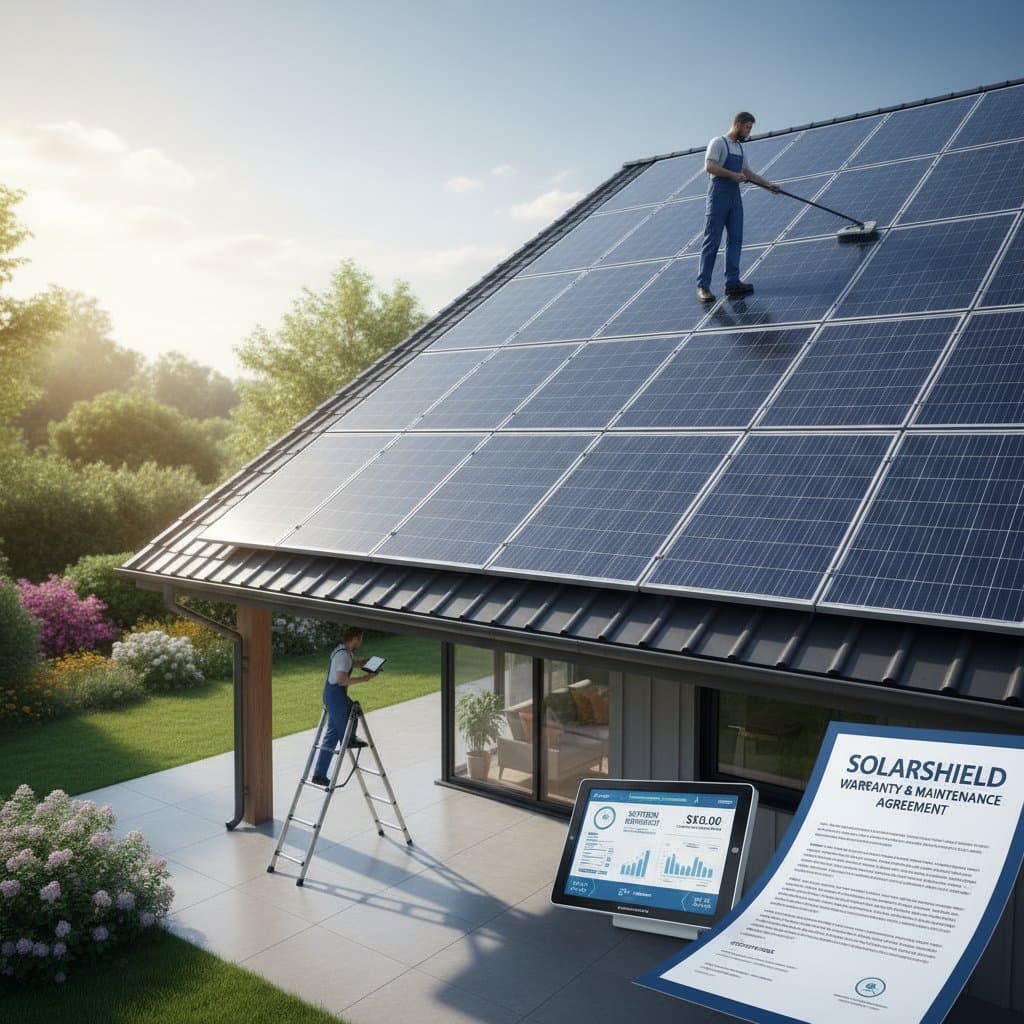
Routine care involves wiping panels, verifying connections, examining inverters, and measuring output. Execution spans two to three hours for standard homes. Pricing falls between $300 and $500, scaled to array dimensions and site challenges.
This level suits owners seeking dependable checks without in-depth analysis. Experts advise annual sessions or post-storm follow-ups to sustain reliability.
Advanced Maintenance Option
Enhanced packages incorporate infrared scans, production analytics, and inverter software refreshes. They may preemptively swap fuses or links. Costs climb 25 to 50 percent, reaching $600 to $900.
For intricate setups with storage or elaborate circuits, this tier prevents interruptions and safeguards guarantees. Owners often recoup the outlay through avoided losses and sustained performance.
Supplementary Services
| Service Add-On | Average Price | Bundled Discount |
|---|---|---|
| Storage unit check | $150 | 10% paired with panel wash |
| Inverter adjustment | $200 | 15% with complete service |
| Monitoring installation | $100 | 20% in advanced plans |
Combining tasks in a single outing trims 10 to 20 percent off isolated bookings. Platforms facilitate provider comparisons and certification reviews prior to arrangements.
Weighing Professional and Self-Managed Approaches
Self-Managed Expense Analysis
Homeowners can handle basic tasks with caution. Essential items include extension poles, gentle brushes, and mild solutions, totaling $100 for starters from brands like Unger, Ettore, or Zep. Roof safety rentals add $50 to $75 daily.
The effort consumes two to three hours, excluding preparations. Valuing time at $25 hourly pushes overall outlay to $175 to $225. Risks encompass injury, surface harm, and guarantee invalidation from unsuitable techniques.
Benefits of Expert Involvement
Certified specialists conserve effort, apply correct agents, and uphold coverage terms. They hold extensive insurance and wield tools exceeding $5,000 in value. Early detection of wear or faults eludes amateur oversight.
Service logs bolster claims and property appeal. Professionals eclipse self-efforts after a few trials, considering efficiency gains and hazard avoidance.
Strategies to Minimize Expenses
Optimal Scheduling
Arranging visits in quieter periods cuts fees by 10 to 15 percent. Midweek slots benefit from reduced bookings. Timing post-seasonal buildup enhances outcomes and spacing.
Informed Selection Methods
Obtain three bids from accredited firms. This practice secures up to 20 percent reductions. Inquire on prompt-pay incentives or ongoing client perks. Referral credits of $50 to $100 apply to subsequent services.
Pre-Visit Preparations
Remove obstacles near arrays and secure pathways. Actions like branch clearance or space unlocking shave 30 minutes off work, deducting $50 or more. Detailing system specs streamlines assessments.
Regional Variations and Key Insights
Pricing diverges by area. Seaside hubs impose 20 percent surcharges from wage pressures, inland locales hold steadier rates. Sparse expert availability extends wait times in underserved spots.
Safeguarding Long-Term Solar Returns
Investing in targeted maintenance fortifies system resilience and output. By aligning services with warranty needs and site conditions, owners secure amplified savings and reliability. Regular evaluations transform potential vulnerabilities into sustained advantages, ensuring solar setups deliver for years ahead.