Maximize Solar Warranty Benefits in 2026
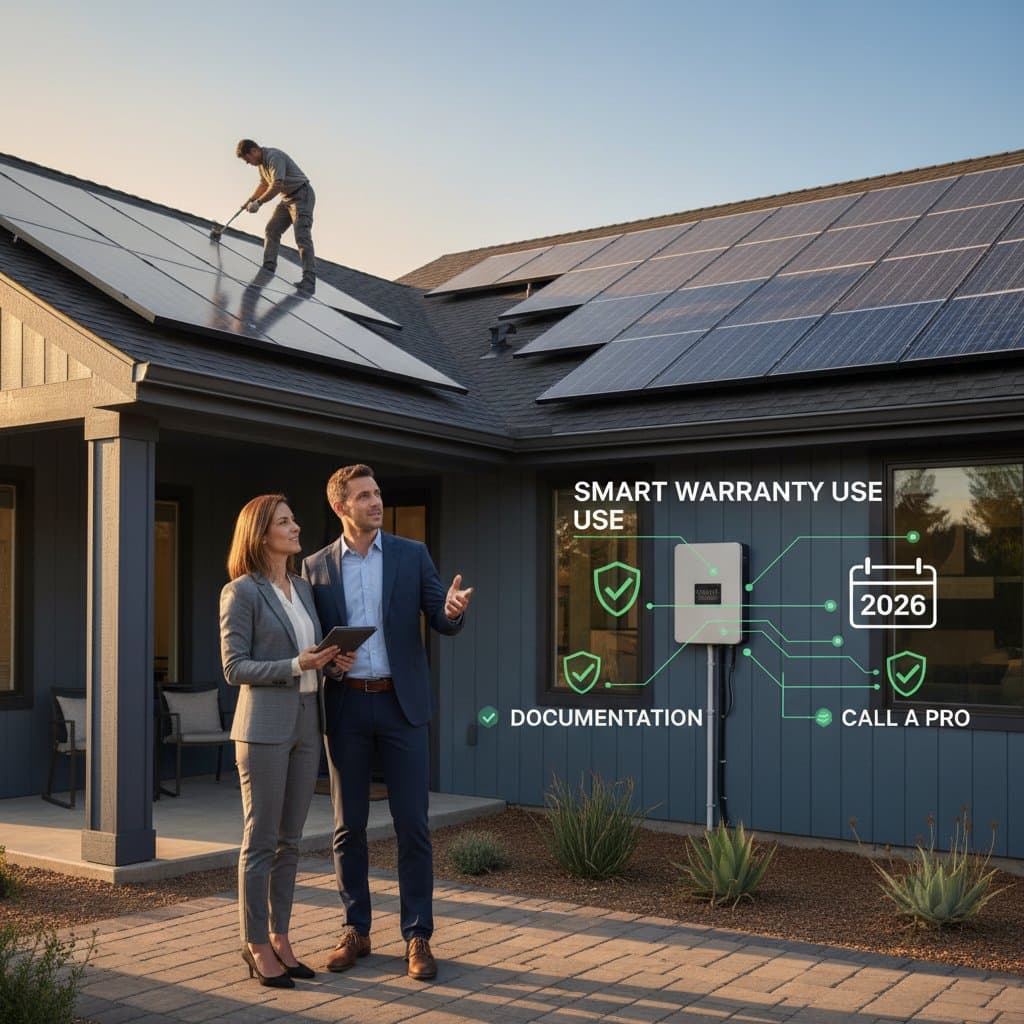
Solar warranties serve as essential safeguards for your investment, shielding against equipment malfunctions and output declines. To extract maximum benefit, owners require a clear grasp of coverage scopes, meticulous service records, and appropriate engagement with installers or manufacturers. Effective warranty management often prevents expenses amounting to thousands of dollars across the system's operational lifespan.
Summary Box
What it is:
A solar warranty represents a formal assurance from the manufacturer or installer, promising repair or replacement for panels or components that fail within a designated timeframe.
Why it matters:
This protection maintains your financial return by minimizing personal repair expenditures and ensuring sustained energy cost reductions.
Typical cost and what changes it:
Standard warranties integrate into the initial system expense. Options for extended or comprehensive plans may increase costs by 200 to 500 dollars per installation.
When to hire a pro:
Engage a certified solar specialist for system diagnostics, rooftop access, or electrical modifications.
How long it takes:
Processing warranty claims spans one to eight weeks, influenced by component availability and manufacturer review periods.
Maintenance interval:
Conduct annual examinations of panels and connections to sustain warranty eligibility.
Anatomy of a Solar Warranty
Solar warranties encompass distinct elements that outline protection boundaries and owner obligations. Familiarity with these aspects enables prompt responses to issues like reduced output or component failures.
- Product warranty: Addresses manufacturing flaws in panels, inverters, or mounting structures.
- Performance warranty: Guarantees that panels retain a defined portion of their initial energy production capacity over specified durations.
- Workmanship warranty: Protects against installer faults, including improper wiring or induced roof vulnerabilities.
- Transferability clause: Specifies conditions for passing the warranty to subsequent property owners.
- Exclusions: Details scenarios that invalidate coverage, such as natural disasters, environmental obstructions, or neglect of upkeep.
- Claim procedure: Describes submission methods and required supporting materials.
Review these provisions during initial setup and periodically thereafter to align expectations with actual protections.
Step-by-Step: How to Use Your Solar Warranty
Follow this structured approach to navigate warranty utilization effectively.
- Confirm coverage. Review the purchase agreement, warranty documentation, or digital registration portal.
- Document the issue. Capture visual evidence of the problem, recording the occurrence date and prevailing environmental factors.
- Contact your installer. Request a system evaluation to confirm warranty applicability.
- Submit a claim. Forward purchase verification, component identifiers, and gathered evidence to the manufacturer via the installer or directly.
- Wait for approval. Expect requests for detailed assessments or performance data from the manufacturer.
- Schedule replacement or repair. Coordinate with the installer for execution upon receipt of approved components.
- Keep all receipts. Archive these records for ongoing warranty support or property transfer purposes.
This process minimizes delays and ensures comprehensive resolution.
DIY vs Pro
Assess tasks based on skill level, risks, and implications before proceeding.
| Category | DIY Level | Safety Risk | Tools Required | Permit or Code | Time Required | Warranty Impact |
|---|---|---|---|---|---|---|
| Visual inspection | Easy | Low | Ladder, camera | No | 30 minutes | None |
| Cleaning panels | Moderate | Medium (fall risk) | Soft brush, hose | No | 1 hour | None |
| Electrical testing | Advanced | High | Multimeter | Yes | 1 to 2 hours | Can void warranty |
| Component replacement | Pro only | High | Specialized tools | Yes | 2 to 4 hours | Protected when done by licensed tech |
For any involvement with electrical systems, structural elements, or power conversion units, consult a qualified solar professional to avoid hazards and preserve coverage.
Maintenance and Lifespan
Routine care extends system durability and upholds warranty terms. Rinse panels one to two times annually using plain water and a gentle brush to remove accumulated dirt without abrasive damage. Monitor for obstructions like fallen leaves or evolving shadows from nearby growth.
Schedule professional reviews of electrical connections and secure fittings every three to five years to detect early wear. Solar panels typically endure 25 years or beyond under optimal conditions, whereas inverters often require updates midway through this span. Consistent attention to these practices not only complies with warranty stipulations but also stabilizes energy generation for reliable returns.
FAQs
How long do solar warranties last?
Product warranties generally extend from 10 to 25 years, varying by manufacturer specifications.
Does a warranty cover storm damage?
Weather-induced harm falls outside solar warranty scopes; address such incidents through homeowner insurance policies.
Can I transfer the warranty if I sell my home?
Numerous manufacturers permit a single transfer, provided paperwork completes within the designated timeframe.
Secure Your Solar Future
Implement these warranty strategies alongside proactive maintenance to fortify your investment against unforeseen challenges. By staying informed and diligent, owners position their systems for peak performance and substantial, ongoing energy savings.