Greywater Costs in 2026: Unlock Rebate Savings Now
Summary Box
National average cost: $4,800
Typical range: $3,000 to $8,000
Low end and high end: $1,200 for simple laundry reuse to $15,000 for full home systems
Time to complete: 2 to 5 days
DIY or Pro: Partial DIY possible, plumbing tie-ins require a licensed installer
ROI or resale impact: Up to 6% boost in water efficiency rating for green-certified homes
Updated: March 2026
Greywater systems redirect household wastewater from sinks, showers, and laundry for irrigation, reducing fresh water use and utility bills. These setups promote sustainability while offering financial returns through rebates and lower consumption. Homeowners gain control over water management, especially in drought-prone areas where conservation mandates increase.
Cost Factors
The scope and size of the system significantly influence expenses. A basic laundry-to-landscape configuration reuses water from washing machines for nearby plants, keeping costs under $2,000. In contrast, a comprehensive whole-home system diverts water from multiple sources, including bathroom drains, and requires advanced filtration, pushing prices toward $10,000 or more.
Material choices affect both initial investment and durability. Standard PVC piping provides an economical option for underground lines, resisting corrosion in most soils. For demanding environments, such as those with high mineral content, HDPE or copper alternatives enhance longevity, though they increase material costs by 20 to 50 percent.
Site conditions play a crucial role in labor expenses. Homes with accessible crawlspaces or open yards allow straightforward trenching, minimizing disruption. Properties on concrete slabs or with rocky terrain demand specialized equipment, elevating installation fees by up to 30 percent.
Labor rates fluctuate with regional markets and seasonal demands. Urban areas with high demand for plumbers command premiums, while rural locations offer more competitive pricing. Scheduling during off-peak winter months in temperate regions can yield discounts of 10 to 15 percent, as contractors seek steady work.
Custom modifications add layers of complexity and cost. Integrating greywater during new construction aligns pipes efficiently, avoiding retrofitting challenges. Post-remodel additions often involve rerouting existing plumbing, which can double labor hours and require structural adjustments.
Strategies to Save on Installation
Begin with a modest system to test benefits before scaling up. Laundry-to-landscape designs capture 15 to 40 gallons per load, ideal for irrigating drought-tolerant gardens without extensive infrastructure. This approach delivers immediate savings on water bills, often 20 to 30 percent, while qualifying for entry-level rebates.
Leverage gravity for efficient water distribution. Position collection points above irrigation zones to enable natural flow, eliminating the need for energy-intensive pumps. Such designs reduce operational costs over time and simplify upkeep, as fewer mechanical parts mean less frequent repairs.
Coordinate installation with ongoing projects to optimize expenses. If landscaping or utility upgrades involve excavation, incorporate greywater lines simultaneously to share trenching costs. This integration can cut total labor by 40 percent, ensuring seamless execution without redundant work.
Obtain multiple detailed quotes to identify value. Request specifics on catchment fixtures, permit management, filter and pump specifications, and maintenance schedules from each bidder. Reviewing these elements reveals hidden fees and confirms alignment with local codes.
Pursue available rebates to offset upfront costs. Utility companies and municipal programs provide incentives ranging from $200 for basic setups to $1,000 for advanced systems. Verify eligibility criteria, such as pre-approval and certified installers, to secure funds without delays.
Installation Guide: DIY or Professional
DIY Approach
Prioritize safety throughout the process. Disconnect power and water supplies before any pipe modifications, and use protective gear to handle non-potable greywater. Consult local regulations to ensure compliance, as improper setups risk fines or system failure.
Gather essential tools for precise work. Include a PVC cutter or hacksaw for clean cuts, a drill with hole saw for fittings, PVC cement and primer for secure joints, hose clamps for connections, a shovel for trenching, a level for alignment, and safety gloves with goggles.
Follow these structured steps for a reliable setup.
- Map the water path. Select suitable sources like showers, bathtubs, and laundry outlets; exclude toilets and kitchen sinks to avoid contaminants.
- Fit a diverter valve. Install it close to the drain for easy toggling between sewer discharge and greywater reuse.
- Lay the piping network. Maintain a minimum slope of 1 inch per 8 feet to direct flow to storage or dispersal points.
- Incorporate filtration. Use mesh or nylon screens to trap debris like lint and hair, preventing blockages in downstream components.
- Position the storage tank. Secure it on a firm, level foundation shielded from sunlight to inhibit algae growth.
- Link to irrigation lines. Employ subsurface drip lines or mulch basins for targeted delivery to trees, shrubs, and flower beds.
- Conduct thorough testing. Inspect for leaks, verify even distribution, and monitor drainage to avoid stagnation within 24 hours.
Pause DIY efforts and engage a professional for complex integrations, such as main drain modifications or pump installations requiring electrical expertise.
Hiring a Professional
Select contractors using a rigorous vetting process. Confirm active licenses, comprehensive insurance, and experience with greywater projects through state registries and industry associations.
Demand transparency in proposals. Require detailed scope drawings, equipment specifications with brand and model details, itemized permit fees, explicit warranties, and milestone-based payment terms covering rough-in, inspections, and final commissioning.
Seek evidence of past success. Request references from at least two comparable installations, and verify inspection approvals to gauge reliability and code adherence.
Professionals handle nuances like soil percolation tests and system sizing, ensuring optimal performance. Expect them to coordinate permits, which vary by jurisdiction and can take weeks to process.
Maintenance Essentials for Longevity
Greywater systems endure 10 to 15 years with diligent care, far outlasting neglected setups. Clean filters biweekly during peak usage to maintain flow rates, and flush lines quarterly with a mild vinegar solution to dissolve mineral deposits.
Inspect pump components annually for wear, focusing on seals and impellers. Early detection prevents costly breakdowns, preserving the system's efficiency.
Watch for these indicators of issues. Reduced flow or standing water points to filter clogs, requiring immediate cleaning. Foul smells at output areas suggest retention problems, often resolved by adjusting slopes or adding vents. Unusual pump sounds indicate air locks or obstructions, necessitating professional diagnostics.
Address problems proactively. Swap out inexpensive parts like filters or valves as wear appears. For major components showing corrosion or structural damage, opt for full replacement to restore full functionality.
Regular upkeep not only extends lifespan but also maximizes rebate qualifications, as many programs mandate documented maintenance for ongoing incentives.
Realize Savings and Sustainability Gains
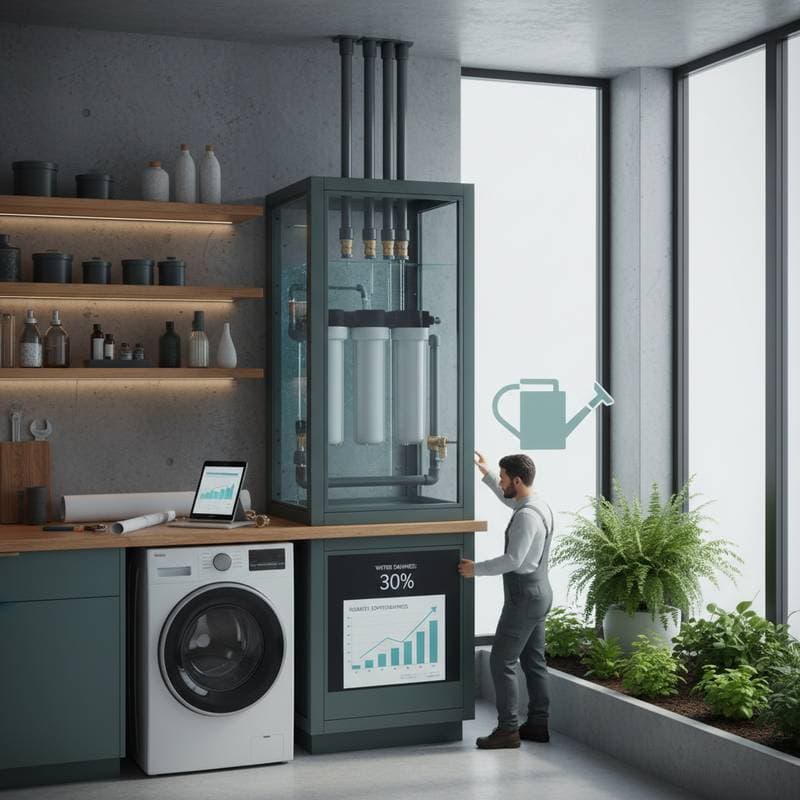
Implementing a greywater system transforms water use from a fixed expense into a managed resource. Homeowners achieve 30 percent reductions in bills through rebates and efficient reuse, while enhancing property appeal in eco-conscious markets.
Beyond finances, these systems support resilient landscapes that thrive with recycled water, reducing reliance on municipal supplies. Plan thoughtfully to integrate seamlessly, yielding dividends in conservation and cost control for years ahead.