2026 ADU Costs: Essential Pricing Insights for Accessory Dwelling Units
An accessory dwelling unit, commonly known as a granny flat, provides versatile space that boosts property value. Homeowners use these units for multigenerational living, rental income, or dedicated workspaces. Before starting construction, a clear grasp of expenses ensures informed decisions and avoids surprises.
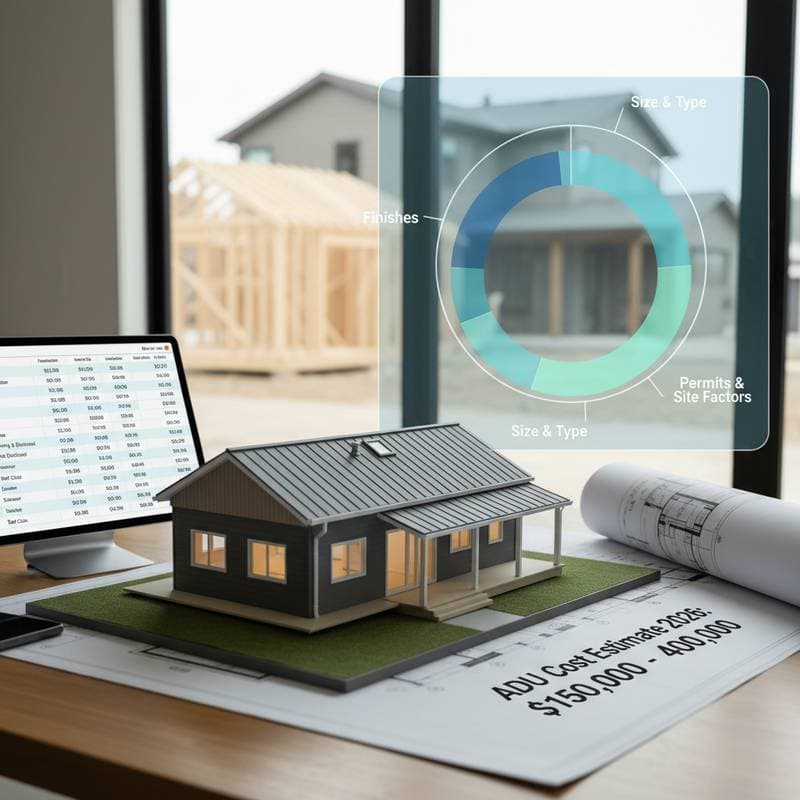
Quick Overview: A standard detached ADU costs between $150,000 and $400,000. Factors like square footage, building type, and material quality determine the final price. Simpler attached options or conversions often fall at the lower end, while custom designs push toward the higher range.
Understanding ADU Types and Their Costs
Different ADU configurations suit various needs and budgets. Detached units offer independence but require more investment. Attached or converted spaces leverage existing structures for savings. The table below outlines key types, sizes, and price ranges based on 2026 projections.
| ADU Type | Typical Size (sq. ft.) | Cost Range | Pros | Cons |
|---|---|---|---|---|
| Detached | 400–1,000 | $200,000–$400,000 | Privacy, high rental appeal, design freedom | Higher upfront costs, separate utilities |
| Attached | 300–800 | $150,000–$300,000 | Cost-effective, shared systems | Reduced privacy, impacts main home |
| Garage Conversion | 250–600 | $90,000–$160,000 | Quick timeline, reuses foundation | Space constraints, upgrade needs |
| Basement ADU | 400–900 | $120,000–$200,000 | Space-efficient, consistent climate | Waterproofing demands, light limitations |
| Above-Garage | 400–800 | $180,000–$300,000 | Yard preservation, value boost | Structural reinforcements, access challenges |
Select a type that aligns with your property layout and goals. For urban lots, attached or conversion options minimize disruption. Rural sites benefit from detached builds that expand usable land.
Detailed Cost Breakdown by Category
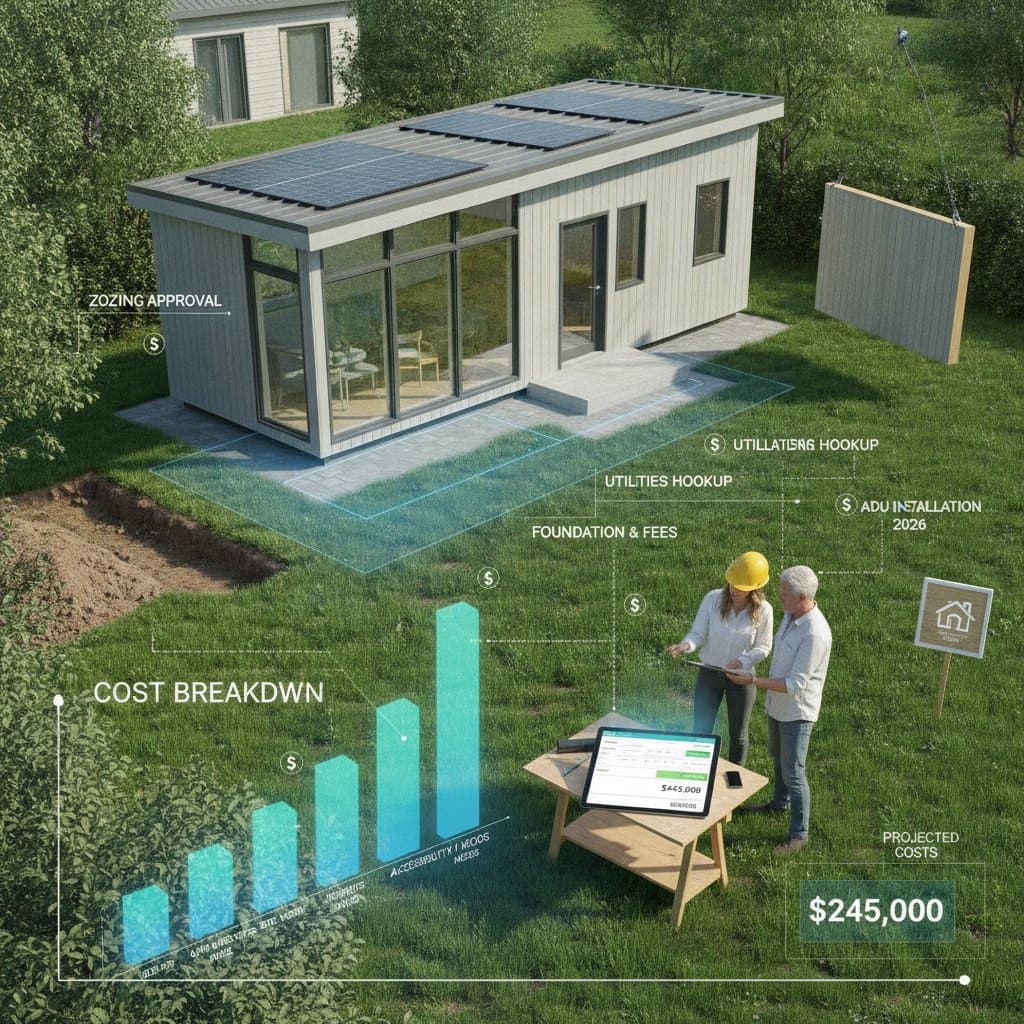
ADU expenses span planning, construction, and finishing stages. Site-specific elements like soil type or zoning add variability. Review this breakdown to allocate funds wisely.
| Category | Typical Cost Range | Key Considerations |
|---|---|---|
| Design and Permits | $5,000–$25,000 | Architectural plans, engineering reports, municipal approvals |
| Site Preparation and Foundation | $15,000–$40,000 | Excavation, concrete pouring, utility trenching |
| Framing and Exterior | $40,000–$100,000 | Walls, roof installation, siding and windows |
| Mechanical Systems (MEP) | $30,000–$70,000 | Wiring, piping, HVAC installation and testing |
| Interior Finishes | $25,000–$70,000 | Walls, floors, kitchens, bathrooms |
| Appliances and Fixtures | $5,000–$15,000 | Energy-efficient models for long-term savings |
| Landscaping and Access | $3,000–$10,000 | Pathways, fencing, drainage improvements |
Total costs rise in high-regulation areas or with premium features like solar integration. Obtain multiple contractor bids to compare line items and negotiate efficiencies.
Balancing DIY Efforts with Professional Expertise
Most ADU projects demand professional involvement for safety and compliance. Codes mandate licensed work on load-bearing elements and utilities. Identify tasks based on your skills to trim expenses without risks.
Suitable for DIY:
- Painting interiors with low-VOC products for health benefits.
- Installing resilient flooring like luxury vinyl planks.
- Planting native landscaping to enhance curb appeal.
- Updating light fixtures and hardware for modern touches.
Require Licensed Professionals:
- Pouring and curing foundations to prevent settling.
- Routing electrical and plumbing lines per code.
- Applying weatherproof roofing and insulation.
- Connecting heating, ventilation, and gas systems.
Intermediate skills suffice for minor conversions, such as garage updates. For full builds, engage a general contractor to coordinate subcontractors, timelines, and inspections. This approach ensures quality and avoids costly rework.
Long-Term Maintenance for Durability
A quality ADU endures 50 years or more with consistent care. Proactive steps preserve structure and systems, minimizing repair bills. Focus on weather resistance and system checks to maintain value.
Routine Maintenance Tasks:
- Examine roofs and gutters biannually for debris or damage.
- Recaulk windows and doors each year to block moisture.
- Refresh exterior paint or siding every 8–10 years.
- Drain water heaters annually and verify detectors monthly.
- Replace HVAC filters every three months for efficiency.
Opt for resilient materials: fiber-cement siding resists rot, metal roofs shed water effectively, and composite materials withstand wear. Proper site grading directs rainwater away, safeguarding foundations against erosion.
Addressing Key ADU Cost Questions
What property value increase can an ADU provide?
An ADU often elevates home worth by 20–35 percent, especially in demand-driven markets. Separate entrances and utilities appeal to appraisers, signaling rental viability.
How can financing cover ADU construction?
Home equity loans, cash-out refinances, or specialized renovation financing work well. Check local incentives for affordable housing projects that offer favorable rates.
Are prefabricated ADUs more affordable?
Prefabs cut on-site labor by 20–30 percent, though transport and crane setup add fees. They excel in controlled factory conditions, reducing weather delays.
Must ADUs have independent utilities?
Detached units generally require dedicated meters for electricity, water, and sewage. Shared systems suit attached designs, pending local ordinances.
Does an ADU raise property taxes?
New square footage increases assessments, but exemptions exist for owner-occupied or income-restricted units in many regions.
Planning Your ADU Budget and Next Steps
Start by assessing your site: measure available space, review zoning rules, and consult appraisers for value projections. Gather quotes from vetted contractors and explore financing options early. These preparations position your ADU as a smart investment that enhances living flexibility and financial returns for years ahead.