Greywater Costs: Installation and Permit Breakdown
A greywater system reuses lightly used household water from sinks, showers, and laundry for irrigating landscapes or flushing toilets. This approach reduces water bills, eases pressure on municipal supplies, and promotes sustainable home practices.
Summary Box
What it is: A plumbing configuration that diverts and treats used household water, ensuring separation from sewage lines.
Why it matters: Conserves fresh water resources, decreases utility expenses, and enhances resilience against water shortages.
Typical cost and what changes it: Systems generally range from $2,000 to $12,000, influenced by scale, filtration methods, and plumbing intricacies.
When to hire a pro: Installations connecting to existing plumbing or irrigation require a licensed plumber for compliance and safety.
How long it takes: Installation spans two to five days, with additional time for permit approvals.
Maintenance interval: Clean filters every few months and conduct full inspections annually.
What It Is
Greywater refers to reclaimed household water sourced from bathroom sinks, bathtubs, and washing machines. This water excludes toilet flushings, kitchen sink discharges, and any flows containing grease or hazardous substances. The system collects this water, applies filtration, and directs it toward non-potable uses such as outdoor irrigation or toilet flushing.
Effective greywater management begins with identifying suitable sources. For instance, water from a daily shower can irrigate a garden bed, while laundry runoff suits drought-tolerant plants. Proper setup ensures the water remains safe for these applications without risking health or environmental harm.
Anatomy of a Greywater System
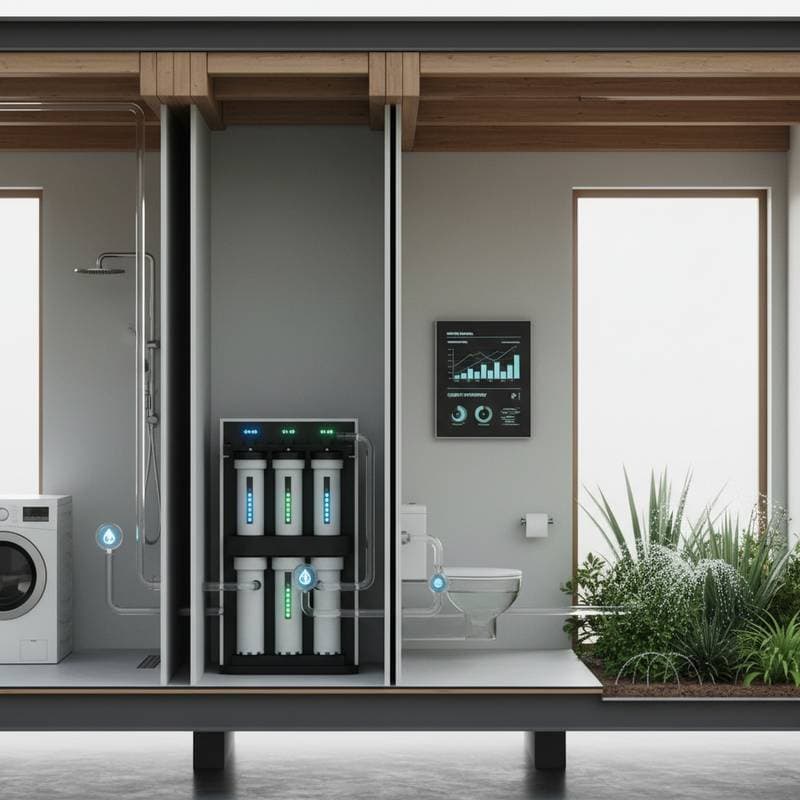
Every greywater system comprises essential components that work together for efficient operation:
- Collection lines: Pipes that transport water from designated fixtures like showers or washers.
- Diverter valve: A mechanism that redirects flow from the sewer to reuse pathways as needed.
- Filter or settling tank: Devices that capture lint, soap residues, and minor particles to prevent clogs.
- Pump or gravity feed: Equipment that propels water to distant irrigation areas or storage reservoirs.
- Distribution lines: Networks that channel treated water to garden zones or indoor flushing systems.
Clogs or leaks in these elements can lead to system inefficiencies or unpleasant odors. Schedule routine checks to maintain performance and extend the system's longevity.
Signs You Need Service
Monitor for these indicators that signal potential issues:
- Accumulation of standing water or unusual odors around irrigation points.
- Reduced drainage speed from fixtures linked to the system.
- Formation of algae or heavy residue within filtration components.
- Diminished overall flow or uneven coverage in treated areas.
Addressing these prompts promptly avoids broader contamination risks and expensive overhauls. A quick visual inspection often reveals the root cause, such as a blocked filter or loose connection.
Installation Process
Follow these steps to implement a greywater system successfully:
- Assessment: Engage a plumber or specialist to evaluate fixture accessibility, site gradients, and landscape configurations.
- Design: Develop a detailed blueprint outlining diversion locations, treatment stages, and distribution zones.
- Permitting: Submit plans to local health or building authorities for review and code verification.
- Rough-in plumbing: Install pipes and valves in concealed areas like walls or slabs.
- Equipment setup: Position and integrate filters, pumps, and tanks into the network.
- Testing: Run trials to confirm proper flow and isolation from drinking water supplies.
- Inspection: Obtain official sign-off from regulators to ensure operational safety.
The entire procedure typically requires one to two weeks, accounting for planning and regulatory delays. Patience during permitting prevents future compliance headaches.
Costs and Cost Factors
Understand the financial aspects through this breakdown:
| Line item | Typical range | Notes and variables |
|---|---|---|
| Basic laundry-to-landscape kit | $800 to $2,500 | Relies on gravity; excludes storage tanks for simpler setups. |
| Whole-house system | $3,000 to $12,000 | Encompasses tanks, advanced filters, and pumps for comprehensive coverage. |
| Permit and inspection fees | $150 to $1,000 | Fluctuates based on local jurisdiction and system complexity. |
| Labor | $75 to $150 per hour | Involves certified plumbers or irrigation experts. |
| Annual maintenance | $100 to $300 | Covers filter servicing and component evaluations. |
Expenses increase with additional collection sites, extended piping distances, or challenging access points. Opt for gravity-based designs and direct soil application to minimize costs while maximizing efficiency.
DIY vs Pro
Compare approaches to determine the best fit:
| Category | DIY | Pro Install |
|---|---|---|
| Skill level | Intermediate plumbing knowledge | Expertise from a licensed professional |
| Safety risk | Moderate potential for errors | Minimal with certified handling |
| Tools required | Basic items like pipe cutters, wrenches, and PVC adhesive | Comprehensive kit including testing apparatus |
| Permit or code | Frequently mandatory | Universally required for validation |
| Time required | Two to three weekends of effort | Two to five consecutive days |
| Warranty impact | Typically unavailable | Commonly provided for assurance |
Simple gravity-fed kits suit DIY efforts for laundry diversion to yards. However, integrations with showers or toilets demand professional involvement to adhere to sanitation and backflow regulations.
Safety and Code
Prevent cross-contamination by isolating greywater from potable lines at all times. Discharge water subsurface to avoid direct human or animal exposure. Incorporate backflow preventers and clearly marked pipes in every design. Adhere to local mandates, which might limit operations during heavy rainfall or subfreezing temperatures.
Compliance starts with understanding your area's specifics. For example, some codes mandate dual plumbing separations, while others emphasize filtration standards. Consulting authorities early streamlines the process.
Maintenance and Lifespan
Perform filter cleaning every few months to sustain clarity. Conduct annual reviews of valves and emitters for wear. Expect to replace pumps or filters after five to ten years of regular use. With diligent care, these systems endure for 20 years or longer, delivering ongoing value.
Incorporate maintenance into your routine, such as seasonal flushes in rainy areas. This practice not only preserves functionality but also optimizes water reuse benefits.
Regional Factors
Adapt designs to local conditions for optimal results:
- Climate: Arid or hot-humid environments benefit most from irrigation applications that curb outdoor water needs.
- Soil: Sandy types facilitate drainage, whereas clay soils require subsurface drip systems to manage saturation.
- Cold regions: Drain or insulate components ahead of freezes to avert pipe damage.
- Code trends: Certain locales enforce subsurface delivery, while others permit surface basins with mulch covers.
Researching these elements ensures your system aligns with environmental realities and regulatory expectations.
FAQs
Can greywater be used for vegetables? Apply it subsurface only, avoiding contact with edible portions like leaves.
Does it smell? A well-maintained system with adequate filtration remains odor-free.
Do I need a permit? Yes, in most jurisdictions for any lasting plumbing modifications.
How much water can it save? Households often reclaim 20 to 40 percent of indoor usage.
Is it safe for pets? Filtered and subsurface applications pose no risks.
Can it run while using the washing machine? Automatic diverters enable simultaneous operation.
Glossary
Backflow prevention: Valve design that blocks reverse flow into clean water systems.
Diverter valve: Switch directing greywater between sewer and reuse routes.
Emitter: Controlled outlet for soil water release.
Filtration unit: Component that clears debris prior to redistribution.
Greywater: Reusable household water from non-toilet sources.
Permit: Regulatory endorsement from building or health officials.
Settling tank: Container allowing solids to precipitate before treatment.
Subsurface irrigation: Underground application to minimize exposure.
Surge tank: Buffer storage for stabilizing water flow.
Valve box: Protective housing for valves and connections.
Making It Happen
Begin with a modest laundry-to-landscape installation to assess your property's suitability. Verify code requirements prior to purchasing materials. For projects requiring wall penetrations or toilet linkages, secure a licensed plumber's services. A thoughtfully scaled greywater system yields returns via reduced bills and reliable landscaping support.