- Utility Tie-in: Shared utilities demand special permits to ensure capacity and safety compliance.
- Building Codes: Adhere to standards for seismic, wind, and fire resistance, which influence foundation and roofing choices.
Contact your local planning office at the outset. Request written confirmation of all requirements to document compliance. In colder climates, allocate funds for insulation upgrades and frost-protected foundations to prevent structural issues.
Installation Timeline and Options
Building a granny pod involves several phases, from site assessment to final inspections. Prefab models install in 4 to 8 weeks, starting with foundation pouring and ending with utility hookups. Custom projects extend to 3 to 6 months, incorporating design reviews and subcontractor coordination.
Consider professional versus DIY approaches based on your expertise. Hiring a general contractor ensures code adherence but increases costs by 20 percent. DIY efforts suit simpler tasks like interior painting or landscaping, potentially saving $5,000 to $10,000.
Site preparation sets the stage for success. Clear vegetation, grade the land for drainage, and conduct soil tests to confirm stability. These steps prevent future repairs and maintain the unit's longevity.
Budgeting Strategies for Success
Establish a comprehensive budget that accounts for all phases. Begin with the base structure cost, then add 15 to 25 percent for contingencies like unexpected permitting delays or material price fluctuations.
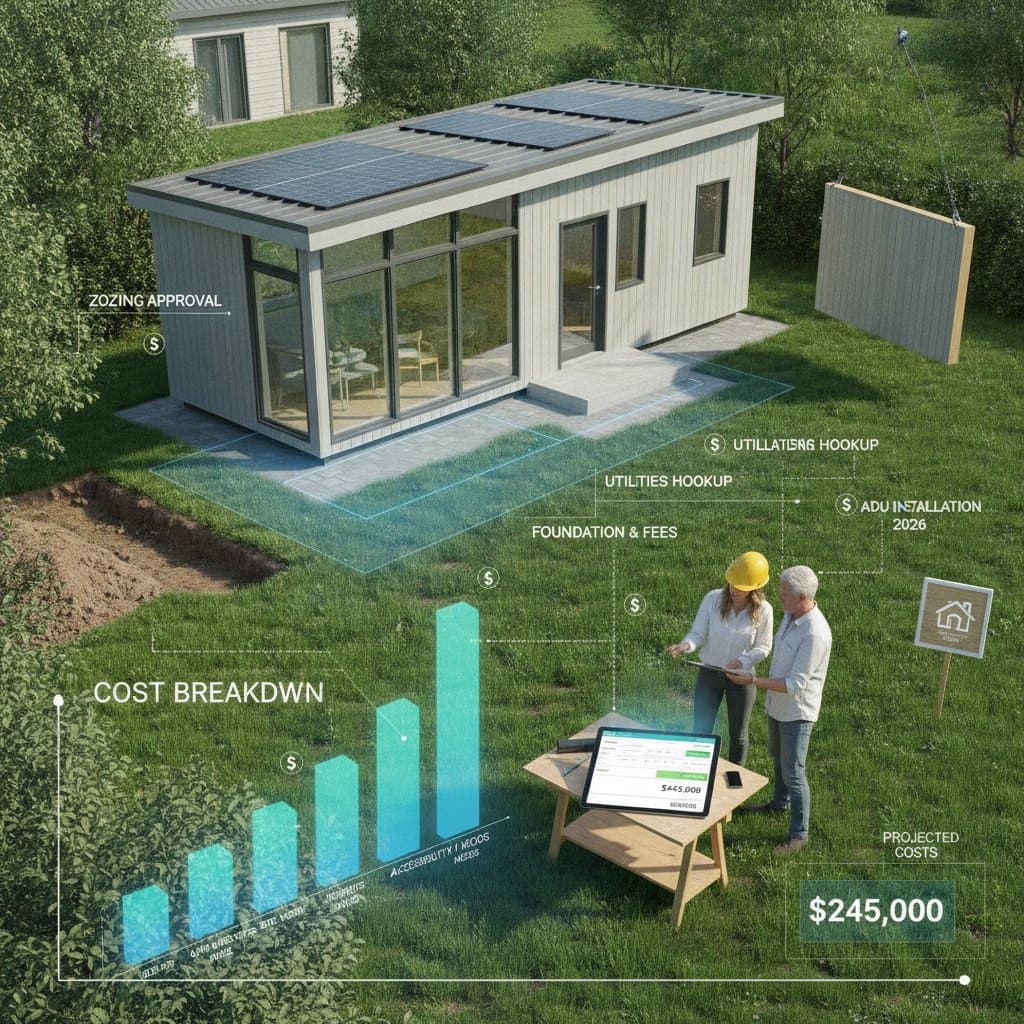
Break down expenses as follows:
- Structure and Materials: $50,000 to $150,000, covering prefab kits or custom framing.
- Foundation and Site Work: $10,000 to $30,000, including excavation and concrete.
- Utilities and Permits: $5,000 to $25,000, varying by connection complexity.
- Interior Finishes: $10,000 to $40,000, for flooring, cabinetry, and fixtures.
- Landscaping and Accessibility: $5,000 to $15,000, enhancing usability and curb appeal.
Explore financing options such as home equity loans or ADU-specific grants in supportive states. These tools ease the upfront burden while preserving property value.
Designing for Comfort and Accessibility
Tailor the interior to the resident's needs for optimal functionality. Incorporate universal design principles to support aging in place. Wider doorways accommodate wheelchairs, lever handles simplify operation, and zero-step entries eliminate barriers.
Select durable, low-maintenance finishes that withstand daily use. Vinyl plank flooring resists moisture, while quartz countertops endure wear without constant upkeep. Integrate safety features like grab bars and non-slip surfaces from the start to avoid retrofitting expenses.
Energy efficiency reduces long-term costs. Opt for LED lighting, high-R-value insulation, and Energy Star appliances. These choices lower utility bills by up to 30 percent and qualify for potential rebates.
Maintenance and Long-Term Value
Regular upkeep preserves the investment. Schedule annual inspections for plumbing, electrical, and structural integrity. Clean gutters quarterly to prevent water damage, and service HVAC systems biannually for efficiency.
A granny pod enhances property equity, often increasing home value by 10 to 20 percent. It provides flexible space for future needs, such as guest quarters or home offices. Thoughtful maintenance ensures the unit remains a valuable asset for decades.
Planning Your Project
Initiate the process by reviewing your local zoning map to confirm ADU eligibility. Establish a budget range that aligns with your financial situation and select between prefab efficiency or custom personalization.
Involve the intended occupant in discussions to address preferences early. Adjustments like adjustable-height counters or voice-activated controls improve daily comfort and independence.
Partner with architects, contractors, and inspectors experienced in ADUs. Their guidance navigates complexities and delivers a seamless outcome.
Building Family Connections Through Smart Design
A strategically planned granny pod fosters intergenerational bonds without sacrificing privacy. It delivers a secure, self-sufficient environment that adapts to evolving family dynamics. Through diligent research, precise budgeting, and collaborative planning, you establish a backyard sanctuary that supports well-being and enriches property potential for generations.