Understanding 2026 Solar Warranty Coverage Details
Solar panel installations represent a significant long-term commitment to renewable energy. Robust warranties serve as essential safeguards, ensuring system reliability and performance over decades. By grasping the specifics of these warranties, homeowners can evaluate proposals effectively and prevent unexpected expenses.
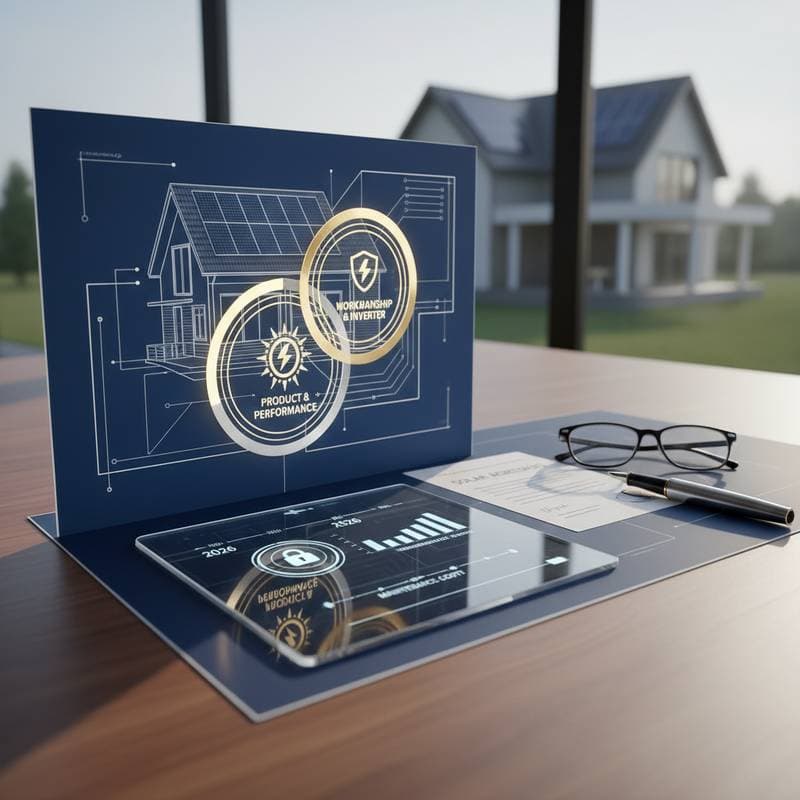
Most solar setups include two primary warranties: one addressing product defects and another guaranteeing energy output. Installers may offer additional protections for workmanship and inverters, enhancing overall security.
Main Warranty Types Compared
Solar warranties vary in scope and duration, tailored to different components of the system. The following comparison highlights key aspects to consider when selecting an installation provider.
| Warranty Type | Typical Coverage | Pros | Cons |
|---|---|---|---|
| Product Warranty | Addresses manufacturing flaws, material failures, or equipment breakdowns within 10 to 25 years | Shields against inherent defects in panels, racking, and components | Excludes damages from environmental forces, improper handling, or unauthorized modifications |
| Performance Warranty | Guarantees at least 80 to 90 percent of initial power production after 20 to 25 years | Ensures sustained energy generation for financial returns | Focuses solely on output levels; excludes repair costs for physical issues |
| Workmanship Warranty | Protects against installation errors, such as roof leaks, faulty wiring, or structural weaknesses, often for 5 to 12 years | Provides recourse for installer-related problems in rooftop or ground-mount systems | Limited duration compared to product warranties; may require proof of regular maintenance |
| Inverter Warranty | Covers failures in the power conversion device, typically for 10 to 12 years, with options for extended terms | Includes replacement units to maintain system efficiency | Inverters degrade faster than panels, necessitating periodic upgrades |
These warranties often overlap, with manufacturers handling product and performance claims while installers manage workmanship issues. Review terms carefully to identify transferable coverage if selling the property.
Timeline and Order of Operations
Navigating warranty processes requires preparation from the outset. Follow these steps to establish a solid foundation for claims and upkeep.
- Obtain detailed warranty documentation alongside every installation quote, specifying durations, covered events, and claim procedures.
- Verify responsibility for service: manufacturers typically manage product issues, while installers handle workmanship.
- Document all equipment serial numbers, installation dates, and receipts in a centralized file for quick access during claims.
- Arrange professional inspections every two to three years to detect issues early and preserve warranty validity.
Expect claim resolutions to span two to eight weeks, depending on the provider. Select installers with proven track records in prompt service to minimize disruptions.
Materials and Tools Checklist
Routine maintenance extends warranty life and optimizes performance. Assemble these essentials for safe, effective panel care.
- Soft-bristle brush or extendable squeegee for gentle debris removal
- Mild, non-abrasive cleaner diluted with water to avoid surface scratches
- Sturdy ladder certified for the roof's pitch and height
- Safety harness, gloves, and non-slip footwear to prevent accidents
- Digital device for accessing monitoring apps that track real-time output and alerts
Store tools in a dry area and consult manufacturer guidelines before use.
Maintenance, Care, and Lifespan
Regular upkeep directly influences warranty enforcement and system longevity. Clean panels quarterly using lukewarm water and the listed tools, avoiding high-pressure methods that could damage seals. Monitor shading from vegetation or structures, trimming as needed to maintain full exposure.
Track energy production monthly via integrated apps to identify declines exceeding five percent, prompting timely interventions. Well-maintained panels endure 25 to 30 years, while inverters often require one replacement around year 10. Adhering to these practices not only upholds warranties but also maximizes return on investment through consistent output.
Regional and Climate Considerations
Local conditions shape warranty needs and potential risks. In dusty, arid zones like the Southwest, frequent cleanings prevent accumulation that reduces efficiency and risks performance warranty breaches. Coastal regions demand salt-resistant materials to combat corrosion, with warranties specifying compatible hardware.
Snow-prone areas require panels engineered for heavy loads, up to 5400 Pascals, and freeze-resistant mounting. Humid climates may accelerate inverter wear, justifying extended coverage. Discuss site-specific adaptations with installers to align warranties with environmental challenges.
Securing Your Coverage Before Installation
Commit to thorough due diligence prior to signing contracts. Scrutinize warranty fine print for exclusions like animal damage or unapproved repairs, and confirm extension options for high-value systems. Retain multiple copies of documents in digital and physical formats, including emergency contact details for manufacturers and installers.
Partner with certified professionals who provide transparent terms and post-installation support. This approach transforms your solar investment into a reliable asset, delivering decades of clean energy without unforeseen liabilities.