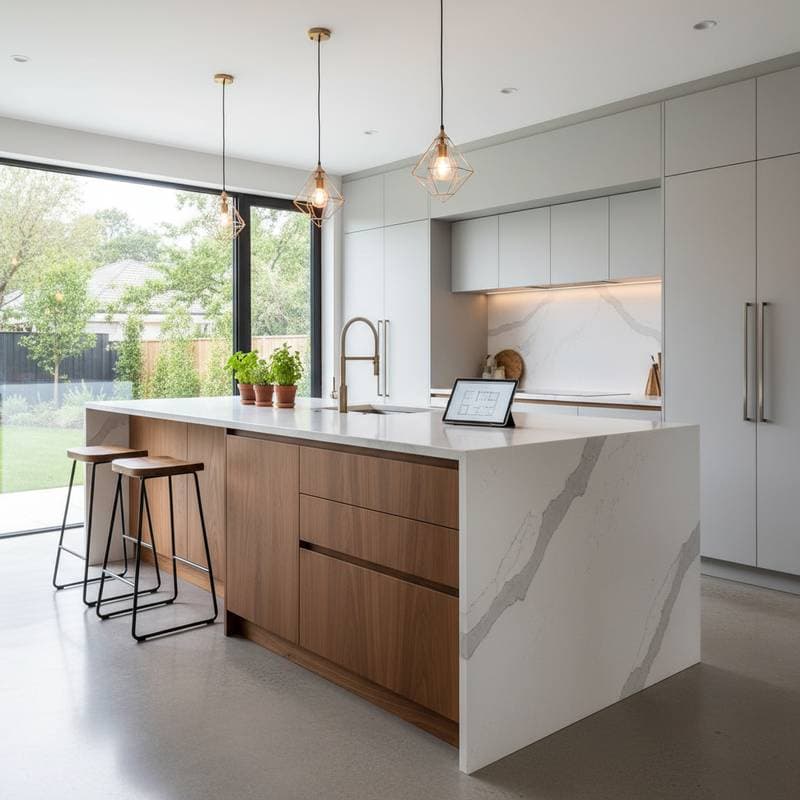
Kitchen Island ROI in 2025: Balancing Costs and Value
Key Insights
A kitchen island enhances home value, provides additional workspace, and optimizes traffic flow when planned effectively.
- Installation expenses generally fall between $2,500 and $8,000.
- Return on investment typically reaches 60 to 80 percent.
- Incorporate built-in seating, storage solutions, and electrical outlets to improve usability and marketability.
Advantages and Drawbacks
Advantages
- Increases available counter space and storage capacity.
- Streamlines kitchen operations and movement patterns.
- Elevates property resale potential through seamless integration with existing layout.
- Accommodates seating arrangements that foster social engagement.
Drawbacks
- May overcrowd compact kitchens or obstruct pathways.
- Incorporating electrical or plumbing elements raises expenses and technical demands.
- Suboptimal design choices can diminish appeal if the island appears cumbersome or incompatible.
- Installation might necessitate modifications to flooring or lighting structures.
Step-by-Step Guide to Installing a Kitchen Island
Required Tools and Materials
- Measuring tape, chalk line, and level
- Circular saw or jigsaw
- Drill with appropriate bits
- Electrical tester and outlet boxes
- Construction adhesive and screws
- Countertop options such as granite, quartz, laminate, or butcher block
Estimated Time and Skill Level
- Duration: 2 to 4 days for a standard installation
- Difficulty: Moderate to advanced
Step 1: Planning and Measurement
Apply painter's tape to outline the proposed island location on the floor. Verify that aisle clearance measures 36 to 42 inches. Ensure full operation of nearby appliance doors.
Step 2: Floor and Utility Preparation
Disconnect power and water supplies if outlets or a sink are included. Indicate paths for electrical wiring and plumbing lines. In older structures, upgrade circuits or drainage systems to comply with current codes.
Step 3: Constructing or Positioning the Base
Assemble prefabricated cabinets or construct a custom frame. Secure the base to the subfloor using screws and adhesive. Confirm level alignment prior to countertop attachment.
Step 4: Integrating Electrical or Plumbing Features
Route wiring through protective conduit to designated outlets or fixtures. Install ground-fault circuit interrupter outlets for enhanced safety. For sink installations, attach flexible supply lines and a properly vented drain system.
Step 5: Securing the Countertop
Position the surface using silicone-based adhesive. Fasten with clips or screws from the underside. Apply sealant to natural stone materials to prevent moisture damage.
Step 6: Final Assembly and Verification
Inspect for level surfaces, functional outlets, and seamless joints. Apply caulk to any gaps between the countertop and adjacent backsplash areas as required.
Step 7: Cleanup and Waste Management
Remove dust and debris with a vacuum. Dispose of materials in accordance with local regulations, particularly for adhesives and treated wood products.
DIY Installation Versus Professional Services
Suitable for DIY Projects When
- Basic carpentry and electrical knowledge are present.
- The design involves a straightforward island without integrated utilities.
- Accurate measurement and leveling of cabinetry can be achieved independently.
Recommended for Professional Handling When
- Features such as a sink, cooktop, or electrical outlets are incorporated.
- Subfloor reinforcement proves necessary.
- Local regulations mandate inspections for electrical or plumbing modifications.
Distinct Professional Approaches
Licensed contractors obtain required permits, calculate appropriate circuit capacities, and apply proper sealing techniques to stone countertops. Interior designers ensure material compatibility and adherence to clearance standards. Engaging experts minimizes errors and supports superior resale outcomes, justifying the additional investment.
Alternative Kitchen Island Options
Mobile Island
Ideal for constrained kitchen spaces, this option offers portability and reduced costs. It provides flexibility but may contribute less to long-term property value.
Peninsula Configuration
Suited to open-concept layouts, it attaches to one wall while extending into the room. This setup delivers comparable workspace benefits with simplified clearance requirements.
Portable Cart or Table
Appropriate for rental properties or temporary enhancements, these require minimal setup and expense. They support basic functionality without structural commitments.
Frequently Asked Questions
Does a Kitchen Island Consistently Increase Home Value?
In most cases, yes, provided it aligns with the room's dimensions. An oversized or awkwardly positioned island can disrupt circulation and detract from buyer interest.
What Dimensions Are Recommended?
For smaller kitchens, aim for 2 by 4 feet; larger spaces accommodate up to 4 by 8 feet. Maintain a minimum of 36 inches for comfortable navigation.
Are Permits Required?
Permits and inspections are often mandatory for electrical and plumbing alterations. Consult your local building authority prior to commencing work.
Is It Possible to Repurpose Existing Cabinets?
Yes, provided they remain structurally sound and can be leveled. Strengthen the foundation, refresh the exterior with paint or refacing, and install a fresh countertop.
Which Lighting Options Perform Best?
Suspend pendant fixtures 30 to 36 inches above the surface for effective task illumination. Opt for LED bulbs to achieve energy efficiency.
Budget Considerations
Entry-level islands, utilizing prefabricated cabinets and laminate countertops, begin at approximately $2,500. Mid-tier configurations with stone surfaces and seating elements range from $5,000 to $6,000. High-end custom builds incorporating plumbing, outlets, or ventilation systems exceed $8,000. Factors such as labor rates, permit fees, and regional material costs impact the total expenditure.
For properties nearing sale, prioritize neutral aesthetics, resilient materials, and layout enhancements over extravagant features. Prospective buyers value practical utility above all.
Space Compatibility Assessment
Evaluate kitchen width and primary traffic routes before finalizing plans. Traditional island positioning ensures accessibility on all sides, preventing bottlenecks near appliances. In narrower configurations, opt for a compact preparation island or wheeled cart.
Within open floor plans, the island serves effectively as a boundary between culinary and dining areas. For compact residences, mobile units provide adaptability without irreversible alterations.
Implementing Your Kitchen Island
Assess your available space and financial parameters initially. Outline the potential footprint and test the arrangement for one week prior to construction. Adjust scale or select a mobile alternative if navigation feels restricted.
Proceed with emphasis on enduring construction and balanced proportions. A strategically developed island elevates aesthetic appeal, streamlines everyday activities, and strengthens market position. Through precise planning and execution, this upgrade yields substantial returns alongside enhanced living experiences for cooking, entertaining, and relaxation.