How Much Does LVP vs Hardwood Flooring Cost? Pricing Guide
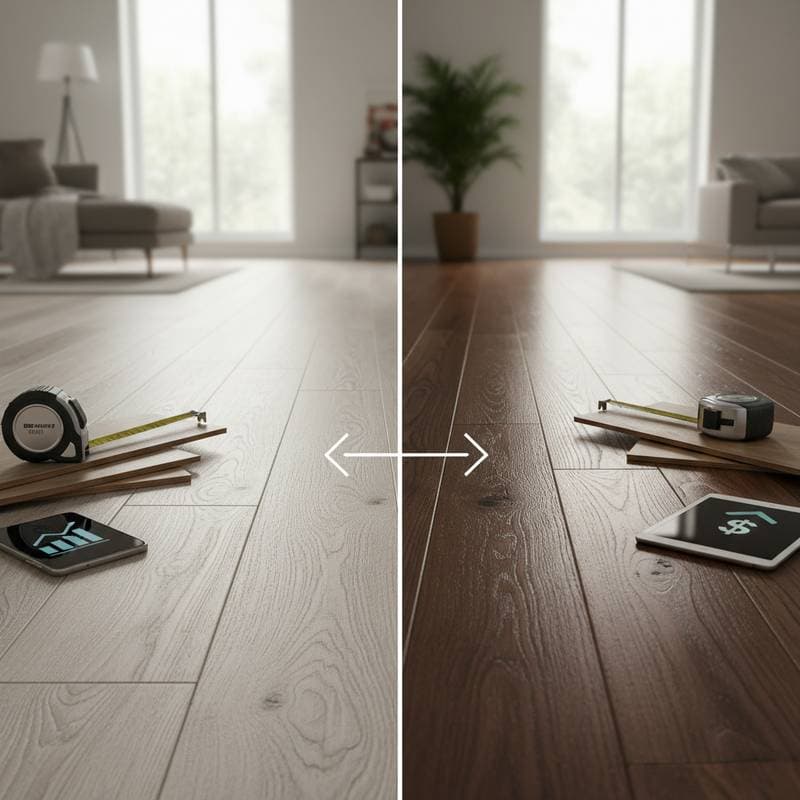
Luxury vinyl plank (LVP) flooring and hardwood both enhance interior spaces with warmth, texture, and lasting appeal. Professional installation for LVP ranges from $3 to $14 per square foot, while hardwood spans $6 to $22 per square foot. Homeowners typically invest around $8 per square foot for LVP and $14 per square foot for solid hardwood.
Three key factors influence the final price: material grade, installation complexity, and regional labor rates. In humid areas, LVP requires less maintenance and thus lower long-term costs, whereas hardwood often boosts resale value in drier climates. Data from the National Wood Flooring Association indicates that properly installed hardwood can raise home value by up to 3 percent, and LVP delivers a return on investment of 50 to 75 percent based on quality and brand.
Selecting LVP or hardwood extends beyond aesthetics. This choice hinges on budget, durability, traffic patterns, moisture levels, and plans for property appreciation.
Detailed Cost Breakdown
LVP and hardwood pricing varies due to differences in materials, labor, and site preparation.
Primary Pricing Structure
LVP installations generally cost $3 to $8 per square foot for materials and $2 to $5 per square foot for labor. Basic click-lock planks with built-in underlayment begin at $3.50 per square foot installed, whereas premium waterproof options with detailed textures exceed $9 per square foot.
Hardwood materials run $6 to $12 per square foot, with installation adding $4 to $10 per square foot. Engineered varieties provide value at $6 to $11 per square foot installed, but solid oak, maple, or walnut with upscale finishes surpass $18 per square foot.
Small projects incur minimum fees of $300 to $600 to cover setup and disposal. National medians place LVP at $8 per square foot installed and hardwood at $14 per square foot. The lower quartile for LVP falls near $5, and the upper quartile approaches $10, highlighting variations by brand and finish.
Size and Scope Factor
Larger areas improve cost efficiency. Adding 100 square feet increases the total by $500 to $1,200, depending on the material. Installations over 1,000 square feet often receive 5 to 10 percent bulk discounts.
Consider a 400-square-foot living room: expect $3,200 for LVP or $5,600 for hardwood. Benchmarks from industry sources like HomeAdvisor show that bigger jobs reduce per-square-foot labor by $0.50 to $1 through streamlined setup.
Material and Quality Tiers
Entry-level LVP from brands like TrafficMaster or NuCore costs $2 to $4 per square foot and lasts 10 to 15 years. These suit rentals or basements where budget matters most.
Mid-range options such as Shaw Floorte or LifeProof range from $4 to $7 per square foot, backed by 20-year warranties and lifelike wood grains.
Premium LVP, including CoreTec or Karndean, prices at $7 to $10 per square foot with waterproof construction and superior scratch resistance.
For hardwood, entry-level prefinished red oak or birch costs $6 to $9 per square foot and endures 25 years.
Mid-range selections like maple, hickory, or engineered white oak fall between $9 and $14 per square foot, balancing durability and style.
Premium choices such as walnut, cherry, or exotic woods reach $18 to $22 per square foot, often with lifetime warranties and refinishing capabilities.
Complexity Variables
Subfloor quality and room design impact expenses. Leveling uneven surfaces adds $1 to $3 per square foot. Stairs, odd shapes, or intricate patterns extend labor by 15 to 25 percent.
Extras like moisture barriers, underlayment, and transitions increase costs. Basements or heated floors may need vapor barriers or compatible systems, adding $200 to $500.
Location plays a role: urban centers like New York or San Francisco charge 20 to 30 percent more for labor than rural areas.
Service Types and Comprehensive Pricing
Standard LVP Installation Package
This package covers material delivery and acclimation, subfloor inspection and cleaning, click-lock or glue-down application, and trim reinstallation.
For 500 square feet, completion takes one to two days at $3,500 to $4,000 total. It appeals to those desiring low-maintenance durability.
Premium Hardwood Installation Package
Services include old flooring removal, subfloor repairs and moisture checks, nailing or gluing, sanding, staining, sealing, and custom transitions.
A 500-square-foot project costs $7,000 to $10,000, or 25 to 35 percent above basic options. The benefit lies in refinishing potential up to five times, supporting a lifespan over 50 years.
Add-On Services Matrix
| Add-On Service | Typical Cost | Savings When Bundled | Purpose |
|---|---|---|---|
| Old floor removal | $1 to $2 per sq ft | 10% | Prepares space for new install |
| Subfloor repair | $2 to $4 per sq ft | 5% | Ensures level installation |
| Trim replacement | $200 to $400 total | 5% | Completes finished look |
| Floor heating integration | $10 to $15 per sq ft | — | Adds comfort and resale value |
Bundling services with one contractor cuts overall costs by 8 to 12 percent. Platforms like Angi or Thumbtack assist in obtaining regional quotes from verified pros.
Professional vs DIY Analysis
DIY Cost Breakdown
Self-installing LVP reduces expenses by 40 to 60 percent. Materials for 500 square feet total $1,500 to $3,000, plus $200 for essentials like tapping blocks, spacers, and knives. A saw rental adds $40 daily.
DIY hardwood demands more: materials cost $3,000 to $5,000, with rentals for nailers, sanders, and saws reaching $400 to $700. Plan for three to five days, plus cleanup; errors may incur $1,000 in fixes.
Professional Advantages
Experts ensure even seams, proper gaps, and warp prevention. Certifications provide warranties worth $500 to $1,000 in coverage. Their efficiency saves 10 to 15 hours over DIY, narrowing the price gap.
Decision Framework
Opt for professionals when the area exceeds 300 square feet, subfloor work is required, or home sale looms.
DIY fits small spaces, basements, or interim fixes, though risks like misalignment or moisture issues often eclipse savings, especially with hardwood.
Actionable Cost-Saving Strategies
Timing Optimization
Contractors discount 5 to 15 percent in off-seasons like late winter or early spring. Midweek bookings fill gaps and lower rates.
Smart Shopping Tactics
Secure three written quotes to spot variances. Inquire about overstock LVP shades or hardwood batches for $1 to $2 per square foot off. Cash payments or multi-room projects yield further reductions.
Preparation Actions
Move furniture, remove old coverings, and clean subfloors in advance. These efforts trim labor by $0.50 to $1 per square foot. Precise discussions with installers prevent costly adjustments.
Market Dynamics and Considerations
Geographic Variations
LVP proves cheapest in the Midwest and South at $7 per square foot, while coastal cities top $10 with elevated labor. Hardwood varies more, hitting $18 per square foot in urban high-end markets.
Market Timing
Prices shift with lumber and petroleum trends. Supply issues affect vinyl and wood differently, but competitive areas stabilize LVP costs quicker.
Value Indicators
Hardwood excels in resale markets, recouping 70 to 90 percent of costs through appraisals. LVP shines in rentals or flips, offering quick recovery at 60 to 80 percent ROI with low upkeep.
Assess your home's style and location: traditional neighborhoods favor hardwood's premium appeal, while modern or moisture-prone spaces benefit from LVP's versatility.
Achieving Optimal ROI with Your Flooring Choice
To maximize returns, align flooring with lifestyle needs and market trends. High-traffic homes gain from LVP's resilience, preserving budgets for other upgrades. Timeless hardwood suits long-term ownership, enhancing equity over decades.
Consult local experts for tailored advice, and track total ownership costs including maintenance. This approach ensures your investment elevates both daily living and future value.