Introduction to LVP and Hardwood Flooring
Homeowners in 2025 encounter a pivotal decision when selecting flooring: Luxury Vinyl Plank (LVP) or hardwood. LVP presents an affordable option with water resistance and straightforward installation suitable for DIY projects. Hardwood, in contrast, delivers exceptional durability, the ability to refinish multiple times, and enhanced resale value. Factors such as budget constraints, local climate conditions, and daily lifestyle demands guide the choice toward the flooring that maximizes comfort and investment return.
This comparison examines costs, longevity, performance in various environments, and practical applications. Readers gain insights to evaluate options based on specific needs, ensuring selections align with long-term home goals.
Cost Breakdown: Initial Investment and Long-Term Value
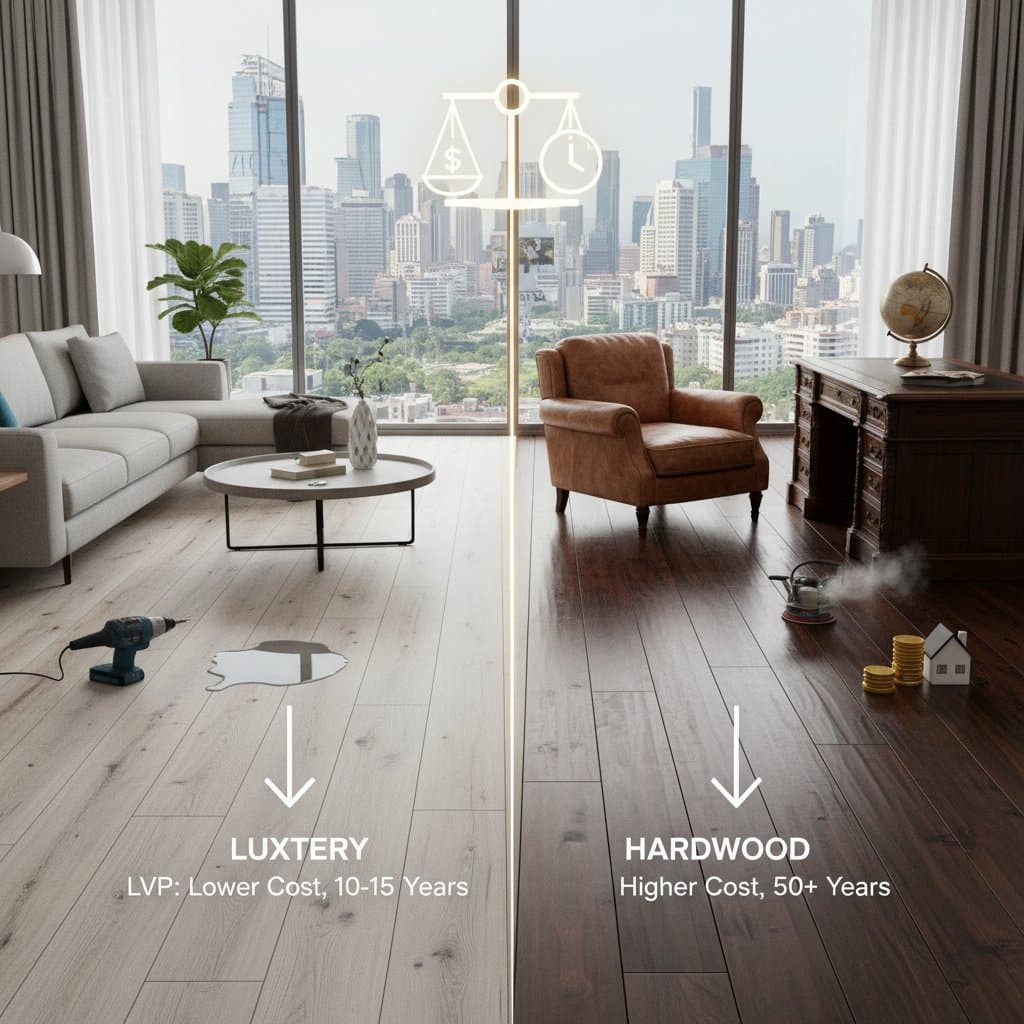
LVP typically costs about half as much as hardwood per square foot. For a 500-square-foot area, LVP installation ranges from $3,000 to $5,000, including materials and basic labor. Hardwood, depending on species like oak or maple, starts at $6,000 and can exceed $10,000 for premium grades.
These figures account for 2025 market trends, where material prices fluctuate with supply chains. LVP benefits from lower production costs due to synthetic components, while hardwood reflects harvesting and milling expenses. Homeowners must consider total ownership costs, including potential repairs and replacements.
Over time, hardwood justifies higher upfront expenses through extended lifespan. LVP requires replacement sooner, potentially increasing cumulative costs for frequent remodelers. Budget-conscious individuals favor LVP for immediate savings, whereas those planning to stay in a home for decades prefer hardwood's enduring value.
Durability and Performance Comparison
Hardwood floors endure for 50 to 100 years with proper care, far outlasting LVP's typical 15 to 25 years. The title's claim that LVP lasts 60 percent less time holds true in average scenarios, as vinyl wears under heavy foot traffic and cannot match wood's resilience.
LVP excels in moisture-prone areas, with its waterproof core resisting spills and humidity without swelling. Hardwood, susceptible to warping in damp conditions, demands climate control systems like humidifiers in arid zones. Both materials handle pet claws and furniture drags, but hardwood scratches more visibly yet refinish easily up to five times.
Testing standards from industry bodies confirm hardwood's superior scratch resistance in engineered forms. LVP mimics wood grains convincingly, offering aesthetic appeal without the maintenance burden. Selection depends on usage intensity; high-traffic homes benefit from hardwood's robustness.
Pros and Cons of LVP
- Affordability: Lower initial and replacement costs suit tight budgets.
- Water Resistance: Ideal for kitchens, bathrooms, and basements.
- Easy Installation: Click-lock systems allow quick DIY setup.
- Low Maintenance: Requires simple sweeping and occasional mopping.
- Cons: Shorter lifespan increases long-term expenses; less eco-friendly due to PVC content.
Pros and Cons of Hardwood
- Longevity: Lasts generations, reducing replacement frequency.
- Refinishing Potential: Restores appearance multiple times.
- Resale Boost: Adds 3 to 5 percent to home value per real estate data.
- Natural Beauty: Unique grains enhance interior design.
- Cons: Higher cost; vulnerable to moisture and requires professional installation.
Installation Processes and Maintenance Needs
LVP installation involves floating planks over existing subfloors, a process completable in a weekend for most rooms. Tools include a utility knife, tape measure, and spacers; no adhesives or nails necessary for standard setups. Professional help costs $1 to $2 per square foot if DIY proves challenging.
Hardwood demands precise subfloor preparation, often with nails or glue for solid types. Engineered hardwood offers flexibility for concrete slabs. Installation fees range from $3 to $5 per square foot, reflecting skilled labor needs. Post-installation, acclimation periods prevent buckling.
Maintenance for LVP focuses on dust removal and spot cleaning with mild solutions. Hardwood requires regular sweeping, avoiding excess water, and periodic refinishing every 10 to 20 years. Both options demand underlayment for noise reduction and insulation.
Regional and Climate Considerations
In humid or coastal climates, LVP's waterproof core prevents warping and mold growth. Salt air and frequent rains make vinyl a practical choice for Florida or Pacific Northwest homes. Installation over uneven surfaces remains forgiving, minimizing preparation costs.
In dry or stable regions like the Southwest deserts, hardwood performs well with proper humidity control. Devices such as dehumidifiers maintain 40 to 60 percent relative humidity, preserving wood integrity. Engineered hardwood adapts better to temperature swings than solid varieties.
Urban apartments with radiant heating favor LVP for heat tolerance up to 85 degrees Fahrenheit. Rural settings with wood stoves benefit from hardwood's thermal mass, retaining warmth efficiently. Local building codes influence selections, particularly in flood zones.
Resale Value and Aesthetic Integration
Hardwood elevates property appeal, attracting buyers seeking premium features. Appraisals show it increases market prices by thousands, especially in traditional neighborhoods. LVP, while versatile, appeals to modern, low-maintenance preferences in starter homes.
Aesthetic versatility defines both: LVP offers endless patterns from rustic to contemporary. Hardwood's natural variations create focal points in open-plan layouts. Pairing materials, such as hardwood in living rooms and LVP in utility spaces, balances cost and style.
Sustainability factors emerge; reclaimed hardwood supports eco-conscious choices, while recyclable LVP variants reduce landfill impact. Future trends predict hybrid floors combining benefits, but current options suffice for most renovations.
Making the Smart Choice for Your Home
Individuals seeking a quick, budget-friendly update that manages moisture and pet activity find LVP delivers predictable results with minimal maintenance. Solid or engineered hardwood stands unmatched for long-term equity and timeless character in primary spaces.
Consider daily routines, remodel frequency, and floor care commitment. High-activity families with young children or spills lean toward LVP's forgiveness. Professionals or empty-nesters value hardwood's elegance and investment security.
A balanced approach optimizes outcomes: install hardwood in main living areas for durability and appeal, reserve LVP for kitchens, basements, or bathrooms where practicality reigns. Consult local contractors for site-specific advice, ensuring selections enhance home functionality and joy.