Kitchen Island Costs in 2025: Budget Versus Premium Breakdown
A kitchen island transforms the functionality of any kitchen space. This versatile addition provides essential storage, comfortable seating, and a dedicated workspace that facilitates both meal preparation and social interaction. Understanding the elements that influence pricing enables homeowners to establish a feasible budget tailored to their needs, whether pursuing a modest utility station or an elaborate focal point.
Quick Overview of Costs: Expect to invest approximately $900 to $3,500 for a straightforward, prefabricated island. For a bespoke premium version incorporating plumbing, stone surfaces, and electrical integrations, costs range from $7,000 to $18,000.
Key Differences Between Budget and Premium Kitchen Islands
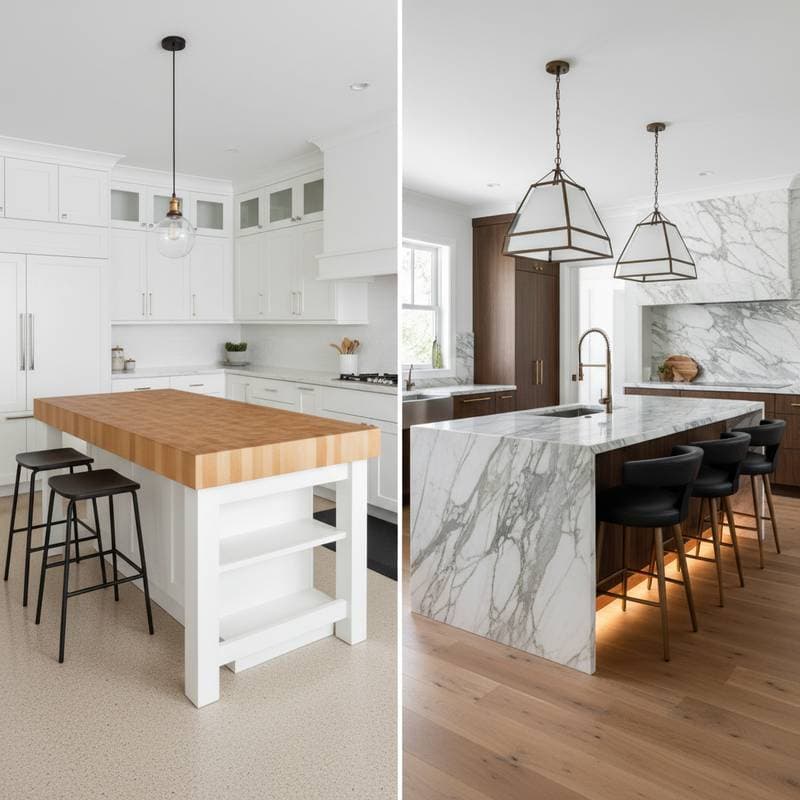
Budget options deliver reliable performance at an accessible price point, while premium selections emphasize customization and luxury. The following table highlights primary distinctions to guide decision-making.
| Feature | Budget Island | Premium Island |
|---|---|---|
| Typical Cost | $900 to $3,500 | $7,000 to $18,000 |
| Size Range | 3 to 5 feet long | 6 to 10 feet long |
| Countertop Material | Laminate or butcher block | Quartz, granite, or marble |
| Cabinet Type | Stock or prefabricated units | Fully custom-built cabinetry |
| Features | Basic storage and open shelving | Integrated sink, cooktop, outlets, and seating |
| Installation | Simple assembly or DIY approach | Professional carpentry and specialized trades |
| Timeframe | 1 to 2 days | 1 to 3 weeks |
Several factors contribute to these variations. Budget islands often utilize readily available materials that require minimal processing, keeping expenses low. Premium models, however, involve high-quality sourcing, intricate designs, and advanced features that demand skilled labor, thereby elevating the overall investment.
Factors Influencing Kitchen Island Pricing
Pricing depends on multiple variables beyond initial materials. Size plays a pivotal role; larger islands necessitate more cabinetry and surface area, increasing material and labor demands. Location within the kitchen also matters, as proximity to existing utilities can reduce or add to plumbing and electrical costs.
Material choices significantly impact the budget. Laminate countertops resist stains effectively and install quickly, suiting entry-level projects. In contrast, natural stone like granite offers timeless elegance and heat resistance but requires precise cutting and sealing to maintain integrity over time.
Additional features amplify functionality yet raise expenses. Incorporating a sink demands plumbing modifications, potentially adding $1,000 to $2,500. Electrical outlets or a cooktop involve wiring updates, which may require permits and inspections, further extending the budget by $500 to $3,000.
Labor constitutes 30 to 50 percent of total costs for professional installations. DIY approaches save money but demand carpentry proficiency to ensure structural stability and code compliance.
Step-by-Step Timeline for Installation
Efficient project management minimizes disruptions. Follow this sequence to streamline the process.
-
Design and Layout Planning: Allocate 1 to 2 weeks to determine dimensions, select materials, and integrate features. Consult floor plans to verify adequate clearance and workflow.
-
Cabinet Fabrication or Delivery: Prefabricated units arrive within days, enabling prompt progress. Custom pieces require 2 to 4 weeks for precise construction.
-
Rough-In Utilities: Address electrical and plumbing needs over 1 to 3 days. Professionals handle conduit installation and pipe routing to meet safety standards.
-
Cabinet Installation: Secure the base structure in 1 to 2 days. Verify level alignment to prevent future adjustments.
-
Countertop Installation: Create templates, fabricate the surface, and install within 3 to 7 days. Allow curing time for adhesives to ensure a seamless fit.
-
Finishing Touches: Apply paint, install trim, and add hardware over 1 to 2 days. Test all features for operational reliability.
Simple projects conclude over a weekend, whereas intricate builds with utility integrations span several weeks. Factor in lead times for materials to avoid delays.
Essential Materials and Tools
Prepare thoroughly to execute the project smoothly. This checklist covers core requirements.
Materials:
- Base cabinets or framing lumber for structural support
- Countertop slab, such as laminate sheets, wood planks, or stone tiles
- Screws, brackets, and construction adhesive for secure assembly
- Trim pieces, molding, and finishes like paint or stain
- Electrical components, including boxes and outlets, or plumbing fittings as applicable
Tools:
- Tape measure and carpenter's square for accurate measurements
- Circular saw or miter saw for cutting components
- Drill with assorted driver bits for fastening
- Level and clamps to maintain alignment
- Safety equipment, including glasses, gloves, and a dust mask
For stone countertops or utility work, engage specialists equipped with diamond-tipped tools and ventilation systems. Source materials from reputable suppliers to guarantee quality and compatibility.
Regional and Climate Factors
Local conditions influence material selection and longevity. In humid or coastal regions, opt for moisture-resistant finishes and corrosion-proof hardware to combat expansion and deterioration. Sealed woods or synthetic alternatives perform best in such environments.
Dry climates pose risks of cracking in untreated wood; regular application of conditioning oils preserves integrity. Availability of natural stone varies by area; proximity to quarries often yields competitive pricing and expedited delivery from regional fabricators.
Building codes differ across locations, affecting utility integrations. Consult local regulations early to incorporate required reinforcements or ventilation.
Frequently Asked Questions
Can you install a kitchen island in a compact space?
Yes, provided at least 36 inches of clearance surrounds the island for safe navigation. Opt for mobile carts or slim profiles under 24 inches deep to maximize utility without overcrowding.
Does a kitchen island enhance property value?
Typically, yes. Well-integrated islands with practical storage and seating attract prospective buyers, particularly when they harmonize with the overall kitchen aesthetic.
What if the budget limits custom features initially?
Begin with foundational elements like cabinets and a basic top, then upgrade to stone surfaces or appliances later. This phased approach distributes costs over time.
Planning Your Kitchen Island Project
Align the design with daily routines and gathering habits rather than aesthetic ideals alone. Assess available space, financial constraints, and essential functionalities first. For budget-conscious builds, prioritize durable basics; for premium pursuits, invest in elements that endure heavy use.
Secure multiple quotes from licensed contractors, verifying insurance coverage. Document agreements in writing to outline scope, timelines, and payments. A thoughtfully executed island enhances efficiency, expands storage, and fosters connections, delivering lasting value without excessive expenditure.