The Real Cost and Value of Kitchen Islands in 2025
Homeowners frequently request kitchen islands as a key remodeling feature. These additions provide essential workspace, ample storage, and a central gathering area that enhances everyday living. The primary concern for many remains whether this investment delivers lasting functionality and improves resale value.
This guide outlines the elements that determine kitchen island costs, offers guidance on selecting appropriate size and features, and describes expectations for DIY construction or professional services.
Key Decisions and Factors
Homeowners should address these essential choices before sourcing materials or consulting contractors:
- Island type: Options include fixed installations, mobile units, or semi-custom built-ins tailored to specific spaces.
- Primary function: Determine if the island serves as a prep area, seating zone, storage solution, or integration point for appliances.
- Size and layout: Ensure at least 36 inches of clearance around all sides to maintain smooth circulation.
- Utilities: Assess requirements for electrical outlets, plumbing lines, or gas connections.
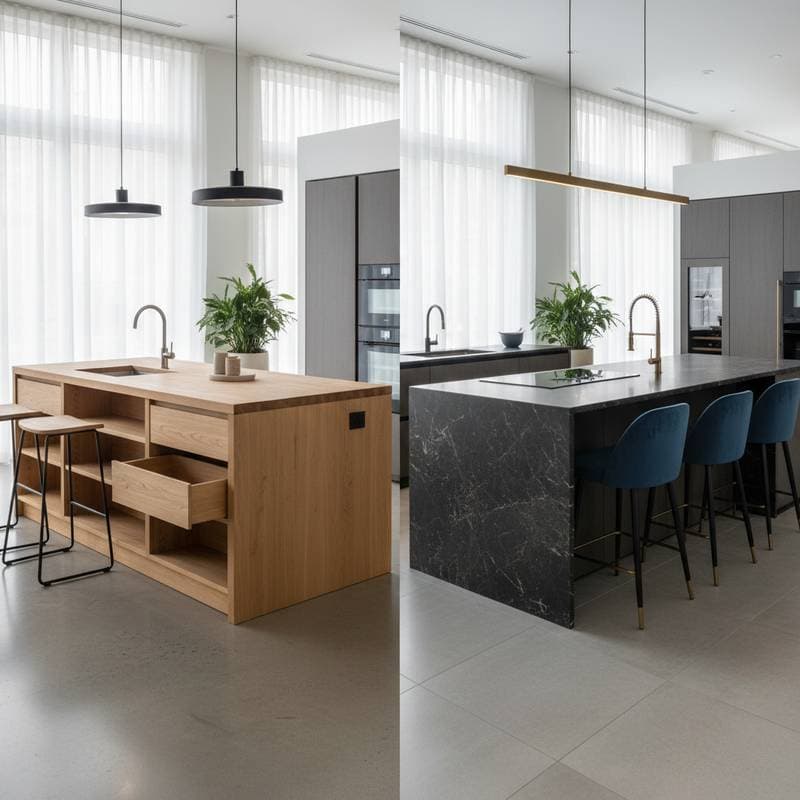
- Countertop material: Select from laminate, butcher block, quartz, granite, or solid surface based on durability and aesthetics.
- Storage configuration: Incorporate cabinets, drawers, shelves, or open shelving at the ends.
- Lighting and seating: Plan for pendant lights, bar stools, or under-cabinet illumination to improve usability.
These decisions directly impact the overall cost, visual design, and practical performance of the island.
Cost Breakdown and What Drives Price
Base Cabinetry
- Stock base cabinets range from $100 to $300 per linear foot.
- Custom cabinetry costs $500 to $1,200 per linear foot.
- Features such as soft-close drawers or pull-out shelves increase expenses by $200 to $600.
Countertops
- Laminate installation falls between $25 and $50 per square foot.
- Butcher block options cost $50 to $100 per square foot.
- Quartz or granite selections range from $70 to $150 per square foot.
- Additions like waterfall edges or integrated sinks add $500 to $1,000 to the total.
Electrical and Plumbing
- Installing an outlet costs $150 to $350 per unit.
- Wiring for pendant lighting ranges from $300 to $700.
- Connections for a sink or dishwasher vary from $500 to $1,200, based on distance from existing lines.
Finishing and Trim
- Painting or staining requires $100 to $300.
- Decorative panels or toe kicks add $200 to $600.
- Reinforcement for seating overhangs costs $150 to $400.
A standard mid-range kitchen island typically requires $3,000 to $8,000. Expenses rise with premium stone countertops, plumbing integrations, or advanced electrical setups. For high-end custom designs incorporating luxury materials and extensive utilities, budgets can extend to $15,000 or more.
Timeline and Order of Work
The construction process follows a structured sequence:
- Design and measurement: Allocate 2 to 5 days for finalizing designs and verifying layouts.
- Cabinet selection or fabrication: This step takes 1 to 3 weeks, varying with the degree of customization.
- Countertop fabrication: Expect 1 to 2 weeks following template creation.
- Utility rough-ins: Electrical or plumbing preparations require 1 to 2 days.
- Installation: Assemble cabinets, install counters, and complete finishes over 1 to 3 days.
The entire project generally spans 1 to 4 weeks, depending on project complexity and contractor availability.
Materials and Tools Checklist
Materials
- Base cabinets or structural frames
- Countertop slab or surface
- Screws, shims, and mounting brackets
- Trim boards or decorative panels
- Paint, stain, or protective sealant
- Outlet boxes and protective covers
- GFCI outlets for areas near water sources
Tools
- Tape measure and framing square for precise measurements
- Level and stud finder to ensure stability
- Drill with appropriate driver bits for assembly
- Circular saw or jigsaw for custom cuts and adjustments
- Clamps and pry bar for secure positioning
- Caulk gun and construction adhesive for sealing
- Safety equipment including gloves, goggles, and hearing protection
Regional and Climate Considerations
Adapt selections to local conditions for optimal performance:
- Humid climates: Opt for sealed surfaces such as quartz or solid surface materials to resist moisture absorption and warping.
- Dry regions: Avoid natural wood tops prone to cracking; instead, choose engineered wood or laminated alternatives.
- Coastal areas: Select stainless steel fixtures and corrosion-resistant hardware to combat salt air exposure.
- Cold climates: Integrate radiant floor heating beneath tile or concrete bases to prevent discomfort during installation or use.
Labor rates fluctuate by location. Urban coastal markets often impose 25 to 40 percent higher fees for carpentry and countertop work compared to rural areas.
Sustainability and Long-Term Value
Incorporate eco-friendly practices to enhance durability and reduce environmental impact:
- Reuse existing cabinets: Repurpose surplus base units with a fresh countertop to minimize waste and control costs.
- Choose durable finishes: Materials like quartz, bamboo, or reclaimed wood endure heavy use with minimal maintenance.
- Efficient lighting: Install LED fixtures to lower energy consumption over time.
- Local materials: Source regionally to cut transportation emissions and bolster community economies.
Such approaches decrease long-term ownership expenses while preserving aesthetic and functional quality.
Common Questions
How big should the island be?
A minimum size of 2 by 4 feet suffices for basic prep needs. Maintain 36 inches of surrounding clearance, or expand to 42 inches in kitchens with multiple users.
Can a sink or cooktop be added to the island?
Such integrations are feasible but elevate both cost and complexity. Plumbing for a sink adds $800 to $1,500, while a cooktop demands ventilation plus electrical or gas hookups that may exceed $2,000.
What options exist for small kitchens?
Mobile islands or slim table-style units fit constrained spaces. Seek designs 24 inches deep and 36 inches tall to preserve traffic flow.
Is a permit necessary?
Permits apply when incorporating wiring, plumbing, or gas elements. Review local building regulations prior to commencement.
Does flooring require repair after removing an old island?
The base footprint often leaves voids or damage. Budget for patching, refinishing, or replacing the affected flooring section before installing the new unit.
Planning Your Kitchen Island Upgrade
A thoughtfully designed kitchen island transcends mere aesthetics; it functions as a versatile hub for preparation, storage, and social interaction. Begin by assessing specific requirements, such as additional counter space, seating capacity, or appliance accommodations, then align the design with your kitchen dimensions and financial parameters.
For those prioritizing practicality alongside visual appeal, a strategic island investment yields everyday utility and appreciable home equity growth. Through precise budgeting, informed material selections, and methodical execution, this addition can endure for years while remaining financially manageable.