Efficient Multigenerational Home Layouts: Strategies to Minimize Conversion Costs
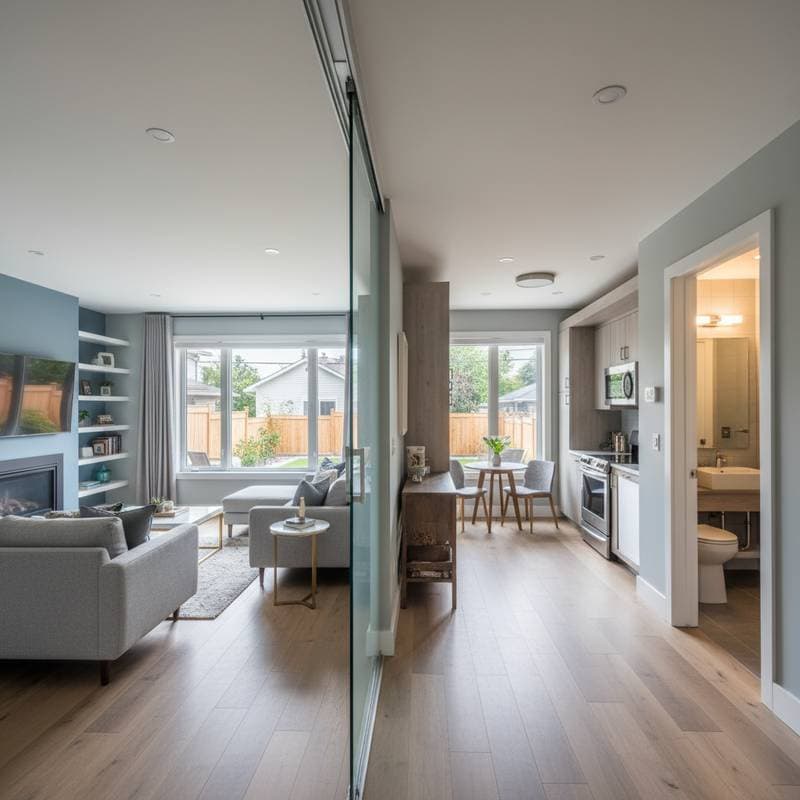
Homeowners throughout the United States increasingly modify their living spaces to accommodate extended families in a single residence. The primary objective remains straightforward: establish adaptable, private, and secure areas that avoid excessive construction or expenditure. This guide outlines methods to design or adapt a home for multigenerational occupancy while maintaining control over renovation expenses.
The core focus centers on assisting homeowners in developing economical configurations that accommodate various generations without compromising comfort, adherence to building codes, or potential resale value.
Advantages, Disadvantages, and Suitability for Different Family Structures
Advantages
- Shared utility systems result in reduced energy expenses.
- Caregiving and familial assistance become more straightforward.
- Properties gain increased value when renovations include necessary permits and thoughtful design.
- Spaces offer versatility for evolving requirements, such as leasing arrangements or dedicated workspaces.
Disadvantages
- Inadequate sizing of private areas may lead to overcrowding or disturbances from noise.
- Additional bathrooms and kitchen facilities elevate plumbing expenditures.
- Building codes impose limitations on auxiliary kitchens or secondary access points.
- Certain residential areas face constraints on parking availability.
Ideal Applications
These layouts suit medium to large single-family dwellings with a minimum of 1,800 square feet. Properties featuring unfinished basements, garages, or areas above garages provide optimal opportunities for conversion into functional living spaces.
Detailed Conversion Process
The following steps apply to retrofitting an established home. Initiate the project with thorough investigation of local building codes and a precisely defined project outline.
Essential Safety Equipment
Gloves, respirator, safety goggles, and ear protection ensure protection during work.
Required Tools
A circular saw, drill, reciprocating saw, framing square, and voltage tester facilitate precise execution.
-
Establish Living Zones. Determine sections of the home suitable for transformation into semi-independent suites. Prioritize locations adjacent to current plumbing or heating, ventilation, and air conditioning infrastructure to minimize disruptions.
-
Evaluate Structural Integrity. Confirm the status of load-bearing walls prior to creating openings for doors or passages. Engage a structural engineer to assess modifications involving beams or joists, ensuring stability and compliance.
-
Design Utility Systems. Chart the placement of plumbing lines, electrical wiring, and heating, ventilation, and air conditioning components. Incorporate dedicated circuit breakers for any new kitchen or bathroom installations, along with ground fault circuit interrupter and arc fault circuit interrupter safeguards as mandated by code.
-
Construct Framing and Add Insulation. Employ 2x4 or 2x6 lumber for framing, R13 to R21 levels of insulation, and fire-resistant drywall to separate living areas, enhancing both acoustic isolation and fire safety.
-
Fit Doors and Apply Finishes. Select solid-core doors to optimize sound attenuation. Incorporate weatherstripping to bolster privacy and maintain airtight seals.
-
Conduct Inspections and Finalize. Arrange for municipal inspections of plumbing, electrical, and framing elements before enclosing with drywall. Retain all documentation of permits to support future property transactions or insurance evaluations.
Project Timeline
A modest do-it-yourself retrofit, such as installing partition walls or a basic kitchenette, typically requires three to six weekends. A comprehensive professional overhaul that encompasses new plumbing and bathroom facilities spans six to ten weeks.
Common Errors That Escalate Expenses
-
Overlooking Drainage Issues. Conversions in basements frequently encounter problems from dampness. Install perimeter drains or a sump pump if evidence of water intrusion appears.
-
Excessive Kitchen Development. Constructing a complete secondary kitchen risks reclassifying the space as an accessory dwelling unit, which invokes rigorous regulations and elevated permitting fees.
-
Inadequate Heating, Ventilation, and Air Conditioning Capacity. Expanding usable area without upgrading systems creates uneven temperatures in different zones.
-
Neglecting Acoustic Isolation. Remedying sound transmission after drywall installation proves three times more costly than addressing it during initial construction.
-
Failing to Define Boundaries. Common access points or shared bathrooms generate interpersonal conflicts. Establish clear separations in the planning phase.
Guidelines for Professional Versus Do-It-Yourself Approaches
Apply the DIY Evaluation Framework to determine personal capabilities versus the need for professional involvement.
Skill Assessment
Carpentry tasks and finishing details lend themselves to do-it-yourself efforts, whereas electrical and plumbing modifications demand permits and specialized diagnostic equipment.
Safety Considerations
Projects involving natural gas lines, structural walls, or main electrical panels necessitate professional expertise to mitigate hazards.
Equipment Factors
Specialized items like drywall lifts, drain augers, and circuit analyzers often justify rental or professional services rather than one-time purchases.
Scenarios Requiring Professionals
- Alterations to structural elements or foundational components.
- Installation of new electrical circuits or distribution panels.
- Tasks that require certified blueprints or official inspection approvals.
A combined strategy yields efficiency: handle framing and surface treatments independently, while contracting specialists for foundational installations and regulatory compliance.
Bid Comparison Table
| Line Item | Specifications or Scope | Contractor A | Contractor B | Contractor C | Variance Explanations |
|---|---|---|---|---|---|
| Plumbing Rough-In | Two fixtures, 30-foot run | $4,200 | $3,800 | $4,750 | Differences in material quality and venting paths |
| Electrical Work | Two circuits, 12 outlets | $2,500 | $2,200 | $2,950 | Influenced by distance from main panel |
| Framing and Drywall | 400 square feet of partitions | $3,100 | $2,850 | $3,300 | Affected by site access and waste disposal |
| Flooring Installation | Vinyl plank, 400 square feet | $1,800 | $1,950 | $2,100 | Variations in underlayment selections |
Request detailed breakdowns in all proposals and verify inclusion of site cleanup, permitting, and inspection services.
Preparation Checklist
- Research local zoning laws and building codes specific to multigenerational or accessory dwelling units.
- Measure existing space to confirm minimum square footage requirements for private zones.
- Consult a structural engineer for any planned wall modifications.
- Budget for utility upgrades, allocating 30 to 40 percent of total costs to plumbing and electrical.
- Gather multiple contractor bids and review references for similar projects.
- Prepare a family agreement on space usage and privacy expectations to align design choices.
Securing Long-Term Value Through Thoughtful Design
Implementing these multigenerational layouts not only fosters family closeness but also safeguards financial investments. By prioritizing code-compliant, flexible designs, homeowners enhance daily livability while boosting the property's market appeal. Begin with a detailed plan to transform your home into a resilient, cost-effective haven for generations to come.