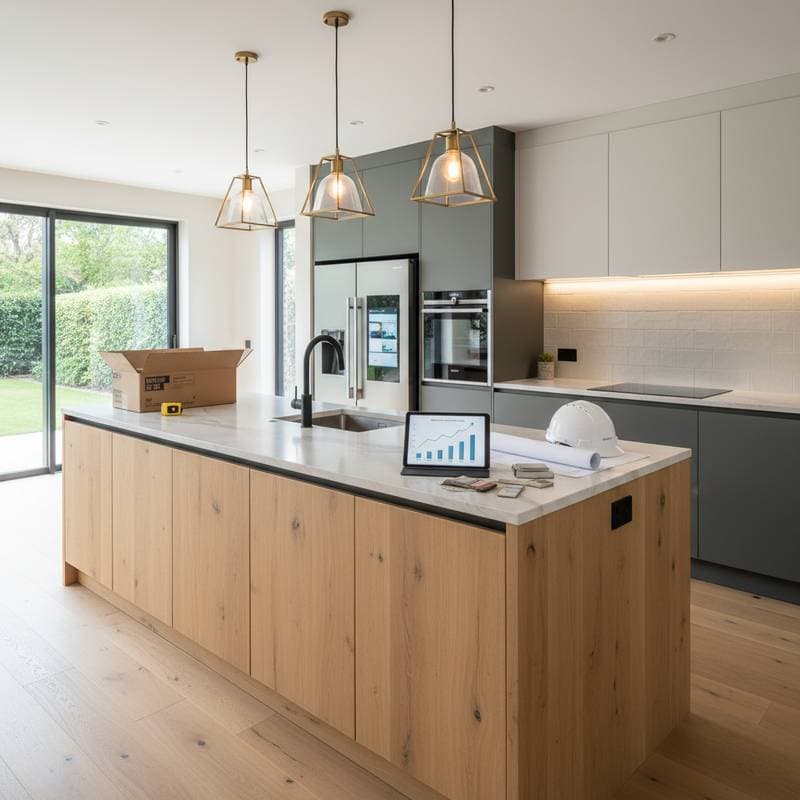
Is a 2026 Kitchen Island Worth It? Costs vs. ROI Breakdown
Summary Box
National average cost: $5,800
Typical range: $3,000 to $10,500
Low end and high end: $1,200 for a small stock island to $18,000 for a custom built unit with stone top and plumbing
Time to complete: 2 to 7 days for installation, 3 to 6 weeks with custom fabrication
DIY or Pro: DIY possible for freestanding or prefab units, pro required for electrical, plumbing, or structural tie-ins
ROI or resale impact: 60 to 75 percent return on investment for midrange projects
Updated: March 2026
A kitchen island transforms functionality and aesthetics in the space. It provides additional preparation area, seating options, and storage solutions. The island also serves as a central element that enhances overall layout and circulation. However, the financial return varies based on dimensions, design elements, and material quality. Homeowners considering a kitchen renovation in 2026 must evaluate expenses alongside potential value added before proceeding.
Cost Factors
Scope and Size
A compact, mobile island featuring open shelving incurs lower expenses compared to an integrated model with drawers, electrical outlets, and plumbing features. Expanding the surface area often increases costs proportionally, particularly when accounting for additional countertop material and installation labor.
Material Grade and Finish
Budget-friendly options include laminate surfaces paired with medium-density fiberboard bases. Premium selections such as quartz, granite, or butcher block elevate the price. Custom painting, intricate trim work, and ornamental panels extend labor requirements.
Site Conditions and Accessibility
Confined kitchen spaces or irregular flooring complicate the installation process. Modifying electrical systems or damaging existing floors during setup adds significant time. Homes with slab foundations face higher costs for plumbing adjustments than those with crawl spaces.
Labor Market and Season
Peak seasons like spring and summer drive up contractor fees due to increased demand. Off-peak periods, such as winter, typically offer reduced rates. Labor costs in urban areas surpass rural equivalents by 20 to 40 percent.
Custom Work and Change Orders
Features like integrated seating, cascading countertops, or embedded appliances demand exacting craftsmanship. Any alterations from the original specifications contribute extra fabrication time and on-site adjustments.
How To Save Without Regret
Practical Substitutions
- Select prefabricated cabinets enhanced with quality hardware rather than bespoke cabinetry.
- Opt for mid-tier quartz or butcher block surfaces over luxury marble.
- Omit sinks or cooktops to bypass costly plumbing or ventilation modifications.
Sequence and Prep That Reduce Labor Hours
Complete flooring installation beneath the island prior to assembly to prevent subsequent edge repairs. Finalize electrical and lighting configurations before countertop production to ensure accurate cutouts.
Off-Season Timing or Batch Projects
Schedule installation during quieter months when contractors apply labor discounts. Pair the island addition with complementary tasks, such as kitchen repainting or backsplash replacement, to distribute setup expenses.
Compare at Least Three Quotes and What to Ask
Employ a detailed checklist to assess proposals systematically.
Quote Comparison Checklist
- Scope detailed item by item
- Materials specified by grade and brand
- Surface preparation and cleanup encompassed
- Permit and disposal fees incorporated
- Warranty conditions and schedule outlined
- Payment terms linked to project milestones
Request sketches, surface material samples, and firm timelines from each bidder. Steer clear of aggregated estimates lacking precise labor breakdowns.
Step By Step or Hiring Guide
If DIY
Safety Warning
Avoid handling electrical or plumbing integrations without proper licensing. Disconnect power sources prior to any cutting. Utilize eye protection during countertop fabrication.
Tool List
Required Tools
- Circular saw or jigsaw
- Drill and driver set
- Tape measure and level
- Clamps and square
- Stud finder
- Safety glasses and gloves
Optional Helpers
- Power sander for surface preparation
- Countertop suction cups for handling stone
Safety Gear
- Gloves, dust mask, and knee pads
Step Sequence
- Plan Layout. Outline the island's footprint on the floor using painter's tape. Ensure at least 36 inches of clearance on all sides for movement.
- Check Subfloor. Assess and level the surface as necessary. Reinforce with shims beneath the cabinet base for stable footing.
- Assemble Base. Fasten cabinet units together using screws along face frames. Secure the assembly to the floor via brackets.
- Run Wiring and Plumbing (Pro Step). Engage licensed professionals to install outlets and supply lines before placing the countertop.
- Set Countertop. Perform a trial fit without adhesive. Apply bonding agent or silicone sealant, then position and clean joints.
- Install Trim and Panels. Attach side panels, toe kicks, and moldings. Sand surfaces and apply finish as required.
- Add Hardware and Accessories. Fix handles, towel racks, or overhang supports for seating.
- Inspect and Test. Verify operation of drawers, electrical outlets, and plumbing fixtures.
If Hiring a Contractor
Vetting Checklist
- Confirm licensing and insurance coverage.
- Review references from comparable island installations.
- Examine proposed drawings and material schedules.
- Clarify responsibility for permits and inspections.
- Inquire about protection measures for existing surfaces.
- Establish payments tied to key stages: base assembly, countertop placement, and final completion.
A comprehensive contract must specify countertop composition, edge detailing, outlet quantities, and waste management. Retain 10 percent of payment until walkthrough approval.
Maintenance and Lifespan
Care Routines
Address spills promptly, particularly on stone or wood surfaces. Employ cutting boards to minimize scratches. Reapply sealant to natural stone annually or biennially. Adjust drawer hardware and hinges seasonally.
Common Failures and Early Warnings
Shifting base cabinets signal insufficient securing. Fractured grout or widening seams indicate moisture fluctuations or unstable foundations. Intermittent lighting points to faulty wiring.
When to Repair vs Replace
Surface imperfections respond well to sanding and refinishing. Extensive issues, such as moisture-induced cabinet swelling or countertop delamination, necessitate full replacement for durability.
Making It Happen
Incorporating a kitchen island involves balancing utility and economics. Optimal returns arise from designs that harmonize with the existing kitchen's proportions and materials. Excessive scale in a standard home seldom recoups investment, while minimalism in upscale settings may appear incomplete.
Assess daily routines to guide decisions. Frequent meal preparation or hosting warrants expansive surfaces with seating for ongoing benefits. Infrequent use favors compact, portable units at reduced expense. Reference the outlined cost parameters to establish a feasible budget, then solicit bids with defined specifications.
Midrange configurations featuring resilient materials and essential electrical integration offer the ideal cost-value equilibrium. Such additions enhance resale appeal by presenting a practical focal point that streamlines activities. Align materials with adjacent counters and flooring for a seamless, intentional appearance.
Prioritize accurate measurements, utility assessments, and material confirmations prior to procurement. Thoughtful preparation streamlines execution, minimizes revisions, and ensures enduring performance.