Luxury Vinyl Plank vs. Hardwood: A 2026 Cost Comparison
Homeowners weighing luxury vinyl plank against hardwood flooring encounter decisions that surpass simple upfront expenses. Both options deliver resilience, visual appeal, and enduring worth, but their economic and functional distinctions significantly impact total ownership costs. By examining installation methods, expense breakdowns, and upkeep demands, individuals can pinpoint the selection that aligns with their household needs and financial plans.
Understanding the Materials
Luxury vinyl plank, known as LVP, represents an engineered solution that mimics genuine wood appearance while resisting moisture and abrasion. It features layered construction, such as a protective wear layer, printed design film, and a stable core that may be rigid or flexible. Hardwood flooring derives from solid timber planks or engineered assemblies with authentic wood veneers atop plywood bases. These choices cater to varied priorities, including genuine texture for enhanced resale appeal or simplified care for everyday convenience.
Assessing these floors requires attention to both raw materials and skilled workmanship. Store prices reveal only initial outlays. The full economic view incorporates subfloor readiness, material transport, padding additions, and final treatments.
Initial Costs Breakdown
Luxury Vinyl Plank (LVP)
- Material expenses: $2.50 to $5.50 per square foot for standard selections, escalating to $8 for premium variants
- Labor for installation: $2 to $3.50 per square foot from certified professionals
- Padding and add-ons: $0.50 to $1 per square foot
Hardwood Flooring
- Material expenses: $5 to $10 per square foot for common varieties, up to $14 for rare species
- Labor for installation: $4 to $7 per square foot using nailing or adhesive techniques
- Sanding, staining, and sealing: $1.50 to $3 per square foot
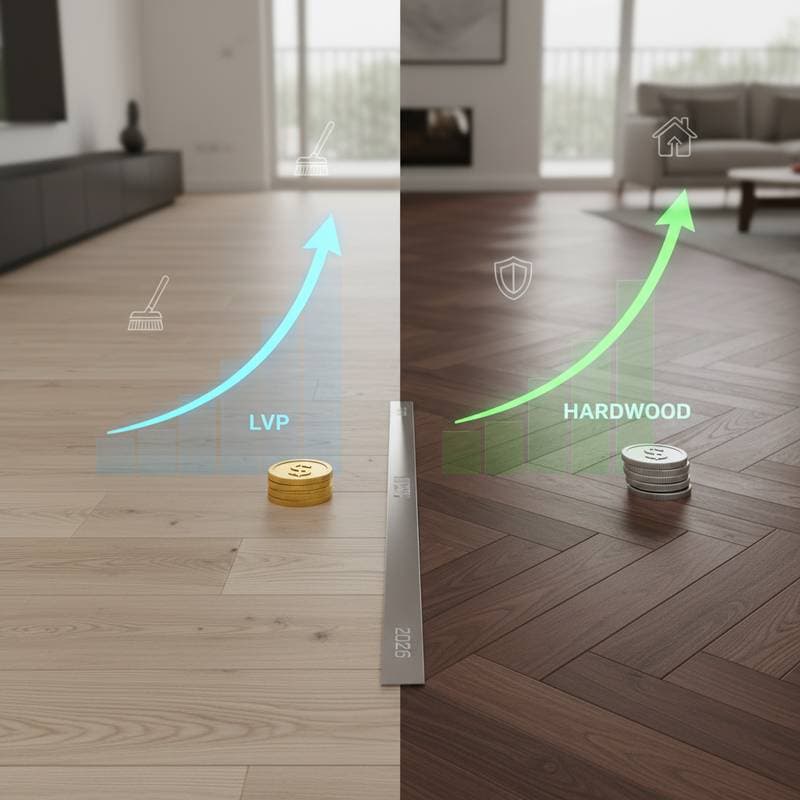
LVP often presents clear initial economies. However, gaps diminish when advanced vinyl meets entry-level hardwood. Consider durability spans, refinishing intervals, and market value effects to gauge comprehensive benefits.
Installation Process Overview
1. Consultation and Measurement
Homeowners start with on-site evaluations or style discussions. Trusted specialists furnish detailed quotes distinguishing labor, supplies, and preparatory work.
2. Site Inspection
Experts check subfloor stability, dampness indicators, and edge transitions. Hardwood demands precise humidity assessments to avert buckling risks. LVP requires even, debris-free foundations.
3. Agreement and Timeline
Upon estimate acceptance, teams procure components and confirm dates. Initial payments range from 30 to 50 percent, subject to company policies.
4. Execution Phase
LVP setups conclude in days via interlocking mechanisms with sparse glue use. Hardwood projects span a week or more, incorporating on-site finishing steps.
5. Completion Review
Professionals conduct final checks for adherence to standards. Hardwood surfaces demand curing time before full activity, whereas LVP supports prompt use.
Exclusions and Potential Add-On Fees
Standard proposals omit subfloor fixes, item relocation, and waste removal. Dampness barriers or noise-reduction underlays incur extra charges. Hardwood acclimation waits may elevate labor totals. LVP guarantees typically disregard harm from unsuitable cleaners or item shifts. Scrutinize contract details to sidestep unexpected conflicts.
Ongoing Financial Considerations
Ownership expenses persist after setup. Hardwood endures for generations with diligent care, though refinishing incurs repeated costs. Schedule expert resurfacing every decade at $3 to $5 per square foot, varying by wear and coating choices. LVP resists refinishing and necessitates complete renewal upon visible degradation.
For property sales, hardwood draws purchasers valuing tradition and stamina. LVP suits rentals or wet zones where wood falters. Returns hinge on dwelling category, region, and audience tastes.
Cost Comparison Table
| Category | Material Cost | Installation Cost | Expected Lifespan | Key Drawbacks |
|---|---|---|---|---|
| Basic LVP | $2.50 - $5.50 | $2 - $3.50 | 15 - 25 years | No refinishing, heat sensitivity |
| Advanced LVP | $6 - $8 | $2.50 - $4 | 20 - 30 years | Synthetic feel, modest resale boost |
| Basic Hardwood | $5 - $10 | $4 - $7 | 30 - 50 years | Refinishing needs, moisture vulnerability |
| Premium Hardwood | $10 - $14 | $5 - $8 | 40 - 60 years | Elevated upfront outlay, extended setup |
Estimates assume expert work without relocation, demolition, or major subfloor adjustments.
Framework for Choosing Based on Costs
Select between LVP and hardwood by assessing these six elements:
- Financial Room: Assess capacity for larger starting investments versus economical starts.
- Tenure Plans: Long-stay residents benefit from hardwood endurance; brief owners favor LVP simplicity.
- Upkeep Readiness: Hardwood involves resurfacing and climate management; LVP demands basic sweeps.
- Design Choices: Hardwood provides natural variations; LVP ensures consistent looks and spill resistance.
- Market Appeal: Gauge local buyer preferences for authenticity or versatility.
- Site Factors: Opt for LVP in humid spots like laundry rooms; reserve hardwood for dry interiors.
These aspects shape expenses and overall contentment.
Safeguards and Buyer Rights
Confirm contractor credentials, liability protection, and guarantees prior to commitment. Contracts shall outline product specifications, techniques, and site restoration duties. Steer clear of oral promises or ambiguous terms. Analyze warranty scopes, as LVP and hardwood protections vary. Suppliers commonly cover only manufacturing flaws, not reinstallation labor.
For hardwood, ensure adherence to acclimation protocols and secure fastening methods. For LVP, verify wear layer depth—at least 12 mil for homes or 20 mil for busy areas.
Sustaining Performance Through Care
Hardwood Maintenance
- Regulate indoor humidity within advised ranges to minimize dimensional changes
- Apply protective pads beneath furniture legs to guard against marks
- Renew coatings at intervals with matching products to sustain protection
Luxury Vinyl Maintenance
- Employ endorsed cleaners to safeguard the top layer
- Prevent sliding heavy loads that risk gouges or rips
- Swap out affected sections piece by piece to prolong service life
Consistent habits profoundly affect lifetime expenses. Oversight can halve durability, positioning upkeep as essential budgeting.
Maximizing Returns on Your Flooring Investment
LVP and hardwood each excel in distinct scenarios, matching varied economic strategies. LVP delivers adaptability, swift placement, and reduced care burdens, ideal for budget-conscious updates.
Secure optimal outcomes by balancing setup costs with future outlays and personal aims. Through methodical review, precise planning, and informed selections, homeowners secure floors that harmonize elegance with fiscal wisdom.