2026 Flood-Proofing Costs: Prepare Your Home Today
Flood-proofing safeguards a home against rising water through methods such as sealing entry points, elevating structures, or redirecting water flow. These upgrades mitigate risks of structural failure, mold proliferation, and potential lapses in insurance coverage. Homeowners typically invest between $3,000 and $28,000 in flood-proofing projects, with expenses varying based on geographic location, foundation design, and assessed flood risk.
Key Overview
Definition:
A collection of modifications designed to exclude water or minimize internal flood damage.
Importance:
These measures avert expensive repairs, enhance occupant safety, and often qualify for reduced insurance premiums.
Average Expense:
$3,000 to $28,000, though comprehensive elevation efforts may exceed $100,000.
Professional Involvement:
Essential for alterations affecting structure, electrical components, or installations needing permits, such as flood vents.
Project Duration:
One day for basic sealing; up to several weeks for elevation or extensive drainage installations.
Upkeep Schedule:
Examine seals, sump pumps, and drainage features biannually and following significant rainfall events.
Core Mechanisms of Flood-Proofing
Effective flood-proofing employs layered strategies to address vulnerabilities:
- Foundation Sealing: Apply waterproof membranes or specialized coatings to walls and footings, creating a barrier against moisture penetration.
- Enhanced Drainage: Install French drains, sump pumps, or adjust site grading to channel water away from the building's base.
- Flood Vents: Incorporate engineered openings in crawl spaces or enclosures to allow water passage, thereby equalizing hydrostatic pressure and avoiding structural breaches.
- Backflow Prevention Valves: Equip plumbing with one-way valves to block sewage reversal during high-water incidents.
- Structural Elevation: Lift the entire home or vital utilities above anticipated flood elevations using hydraulic or manual jacking techniques.
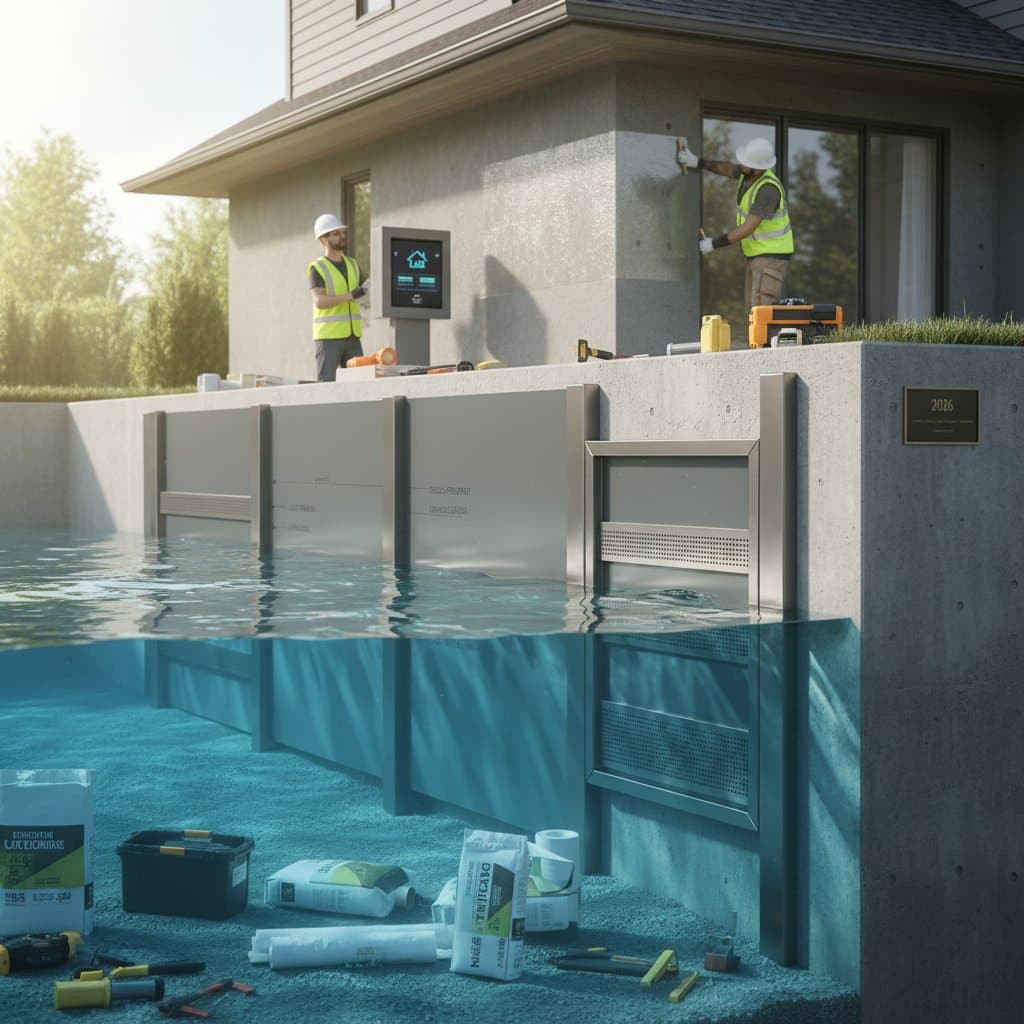
- Protective Barriers: Deploy temporary flood shields or permanent retaining walls at vulnerable access points like doors, garages, and windows.
Integrating multiple approaches fortifies the property against diverse flood scenarios, from minor overflows to severe inundation.
Detailed Implementation Guide
Follow these steps to execute a flood-proofing project systematically:
- Conduct Risk Evaluation: Engage a certified floodplain manager or structural engineer to analyze flood maps, soil permeability, and elevation data specific to the property.
- Develop Plans and Secure Approvals: Decide on dry flood-proofing (keeping water out) versus wet (allowing controlled entry). Obtain necessary permits for any modifications impacting drainage or structure, as mandated by local regulations.
- Choose Approved Materials: Select products certified for flood resistance, including coatings, valves, and barriers that meet Federal Emergency Management Agency standards for durability and performance.
- Site Preparation: Remove obstructing vegetation, mend foundation cracks with hydraulic cement, and regrade soil to ensure a minimum two percent slope directing water from the foundation.
- System Installation: Coat surfaces with elastomeric sealants, position sump pumps in basements with battery backups, integrate flood vents per manufacturer spacing guidelines, and fit backflow valves to sewer lines.
- Verification Testing: Use controlled water introduction via hoses or portable pumps to validate the integrity of seals, functionality of drains, and operation of valves.
- Establish Maintenance Routine: Schedule inspections prior to rainy seasons, clean debris from drains, and reapply sealants to exposed areas as wear becomes evident.
This process ensures compliance, effectiveness, and longevity of the flood-proofing investment.
DIY Options Versus Professional Services
| Aspect | DIY Approach | Professional Approach |
|---|---|---|
| Expertise Needed | Suitable for intermediate tasks like sealing and basic grading | Required for complex elements such as drainage networks, vent installations, and full elevations |
| Safety Considerations | Moderate hazards in confined spaces like basements | Elevated risks during heavy lifting or excavation; demands certified safety protocols |
| Equipment Demands | Basic tools including drills, trowels, portable pumps, and sealant applicators | Specialized machinery like excavators, concrete cutting saws, and precision leveling lasers |
| Regulatory Requirements | Generally exempt for surface-level sealants | Permits mandatory for subsurface drains, vents, or structural adjustments |
| Timeline | 1 to 3 days for straightforward applications | 1 to 4 weeks, accounting for planning, execution, and inspections |
| Guarantee Provisions | Minimal coverage; relies on product warranties | Standard 1- to 5-year warranties from licensed providers |
Professionals are indispensable for projects involving load-bearing elements, electrical integrations, or communal drainage systems to avoid liability issues and ensure code adherence.
Longevity and Ongoing Care
Flood-proofing components require consistent attention to sustain performance:
- Sealants and Membranes: Renew applications every 5 to 10 years, or immediately post-flood exposure to restore barrier efficacy.
- Sump Pumps: Perform monthly operational tests with water loads; replace units every 7 to 10 years to prevent failure during critical events.
- Drainage Lines and Vents: Clear accumulations biannually using high-pressure rinses to maintain unobstructed flow paths.
- Barrier Systems: Check seals, hinges, and anchoring points seasonally, repairing any corrosion or wear to uphold defensive capabilities.
Diligent maintenance extends system lifespan to decades while upholding standards for insurance eligibility and property protection.
Common Questions
Is flood-proofing necessary with existing insurance?
Insurance reimburses post-damage losses but does not prevent them; moreover, frequent claims may increase rates significantly. Proactive flood-proofing minimizes disruptions and financial burdens.
What factors most influence project costs?
Location-specific risks, home size, and chosen methods drive expenses; for instance, elevating a multi-story structure in a high-risk zone incurs higher fees than sealing a low-risk single-level home.
Can flood-proofing increase property value?
Yes, documented upgrades appeal to buyers in flood-prone areas, potentially boosting resale prices by 5 to 10 percent through enhanced resilience and lower perceived risks.
Securing Your Investment Through Flood Resilience
Implementing flood-proofing in 2026 positions homeowners to confront escalating climate threats with confidence. These targeted investments not only shield against immediate dangers but also yield substantial long-term savings on repairs and premiums. Consult local experts to tailor a plan that aligns with your property's unique profile, ensuring enduring protection and peace of mind.