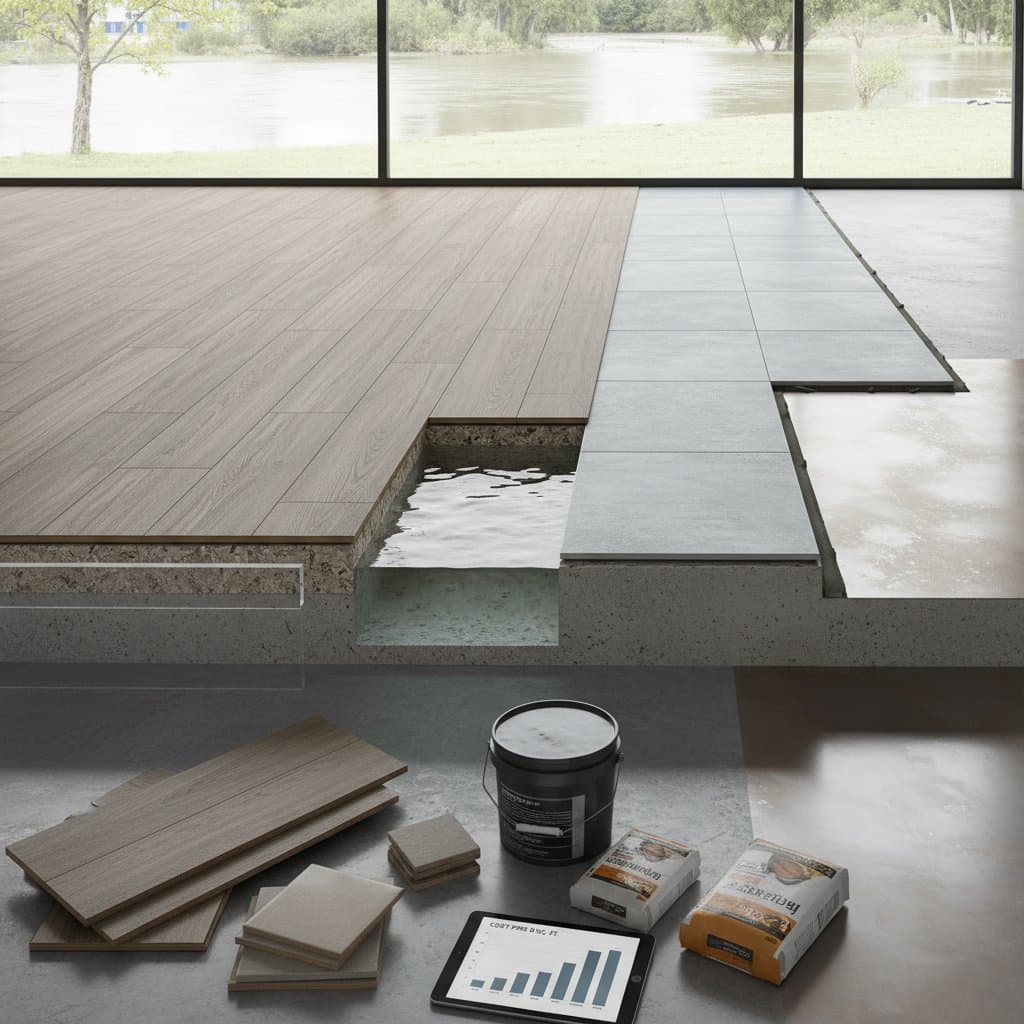
Protect Your Home: Flood-Resistant Flooring Costs
Summary Box
What it is: Flood-resistant flooring withstands water exposure without warping, rotting, or developing mold.
Why it matters: This type of flooring safeguards homes from expensive damage caused by floods or plumbing failures and reduces future repair expenses.
Typical cost and what changes it: The national average ranges from $4 to $25 per square foot installed, influenced by the chosen material, subfloor preparation, and inclusion of moisture barriers.
When to hire a pro: Engage a licensed installer for concrete coatings, epoxy applications, or tile installations, particularly in areas prone to frequent flooding or with uneven subfloors.
How long it takes: Installation requires one to five days, varying by total square footage and necessary drying periods.
Maintenance interval: Perform monthly cleaning and reseal or recoat every five to ten years, based on the specific material.
Anatomy of Flood-Resistant Flooring
Flood-resistant flooring functions as a layered system rather than a single product. Each component contributes to overall water resistance.
1. Subfloor: This forms the structural foundation, typically plywood or concrete. Ensure it remains dry, level, and sealed prior to any installation.
2. Moisture barrier: Install a plastic sheet or resin membrane to block water vapor transmission. This layer stops moisture from rising into the upper flooring components.
3. Adhesive or underlayment: Certain systems incorporate waterproof adhesives or foam underlayments that offer cushioning and noise reduction.
4. Finished surface: The top layer provides the aesthetic and functional finish. Popular options encompass vinyl planks, ceramic tiles, polished concrete, and epoxy coatings.
5. Sealant or finish coat: Apply this to shield edges and seams against water infiltration while enhancing longevity.
Failure in any layer allows water to infiltrate and cause concealed structural issues. Focus on meticulous installation and sealing to maintain integrity.
Step-by-Step Process
1. Inspect and dry the subfloor.
Measure moisture levels to confirm they fall below 12 percent for wood subfloors or that concrete has fully cured. Employ a reliable moisture meter for accurate assessment.
2. Apply or install a moisture barrier.
Use plastic sheeting, liquid membranes, or epoxy sealers to halt vapor movement. Overlap seams by a minimum of six inches and secure with tape for complete coverage.
3. Prepare edges and transitions.
Fill gaps along walls, drains, and door thresholds using silicone or waterproof caulk. Effective edge sealing blocks pathways for water to enter beneath the flooring.
4. Lay the flooring material.
Adhere to manufacturer specifications regarding spacing, adhesive application, or click-lock mechanisms. Maintain clear expansion joints, especially for tiles and vinyl products.
5. Seal seams and finish.
Add a waterproof topcoat or grout sealer to create a protective barrier. This step ensures surface-level moisture cannot penetrate.
6. Allow cure or set time.
Respect the curing duration specified for each material. Refrain from foot traffic or cleaning until the surface achieves full hardness.
DIY vs Pro
| Factor | DIY | Professional |
|---|---|---|
| Skill level | Intermediate for vinyl; advanced for tile or epoxy | Certified installer equipped with specialized moisture testing equipment |
| Safety risk | Moderate, involving chemical handling and heavy lifting | Managed through professional safety protocols and ventilation systems |
| Tools required | Basic saw, trowel, roller, and moisture meter | Industrial grinder, mixing tools, and high-grade commercial sealers |
| Permit or code | Generally not required | Often necessary for slab waterproofing, including potential inspections |
| Time required | 2 to 5 days | 1 to 3 days for efficient completion |
| Warranty impact | Often limited or voided | Preserves full manufacturer warranty coverage |
DIY suits small-scale projects in straightforward rooms. Opt for professional services in basements, expansive areas, or properties with prior flood history. Experts verify that barriers and sealants comply with building codes and product guidelines.
Maintenance and Lifespan
With proper care, flood-resistant flooring endures 10 to 50 years, contingent on the material and maintenance routine.
Vinyl planks typically require replacement after 15 to 20 years. Clean them using a mild detergent solution and reseal joints when wear appears.
Ceramic tiles often exceed 40 years of service. Reapply grout sealer every two to five years to avoid discoloration and cracking.
Epoxy coatings last 10 to 20 years, depending on wear levels. Schedule recoating once the surface loses its sheen or becomes dull.
Polished concrete offers indefinite durability when resealed every five to ten years.
Incorporate daily spill removal, monthly damp mopping, and regular checks of seams and caulk. Effective mold prevention relies on thorough drying after each cleaning session.
FAQs
1. What makes flooring flood-resistant?
Waterproof materials combined with sealed seams prevent absorption and structural degradation.
2. Can I install flood-resistant flooring over existing tile or vinyl?
Installation is possible over dry, clean, and level surfaces. Consult manufacturer guidelines to confirm adhesive compatibility.
3. Do I need a moisture barrier over concrete?
Concrete permits moisture absorption, so a barrier is essential to protect overlying layers from vapor damage.
4. How do I clean flood-resistant floors after a flood?
Apply a disinfecting bleach solution or approved cleaner, followed by thorough drying using fans and dehumidifiers.
5. Are these floors slip-resistant?
Many options, such as textured vinyl, rubber underlays, and certain tiles, feature built-in slip resistance. Add grit to epoxy mixes for enhanced traction.
6. Will insurance cover flood-resistant flooring?
Reimbursement varies by policy terms. Standard flood insurance frequently covers materials certified for flood resistance.
7. Can radiant heat be used under flood-resistant floors?
Most vinyl and tile varieties accommodate radiant heating systems when paired with appropriate insulation and waterproof membranes.
8. How long before I can walk on a new epoxy floor?
Foot traffic becomes safe after two to three days, once the final coat attains full hardness.
Making It Happen
Selecting flood-resistant flooring serves as a strategic safeguard and enhances property value. Begin with subfloor moisture testing to identify needs. Align material choices with local climate conditions; opt for sealed tile or epoxy in flood-prone regions. Luxury vinyl planks provide an economical, comfortable solution for moderate moisture risks. Sustain performance through consistent cleaning, sealant upkeep, and seasonal edge inspections.