Understanding the Two Core Solar Warranties
Solar energy systems represent a significant investment in sustainable power. To ensure long-term reliability, manufacturers offer two primary warranties: the equipment warranty and the performance warranty. These protections address different aspects of your system, from physical components to energy production efficiency.
The equipment warranty covers the hardware itself, including solar panels, inverters, and mounting structures. This coverage typically spans 10 to 25 years and protects against defects in materials and workmanship. If a panel cracks due to manufacturing flaws or an inverter fails prematurely, the manufacturer replaces or repairs the item at no cost to the owner.
In contrast, the performance warranty focuses on the system's output over time. It guarantees that panels will produce at least 80 to 90 percent of their original capacity after 25 years. This warranty ensures your solar array maintains efficiency, safeguarding the financial benefits of reduced energy bills.
Key Coverage Details and Limitations
Both warranties come with specific terms that owners must understand. The equipment warranty often excludes damage from natural disasters, improper installation, or neglect. For instance, hail impacts or flooding may require separate insurance claims rather than warranty service.
Performance warranties measure output through annual degradation rates, usually around 0.5 percent per year. Testing involves professional assessments using tools like irradiance meters to verify production levels. If output falls below the guaranteed threshold, the manufacturer compensates with new panels or a monetary equivalent based on lost energy value.
Transferability adds flexibility for homeowners. Most warranties transfer to new owners upon property sale, provided documentation is updated and an inspection confirms system condition. Review the fine print, as some require notification within 30 days of the sale.
Maintenance Practices to Preserve Warranty Validity
Regular upkeep plays a vital role in maintaining warranty coverage. Manufacturers mandate specific actions to prevent voiding protections. Neglect can lead to denied claims, resulting in expensive out-of-pocket repairs.
Schedule annual professional inspections to check for issues like loose connections, corrosion, or shading from overgrown vegetation. These visits ensure components function optimally and document compliance with warranty terms.
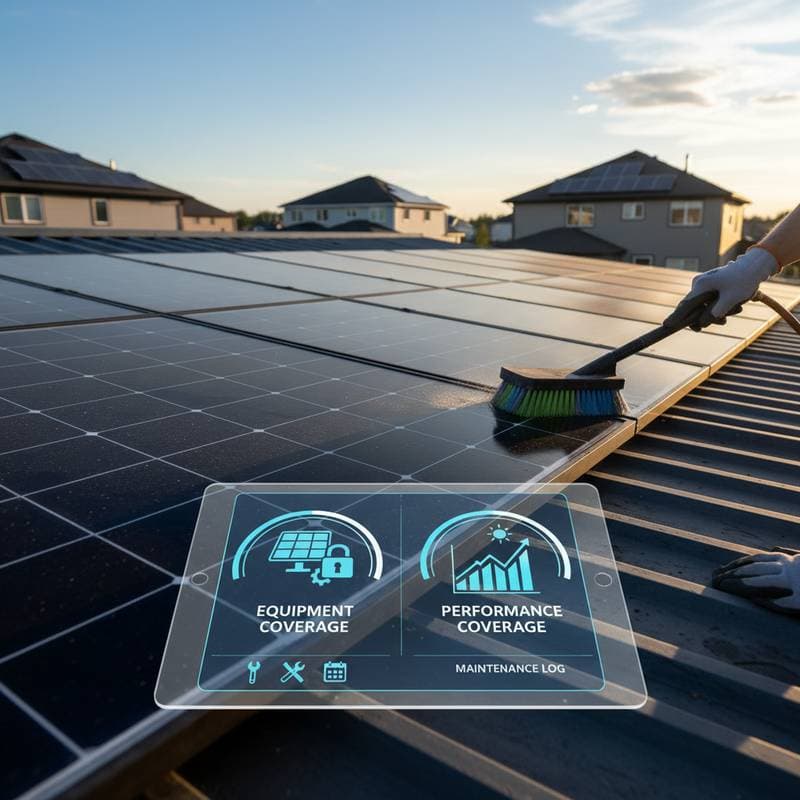
Cleaning panels requires care to avoid damage. Use soft brushes and manufacturer-approved solutions, typically water with mild detergent. Avoid high-pressure washers or abrasive materials that could scratch surfaces and compromise seals.
Consider a preventive maintenance contract for added assurance. Such agreements provide scheduled inspections, minor repairs, and performance monitoring. This service keeps records that support warranty claims and extends system lifespan.
Common Pitfalls and How to Avoid Them
Many owners encounter surprises due to overlooked details. Installer bankruptcy poses a risk, but manufacturers generally honor component warranties directly. Contact the original equipment supplier with proof of purchase to initiate service.
DIY modifications can invalidate coverage. Altering the system without approval, such as adding unapproved accessories, may void protections. Always consult certified professionals for upgrades or expansions.
Monitor system performance monthly through inverter displays or monitoring apps. Sudden drops in output signal potential problems, like bird debris or inverter faults. Address these promptly to stay within warranty guidelines.
FAQs
Does cleaning panels void the warranty?
No, provided you adhere to manufacturer guidelines and use gentle methods. Harsh chemicals or mechanical abrasion can damage coatings, leading to denied claims.
What happens if the installer goes out of business?
Reach out to the equipment manufacturer. They typically uphold warranties on their products independently of the installer's status.
Can warranties transfer to a new homeowner?
Yes, in most cases. Submit a transfer request with sale documents and arrange an inspection to verify system integrity.
Steps to Secure Your Solar Investment
Gather all solar documentation, including warranty certificates and installation reports. Note key dates, such as coverage start and expiration, in a dedicated file or digital calendar.
Arrange an initial professional review if your system has operated for over a year without service. This assessment identifies any emerging issues and updates maintenance logs.
Track energy production against expected levels. If discrepancies arise, document them with photos and readings to strengthen future warranty interactions.
By prioritizing these practices, owners preserve warranty benefits and enjoy sustained energy savings. A well-maintained solar system delivers reliable performance, contributing to both environmental goals and financial security for decades.