2026 Kitchen Island Costs: Key Factors by Size and Materials
Project Overview
National average cost: $5,200
Typical range: $3,000 to $10,500
Low end: $1,200 for prefabricated units or basic do-it-yourself assemblies
High end: $18,000 or more for bespoke designs featuring luxury stone surfaces and integrated appliances
Completion time: 3 to 10 days, varying with fabrication and setup demands
Do-it-yourself or professional: Basic stock cabinet and simple surface installations suit do-it-yourself efforts; plumbing, electrical modifications, and stone work demand professional expertise
Return on investment and resale value: Strong market appeal in property sales, with returns typically ranging from 55% to 70%
Last updated: March 2026
Elements Influencing Costs
Multiple factors determine the price of a kitchen island. These elements impact material selections as well as labor requirements.
- Dimensions and configuration. Expansive islands demand additional cabinetry, greater countertop areas, and potential floor strengthening. Standard sizes measure 4 feet by 6 feet; configurations exceeding 5 feet by 8 feet enter custom territory with elevated pricing.
- Material quality and surface treatments. Budget-friendly options include laminate surfaces paired with medium-density fiberboard cabinetry. Upgrades to solid wood fronts, plywood construction, and natural stone countertops increase expenses while extending durability.
- Countertop materials. Quartz and granite dominate premium selections. Alternatives such as butcher block, concrete, or solid-surface composites offer diverse pricing and varying upkeep obligations.
- Installation environment. Confined spaces, irregular subfloors, or outdated electrical systems extend labor duration. Modern, open-plan kitchens facilitate quicker installations.
- Regional labor rates and seasonal timing. Contractors impose higher fees during high-demand remodeling periods. Scheduling in quieter seasons often yields reduced labor charges.
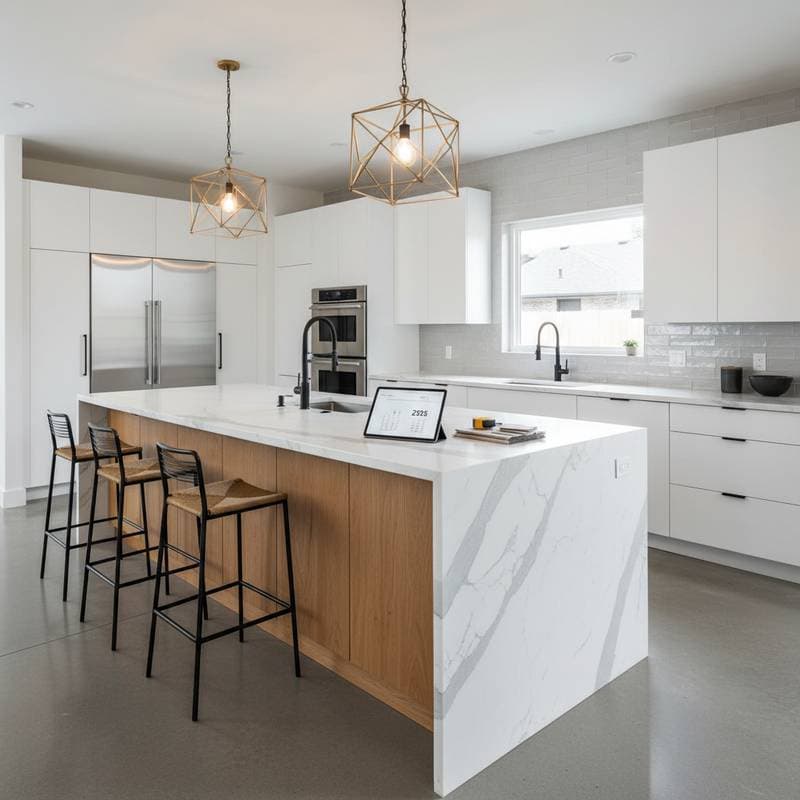
- Bespoke elements and additions. Features like cascading edges, extended seating ledges, embedded appliances, or incorporated sinks introduce added complexity and expense.
Strategies to Control Expenses Effectively
Cost-Effective Material Choices
- Opt for butcher block or solid-surface countertops over granite or quartz to reduce costs by $1,000 or greater.
- Select ready-made cabinets from major retailers instead of fully customized units. Enhance their look through painting or decorative trim applications.
- Omit integrated appliances, such as beverage coolers or microwaves, unless frequent use justifies the investment.
Preparation Steps to Minimize Labor Time
Complete flooring and wall treatments prior to island installation. Verify electrical and plumbing preparations in advance to prevent corrective work. Assemble cabinet components off-site when feasible to accelerate on-location efforts.
Timing and Project Bundling Approaches
Schedule work during regional off-peak periods for potential savings. Combine the island installation with complementary kitchen renovations to secure favorable labor negotiations.
Evaluating Contractor Proposals
Review at least three detailed estimates using this evaluation framework:
Proposal Review Framework
- Detailed breakdown of project scope
- Specification of material qualities and brands
- Inclusion of surface preparation and site cleanup
- Coverage of permitting and waste removal fees
- Clear warranty provisions and project schedule
- Milestone-based payment terms
Guide to Assembling a Standard Kitchen Island
These instructions target a straightforward island using off-the-shelf cabinets topped with laminate or butcher block. Refrain from electrical or plumbing tasks without appropriate licensing.
Prioritize Safety Measures
Shut off power at the main breaker when operating near electrical fixtures. Wear protective gloves for handling cabinetry or edged tools. Don safety eyewear during any drilling or cutting operations.
Essential Tools for the Task
Core tools:
- Power drill with assorted driver bits
- Spirit level
- Measuring tape
- Stud detector
- Circular saw or jigsaw
- Clamping devices
- Assorted screws
Supplementary items:
- Cabinet lifting jack or support braces
- Pneumatic finish nailer for moldings
- Caulking applicator
Protective equipment:
- Work gloves
- Eye protection
- Respiratory mask
Step 1: Design the Layout and Outline the Area
Assess the available space with precision. Maintain a minimum 36-inch clearance for pathways on all sides; expand to 42 inches in kitchens serving multiple users. Outline the cabinet base on the floor using masking tape to assess the arrangement.
Step 2: Secure the Cabinet Bases
Identify underlying floor joists or support structures. Fasten base cabinets with 3-inch screws or lag bolts for stability. Ensure level alignment in all orientations, employing shims for adjustments as required.
Step 3: Connect Adjacent Cabinets
Secure neighboring cabinet frames with clamps. Pre-drill holes and fasten using specialized cabinet screws through frames or side panels. Confirm uniform alignment along front edges and upper surfaces.
Step 4: Affix the Countertop
Position the surface without adhesive initially to test fit. Apply construction adhesive for laminate or wood tops, securing from below with screws where accessible. Delegate stone countertop handling to specialists or fabricators.
Step 5: Apply Finishing Details
Install side panels, toe kicks, and edge caps to achieve a seamless appearance. Seal joints with wood filler, then sand to a smooth finish. Apply paint, stain, or protective coatings as preferred.
Step 6: Complete the Installation
Incorporate handles, electrical outlets, or seating supports. Verify all components for security and evenness. Thoroughly clean all surfaces prior to utilization.
Project Timeline Considerations
Procurement durations:
- Off-the-shelf cabinets: 1 to 2 weeks
- Semi-custom orders: 4 to 6 weeks
- Fully custom fabrications: 8 to 10 weeks or extended
On-site labor estimates:
- Cabinet placement: 1 to 2 days
- Countertop measuring and production: 5 to 10 days
- Final countertop fitting and detailing: 1 day
Key verification stages:
- Electrical preliminary work before enclosing walls
- Plumbing initial setup before positioning cabinets, if a sink features
- Concluding review of all electrical, lighting, and plumbing integrations
Upkeep and Longevity Practices
Consistent maintenance preserves the island's value over time.
Daily and Periodic Care
Address spills promptly, particularly on wooden or stone surfaces. Employ cutting boards and heat pads to avoid surface damage. Reapply sealant to natural stone annually or biennially based on usage and manufacturer guidelines. Inspect and tighten fittings, along with trim components, semiannually.
Identifying Potential Issues
Separating joints in countertops signal structural shifts or water exposure. Misaligned cabinet doors indicate the need for hinge realignment or foundation stabilization. Deteriorated sealant at splashback edges requires prompt renewal to prevent water damage.
Decisions on Repairs or Replacements
Restore finishes through refinishing or repainting when structural integrity remains intact. Proceed to full replacement if cabinetry exhibits warping or failed connections. Resurface countertops viable for minor wear; replace if fractures penetrate deeply.
Enhancing Kitchen Functionality Through Smart Design
Kitchen islands deliver expanded storage, preparation areas, and casual dining options. Their true worth emerges from deliberate planning and precise execution. For your 2026 endeavor, align dimensions with household movement patterns, select resilient materials suited to daily routines, and allocate funds for production and detailing. Secure several proposals, scrutinize each project's details, and clarify task responsibilities prior to commencement.