2026 ADU Construction Costs: Essential Insights for Savvy Investments
Accessory dwelling units, commonly known as ADUs or granny flats, provide homeowners with versatile options for expanding living space and enhancing property value. These structures support multigenerational living, generate rental income, or facilitate downsizing without leaving familiar surroundings. Understanding the full scope of construction expenses proves essential before embarking on such a project. This guide examines average costs, key influencing factors, the construction sequence, common errors, and strategies for balancing professional and do-it-yourself approaches.
Detailed Cost Analysis
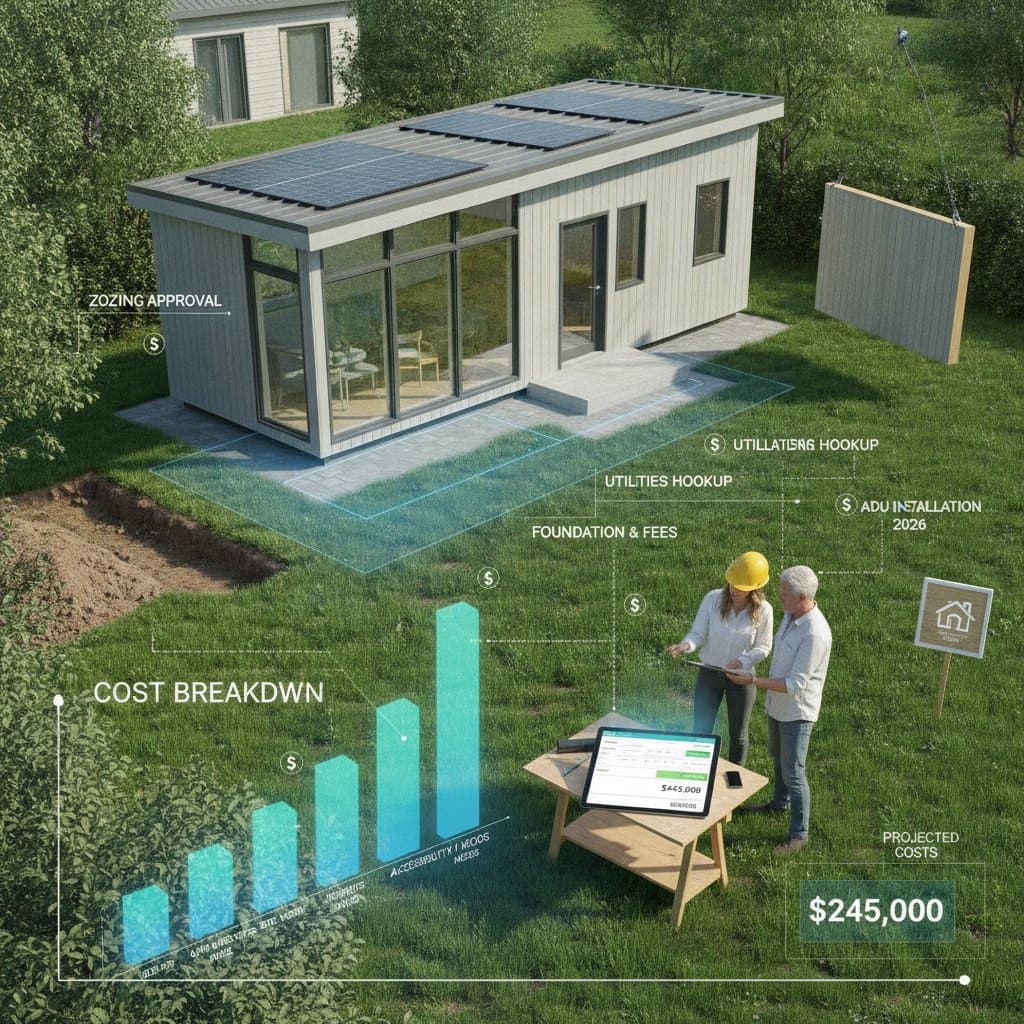
Construction expenses for ADUs vary based on unit size, location-specific challenges, and desired quality of materials and finishes. For a standard detached ADU ranging from 400 to 800 square feet, national averages position total costs between $150,000 and $300,000. Garage or attic conversions typically range from $80,000 to $180,000, as they leverage existing foundations and utilities. Prefabricated models offer entry points around $100,000, though these figures often exclude essential site preparation, utility connections, and permitting fees.
Site conditions play a pivotal role; for instance, urban areas with stringent codes may inflate expenses by 20 to 30 percent compared to rural settings. Labor rates fluctuate regionally, with coastal regions commanding premiums due to higher wages and material transport costs. Homeowners benefit from obtaining multiple quotes to identify value-driven options.
Comprehensive Cost Breakdown Table
| Scope Item | Material Cost Range | Labor Cost Range | Total Cost Range | Key Influencing Factors |
|---|---|---|---|---|
| Foundation and Slab | $10,000 - $25,000 | $8,000 - $18,000 | $18,000 - $43,000 | Soil stability, grading requirements, frost line depth |
| Framing and Exterior | $25,000 - $45,000 | $20,000 - $35,000 | $45,000 - $80,000 | Lumber market prices, roof complexity, siding durability |
| Plumbing and Electrical | $12,000 - $20,000 | $10,000 - $18,000 | $22,000 - $38,000 | Proximity to primary utilities, trenching distances |
| Interior Finishes | $20,000 - $35,000 | $15,000 - $25,000 | $35,000 - $60,000 | Appliance standards, flooring resilience, fixture selections |
| Permits, Design, and Fees | $8,000 - $20,000 | N/A | $8,000 - $20,000 | Municipal review processes, engineering certifications, impact assessments |
| Total | N/A | N/A | $150,000 - $300,000 | For a typical 400-800 sq ft detached unit |
Three Core Factors Shaping Expenses
-
Material Quality Levels: Opting for builder-grade items keeps costs lower, while premium selections like quartz countertops or energy-efficient windows increase outlays by 15 to 25 percent. Balance aesthetics with functionality to align with intended use, such as rental appeal.
-
Labor and Complexity Demands: Projects on sloped terrain or those requiring intricate utility integrations demand specialized skills, elevating labor by up to 40 percent. Modular construction methods can streamline timelines and reduce on-site labor needs.
-
Site-Specific Challenges: Factors including soil composition, utility access, and environmental regulations directly impact budgets. Conducting a preliminary geotechnical survey helps anticipate and mitigate unforeseen expenses.
Sequential Construction Guide
Approach ADU development methodically, beginning with regulatory compliance to ensure smooth progression. Allocate time for each phase to maintain momentum and control costs. Professional oversight remains crucial for adherence to building codes.
Prioritize personal protective equipment throughout the process, including sturdy work boots, heavy-duty gloves, safety glasses, and ear protection to safeguard against hazards like debris and noise.
-
Evaluate Zoning and Setback Requirements: Review local ordinances for maximum lot coverage, height restrictions, and easement conflicts. Consult municipal planners early to confirm feasibility.
-
Engage a Designer or Architect: Develop blueprints that comply with seismic, energy, and accessibility standards while harmonizing with the primary residence. Incorporate sustainable features like solar-ready roofing for future-proofing.
-
File Permit Applications: Prepare documentation for structural integrity, electrical systems, plumbing installations, and insulation efficiency. Anticipate review periods of four to eight weeks, depending on jurisdiction.
-
Site Preparation: Clear and grade the area for optimal drainage, excavate trenches for utility lines, and pour a reinforced concrete foundation. Address any erosion control measures mandated by local environmental rules.
-
Framing and Rough Utilities: Erect walls, install the roof structure, fit windows and doors, and run initial plumbing and electrical conduits. Weatherproofing at this stage prevents delays from seasonal elements.
-
Insulation and Interior Completion: Apply vapor barriers, install drywall, lay flooring, mount cabinetry, and apply finishes. Select low-VOC paints and durable materials to enhance indoor air quality and longevity.
-
Conduct Final Inspections: Schedule checks for electrical safety, plumbing functionality, and overall habitability. Secure a certificate of occupancy to enable legal use or rental.
Professional teams complete detached ADUs in three to five months, factoring in weather and supply chain variables. Conversions of existing spaces often wrap up in six to ten weeks, minimizing disruption to daily life.
Common Pitfalls and Prevention Strategies
Homeowners frequently encounter avoidable challenges that escalate expenses or compromise quality. Proactive planning counters these risks effectively.
-
Overlooking Utility Extension Expenses: Connecting to sewer, water, or power lines beyond 50 feet can add $5,000 to $15,000. Map utility routes in advance and explore on-site septic or solar alternatives where permissible.
-
Neglecting Access Pathways: Narrow routes under eight feet wide hinder equipment delivery, potentially doubling logistics costs. Widen driveways or temporary paths during planning.
-
Excessive Investment in High-End Features: Lavish elements like spa bathrooms yield diminishing returns for rental properties. Focus on versatile, mid-range upgrades that appeal to broad tenant demographics.
-
Inadequate Drainage Design: Improper sloping invites water accumulation, leading to foundation damage costing $10,000 or more in repairs. Integrate French drains or swales as needed.
-
Miscalculating Setback Distances: Encroaching on required buffers by mere inches triggers redesigns or legal variances. Use surveying tools or hire professionals for precise measurements.
Guidelines for Professional Versus Self-Managed Builds
Assess capabilities through a structured evaluation to determine the optimal involvement level. This decision influences both budget and project outcomes significantly.
-
Evaluate Skill Alignment: Determine proficiency in critical areas such as structural framing, electrical wiring, or plumbing installations. Novices risk code violations and safety issues.
-
Weigh Safety Considerations: Detached builds entail heavy lifting, height work, and utility hazards requiring certified expertise. Prioritize compliance to avoid liability.
-
Review Equipment Access: Tasks like foundation pouring demand excavators and mixers, which prove impractical for most individuals. Renting independently often exceeds professional efficiencies.
DIY efforts suit cosmetic tasks including painting, installing trim, or basic landscaping, potentially saving 5 to 10 percent on those elements. Delegate structural, electrical, and plumbing components to licensed specialists to ensure reliability. A coordinated hybrid approach, overseeing subcontractors while handling finishes, achieves 10 to 20 percent savings through diligent scheduling and vendor management.
Launching Your ADU Project Successfully
Initiate the journey by scheduling a zoning consultation with your local building authority to validate project viability. Solicit bids from at least three contractors experienced in ADU developments, confirming their licensing, insurance coverage, and references to recent completions with inspection approvals. Develop a detailed budget incorporating a 10 to 15 percent contingency for variables like material price shifts. Track progress with weekly check-ins to align timelines and resolve issues promptly. This methodical preparation positions homeowners for a rewarding addition that elevates property utility and financial returns over time.