Whole Home Generator Costs and Warranties
A whole home generator provides seamless backup power during grid outages, keeping critical systems like heating, cooling, refrigeration, sump pumps, and lights operational. The choice of system hinges on factors such as power capacity, fuel source, and warranty terms. This comprehensive guide details the full spectrum of installation costs, which typically range from $3,000 to $15,000, explores warranty variations, and outlines the value of professional involvement for optimal performance and safety.
Cost Breakdown: What Drives the Price
The total investment for a whole home generator includes equipment, labor, and ancillary expenses. Entry-level models start at around $3,000 for a basic 10- to 16-kilowatt unit suitable for smaller homes, while larger 20- to 48-kilowatt systems for expansive properties or high-demand appliances can exceed $10,000 for the generator alone. Installation labor adds $1,500 to $5,000, depending on site complexity and local rates.
Fuel type significantly influences costs. Natural gas units, which connect to existing utility lines, incur lower ongoing fuel expenses but may require a $500 to $1,500 gas line extension. Propane systems demand a tank installation costing $1,000 to $3,000, plus fuel refills at $2 to $4 per gallon. Diesel options, ideal for remote areas, feature higher upfront prices due to robust engines but offer extended runtimes.
Additional factors include permits ($200 to $800), concrete pads ($300 to $1,000), and transfer switches ($500 to $2,000). In regions with strict codes, such as coastal zones prone to storms, elevated mounting or noise barriers can push totals toward the upper end. Budget an extra 10 to 20 percent for unforeseen site preparations, like grading uneven terrain.
Pros, Cons, and Ideal Applications
Pros
- Activates automatically within 10 to 30 seconds of an outage, minimizing disruption.
- Utilizes on-site fuel sources for extended operation, often 24 to 72 hours without refueling.
- Enhances home resale value by up to 5 percent and provides reassurance in unreliable power areas.
- Supports full-home coverage or selective load management to prioritize essentials.
Cons
- Substantial initial outlay, with total costs averaging $7,000 to $12,000 for mid-sized installs.
- Demands ongoing maintenance, estimated at $200 to $500 annually.
- Necessitates regulatory approvals and may require dedicated yard space with ventilation.
- Generates noise levels of 60 to 75 decibels, potentially needing enclosures for quieter operation.
Ideal Applications: These systems suit residents in hurricane-prone or rural locales with frequent blackouts. They prove essential for households with significant electrical demands, such as electric vehicle chargers or home offices, and for those dependent on life-sustaining equipment like ventilators or dialysis machines.
Step-by-Step Installation Process
Professional installation ensures compliance with electrical and building codes, preserving warranty validity. Crews prioritize safety through personal protective equipment, including gloves, safety glasses, steel-toe boots, and hearing protection.
-
Load Assessment: A certified electrician evaluates your home's peak electrical draw using a load meter. This determines the necessary kilowatt rating, typically 16 to 22 kilowatts for average households to handle simultaneous appliance use.
-
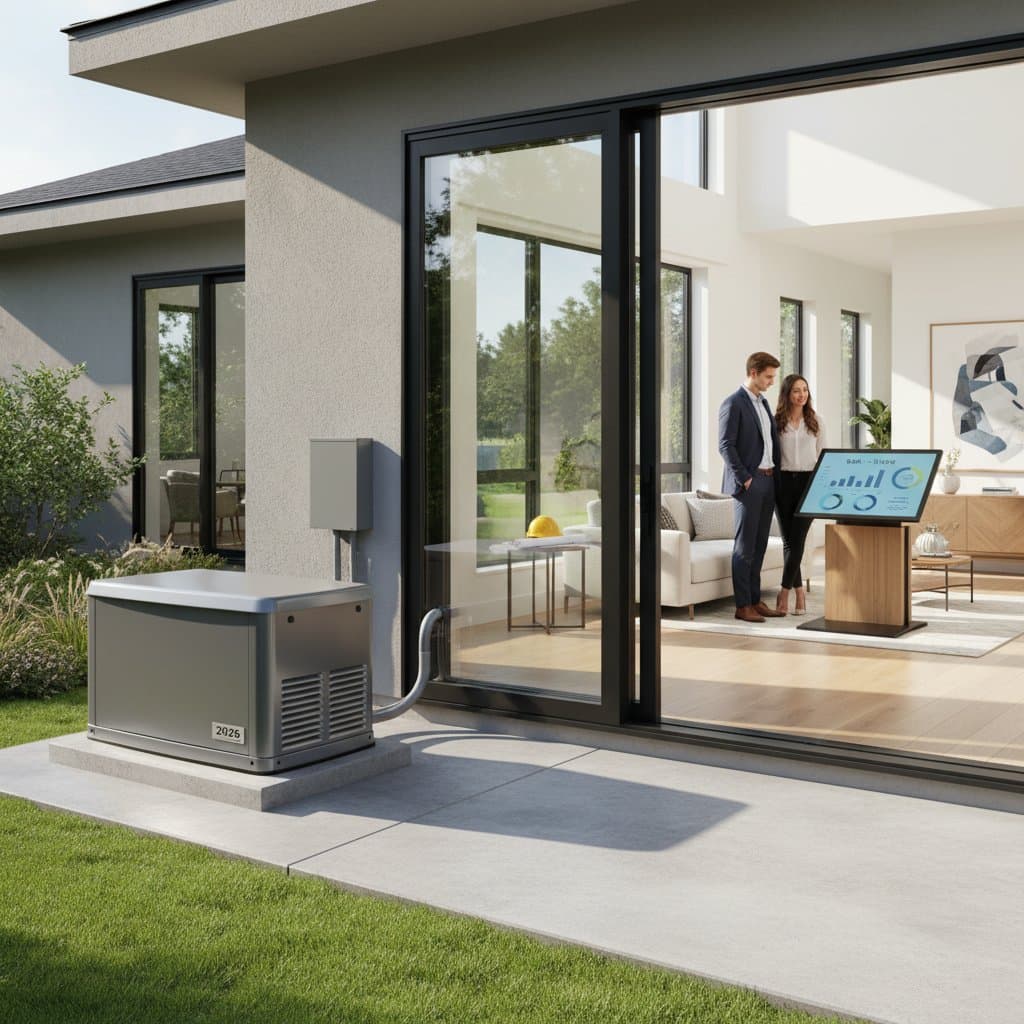
Site Selection: Identify a level, well-ventilated location at least 5 feet from windows, doors, or air intakes to comply with clearance requirements and reduce carbon monoxide risks.
-
Foundation and Fuel Preparation: Install a vibration-dampening concrete pad measuring 4 by 4 feet and at least 4 inches thick. Connect fuel lines, such as a 1-inch natural gas pipe or a 500-gallon propane tank, and confirm regulator capacity matches the generator's demand.
-
Electrical Integration: Mount an automatic transfer switch near the main service panel. Route heavy-gauge wiring from the generator to the switch, ensuring proper grounding and surge protection.
-
Commissioning and Testing: Fuel the unit, initiate a startup sequence, and simulate outages to verify seamless transfer. Technicians balance loads, adjust governor settings for stable output, and program any smart monitoring features.
Homeowners may handle preliminary tasks like clearing the site or pouring the pad under supervision, but all electrical, gas, and final connections require licensed professionals. Expect the process to span two to four days, contingent on material delivery and weather conditions.
Pitfalls to Sidestep During Setup
Selecting an undersized unit leads to frequent overloads, straining the engine and shortening its service life to under 10 years. Always factor in future expansions, like adding an electric heat pump, when calculating capacity.
Neglecting permits invites fines up to $1,000 and voids insurance coverage during claims. Local authorities mandate inspections for gas lines, electrical ties, and exhaust systems to prevent hazards.
Inadequate fuel infrastructure, such as undersized tanks, results in mid-outage failures. For propane, opt for at least 500 gallons to sustain a 20-kilowatt unit through multi-day events.
Overlooking routine upkeep causes 30 percent of failures. Neglected batteries fail to crank the engine, while clogged filters reduce efficiency and increase fuel consumption by 20 percent.
Maintenance Schedule and Expected Durability
With diligent care, a quality standby generator endures 15 to 25 years, delivering thousands of outage-free hours. Implement a structured maintenance plan to maximize reliability.
Initial Post-Installation Checks:
- Monitor oil levels after the first 20 hours of operation and top off as needed.
- Examine all connections for leaks, tightening fittings and replacing gaskets if loose.
Monthly Routines:
- Operate the generator under a simulated load for 20 to 30 minutes to circulate oil and test components.
- Remove debris from intake vents and enclosures to maintain airflow.
- Verify battery charge and inspect cables for corrosion.
Yearly Professional Service:
- Change engine oil, fuel filter, and air filter using manufacturer-specified grades.
- Inspect transfer switch contacts and clean any buildup to ensure low-resistance connections.
- Measure output voltage (typically 240 volts) and frequency (60 hertz) during loaded tests.
Long-Term Evaluation:
- At 10 years, assess engine compression and alternator integrity through diagnostic scans.
- Retire the unit if repair estimates surpass 40 percent of a comparable new model's cost, as ongoing fixes become uneconomical.
Warranties vary: Basic coverage spans 2 to 5 years on parts, with premium plans extending to 10 years including labor. Register promptly and retain service records to activate full protections against defects.
Evaluating Contractor Bids
Focus on comprehensive proposals rather than the lowest bid to avoid hidden expenses. Use this framework to compare options side by side.
| Line Item | Specification or Scope | Contractor A | Contractor B | Contractor C | Variance Notes |
|---|---|---|---|---|---|
| Generator Capacity | 22 kW natural gas unit | Included | Included | 20 kW propane | Mismatch in size and fuel may alter runtime |
| Site Preparation | 4-inch concrete pad, 20-foot gas trench | Included | Included | Omitted | Additional $800-$1,200 for trench work |
| Transfer Switch | 200-amp automatic with surge protection | Included | Included | Included | Standard across bids |
| Permits and Inspections | Full inclusion and scheduling | Included | Excluded | Included | Exclusion adds 5-10% to owner costs |
| Warranty Handling | Installer completes registration | Included | Homeowner | Included | Ensures coverage without extra effort |
| Post-Install Testing | Load balancing and 24-hour monitoring | Included | Basic only | Included | Comprehensive testing prevents issues |
Select the provider offering a turnkey, code-adherent package, even at a 10 to 15 percent premium, for reduced long-term risks.
Pre-Installation Readiness Checklist
Prepare your property thoroughly to streamline the process and minimize delays.
- Review local zoning laws and secure preliminary approvals for generator placement.
- Clear the installation area of vegetation, rocks, and obstacles within a 10-foot radius.
- Arrange temporary power relocation if the main panel work affects daily use.
- Confirm utility shutoff procedures with your gas or electric provider.
- Gather appliance manuals to assist in accurate load calculations.
- Budget for any landscaping restoration post-installation.
Securing Uninterrupted Power for Your Home
Investing in a whole home generator equips you with resilience against power disruptions, safeguarding comfort, security, and health. By understanding costs, prioritizing professional execution, and committing to maintenance, you ensure the system delivers dependable service for decades. This strategic addition not only protects your lifestyle but also fortifies your home's overall value in an era of increasing weather volatility.