How Much Does a Greywater System Cost? Pricing Guide
Greywater recycling captures water from sinks, showers, and laundry for reuse in irrigation or toilet flushing. Professional installation for these systems ranges from $3,000 to $9,000, with a typical mid-capacity residential setup costing about $5,800. Factors such as system size, filtration complexity, and plumbing accessibility determine the final price, alongside regional labor rates and local code requirements.
A well-designed greywater system reduces household water bills by up to 40 percent, based on data from the Water Environment Federation. This approach conserves resources, elevates a property's sustainability rating, and supports green building certifications. Homeowners benefit from long-term savings and enhanced landscape health through professional installation that includes a clear warranty.
Detailed Cost Breakdown
Greywater systems vary in price based on capacity and filtration type. Basic units handling less than 100 gallons per day cost $2,500 to $4,000. Mid-range systems processing up to 250 gallons range from $5,000 to $7,000, while large automated setups for multi-bathroom homes exceed $9,000.
Installers charge a minimum service fee of $250, even for smaller systems. National averages from HomeAdvisor place the typical cost at $5,800, with the lower quartile at $3,200 and the upper quartile at $8,100.
Size and Scope
The scale of the system directly impacts expenses. Adding coverage for each additional 100 square feet of irrigated area increases costs by $150 to $200 in materials and labor. A compact system for a single-bathroom home runs about $3,000, whereas a four-bathroom house with laundry integration may reach $8,500.
Systems focused on landscape irrigation prove less expensive than whole-house reuse options, as they demand fewer pumps and filters. The Greywater Action organization highlights this distinction in their design guidelines.
Material and Quality Tiers
Entry-level systems rely on PVC piping and mesh filters in gravity-fed designs, priced at $2,500 to $3,500. These units last an average of ten years with regular cleaning.
Mid-range options from brands like Aqua2use or GreyFlow incorporate automated valves and biological filters, costing $4,500 to $7,000. They offer five-year limited warranties and require moderate maintenance.
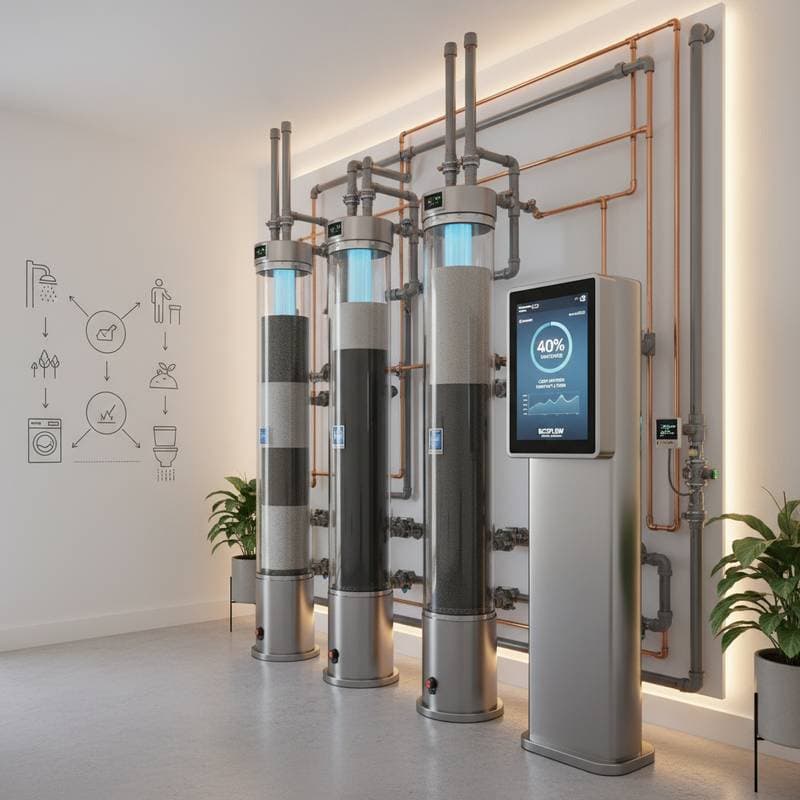
Premium systems feature UV sterilization, digital monitoring, and advanced filtration from brands such as Hydraloop or NexusWater, ranging from $8,000 to $12,000. These achieve up to 95 percent efficiency and include ten-year warranties for substantial long-term savings.
Complexity and Accessibility
The layout of existing plumbing affects labor duration significantly. Accessible crawl spaces or basements simplify retrofits, but concrete slab foundations necessitate pipe rerouting, adding $1,000 to $2,000.
Distance from irrigation zones requires extended piping, raising material expenses. Local codes may mandate backflow prevention and inspections, contributing another $300 to $600. Urban areas see labor rates 15 percent higher than rural locations.
Service Types and Comprehensive Pricing
Basic System Package
Standard installations cover collection from bathroom sinks, showers, or laundry, along with basic filtration, sediment removal, gravity-fed distribution to gardens or lawns, manual control valves, and overflow outlets.
This setup demands two to three days of labor and costs $3,000 to $5,000. It suits smaller households prioritizing irrigation reuse.
Premium or Comprehensive System
Advanced packages integrate whole-house sources from bathrooms and laundry, featuring automated pumping, filtration, smart monitoring with leak detection, UV sterilization for indoor reuse, and extended warranties.
These options range from $7,500 to $10,500 and accelerate payback by 20 to 25 percent through greater water savings. They provide reliable water independence and boost property value, especially in water-scarce regions.
Add-on Services
| Add-on Service | Cost Range | Benefit |
|---|---|---|
| Smart controller integration | $400–$700 | Remote monitoring and automation |
| UV disinfection unit | $600–$1,200 | Indoor reuse capability |
| Irrigation zone expansion | $500–$900 | Larger landscape coverage |
| Annual maintenance plan | $250–$400 | Extended warranty eligibility |
Bundling upgrades often lowers total costs by 10 to 15 percent. Use platforms like Angi and Thumbtack to compare quotes from certified contractors.
Professional vs. DIY Installation
DIY Cost Breakdown
For a small gravity system, source components from Oasis Design or WaterWise: piping at $150, valves at $80, and a filter kit at $120. Tool rentals for trenching and plumbing add $100, bringing the total to $400 to $600.
Such setups risk code violations and insurance issues. Inexperienced installation spans two weekends and invites contamination hazards.
Professional Advantages
Licensed professionals deliver code-compliant designs, warranties, and specialized equipment valued at thousands of dollars. They optimize flow rates and filtration for safety and performance.
The added expertise cost of $1,500 to $2,000 ensures systems last twice as long as DIY versions, with repair coverage under warranty.
Decision Criteria
Opt for DIY in off-grid cabins or minor garden applications. Choose professionals for urban residences or indoor reuse to avoid costly fixes from leaks or contamination.
Cost-Saving Strategies
Timing Optimization
Schedule during winter or early spring for 5 to 10 percent discounts from installers. Weekday appointments save up to $300 compared to weekends.
Align installation with bathroom remodels to eliminate duplicate plumbing efforts, potentially saving $500.
Smart Shopping and Preparation
Obtain three itemized quotes for comparison. Prepare by digging trenches or mounting areas to cut labor by 10 percent.
Purchase filters or pumps directly from manufacturers like GreyFlow or ReWater to avoid markups.
Steps to Implement a Greywater System
Evaluate your home's water usage and irrigation needs to select the right capacity. Consult local codes early to identify required permits and inspections.
Secure multiple professional quotes, prioritizing certified installers with strong warranties. Track potential rebates for sustainable upgrades to further offset costs.
Once installed, maintain the system through regular filter checks and professional servicing to maximize savings and efficiency over time.