Granny Flat Construction Costs Rise 35%: Essential Budgeting Guide
Summary Box
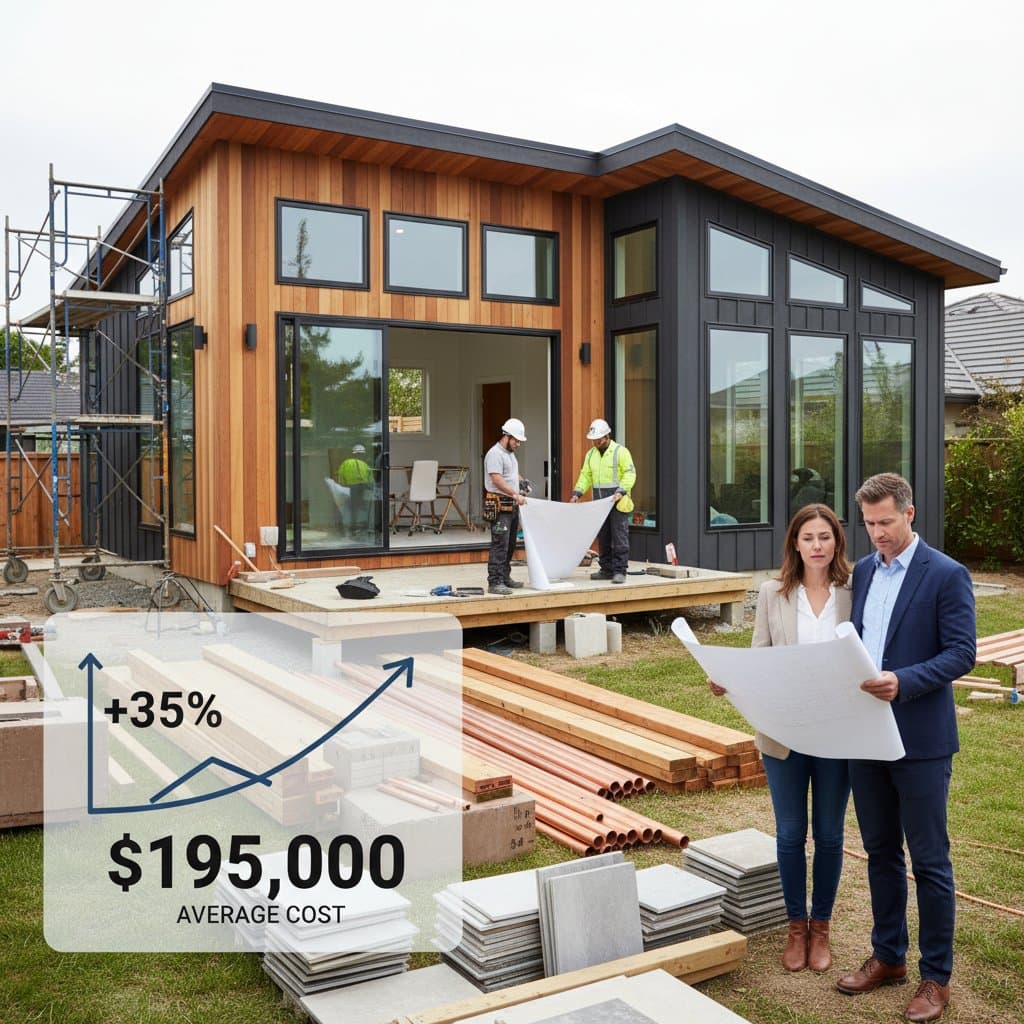
National average cost: $195,000
Typical range: $150,000 to $250,000
Low end: $100,000 (basic prefab unit)
High end: $350,000 (custom build with premium finishes)
Time to complete: 4 to 8 months
DIY or Pro: Primarily professional, with DIY suitable for finishes and landscaping
ROI or resale impact: 60% to 80% return in most markets
Updated: April
Homeowners planning granny flats face a notable cost escalation. Material prices have climbed, labor availability has tightened, and building codes have grown more rigorous, resulting in a 35% overall increase. This guide examines these drivers, outlines budgeting essentials, and covers expectations from initial design to project completion.
Cost Breakdown
Materials vs Labor
| Item | Unit cost | Typical quantity | Line total | Notes |
|---|---|---|---|---|
| Concrete foundation | $8 to $14 per sq. ft. | 400 to 600 sq. ft. | $3,200 to $8,400 | Includes excavation and base prep |
| Framing lumber | $4 to $7 per sq. ft. | 500 sq. ft. | $2,000 to $3,500 | Cost depends on wood grade |
| Roofing | $5 to $10 per sq. ft. | 500 sq. ft. | $2,500 to $5,000 | Asphalt shingles or metal panels |
| Windows and doors | $300 to $800 each | 8 to 10 units | $2,400 to $8,000 | Energy efficient models add cost |
| Electrical and plumbing | $40 to $70 per linear ft. | 100 ft. each | $8,000 to $14,000 | Licensed trades required |
| Insulation and drywall | $3 to $6 per sq. ft. | 500 sq. ft. | $1,500 to $3,000 | Includes taping and sanding |
| Flooring and finishes | $4 to $12 per sq. ft. | 500 sq. ft. | $2,000 to $6,000 | Vinyl plank to hardwood |
| Kitchen and bath fixtures | Lump sum | — | $10,000 to $25,000 | Cabinets, countertop, sink, shower |
| Permits and fees | Lump sum | — | $2,500 to $8,000 | Plan check, utility tie-ins |
| Site work and landscaping | Lump sum | — | $3,000 to $10,000 | Grading, driveway, fencing |
Total estimated range: $100,000 to $350,000, varying by size, finishes, and site demands.
Add-ons and Allowances
- Solar panels: $12,000 to $20,000 for systems enabling off-grid use or energy tax credits
- Custom cabinetry: $5,000 to $10,000 for tailored storage solutions
- Accessibility features: $2,000 to $8,000 including ramps, widened doorways, and support bars
- Detached garage or carport: $15,000 to $30,000 for additional parking or storage
Permits and Disposal Fees
Local authorities typically mandate distinct permits for structural, electrical, plumbing, and mechanical elements. Construction debris disposal incurs fees of $800 to $1,500, depending on volume and local rates.
Cost Factors
Project scope and dimensions significantly influence expenses; a compact 400-square-foot studio demands less investment than an 800-square-foot unit with complete kitchen facilities. Selecting builder-grade materials like vinyl siding maintains affordability, whereas options such as fiber cement or natural wood elevate both aesthetics and budget. Challenging site features, including slopes, restricted access, or unstable soil, necessitate extra excavation and engineering assessments.
Labor dynamics and seasonal timing also play roles; peak construction periods command premium hourly wages, and urban locations generally exceed rural pricing. Custom modifications or mid-build alterations, such as relocating walls or incorporating additional windows, can inflate costs by 10% to 20%.
DIY vs Pro
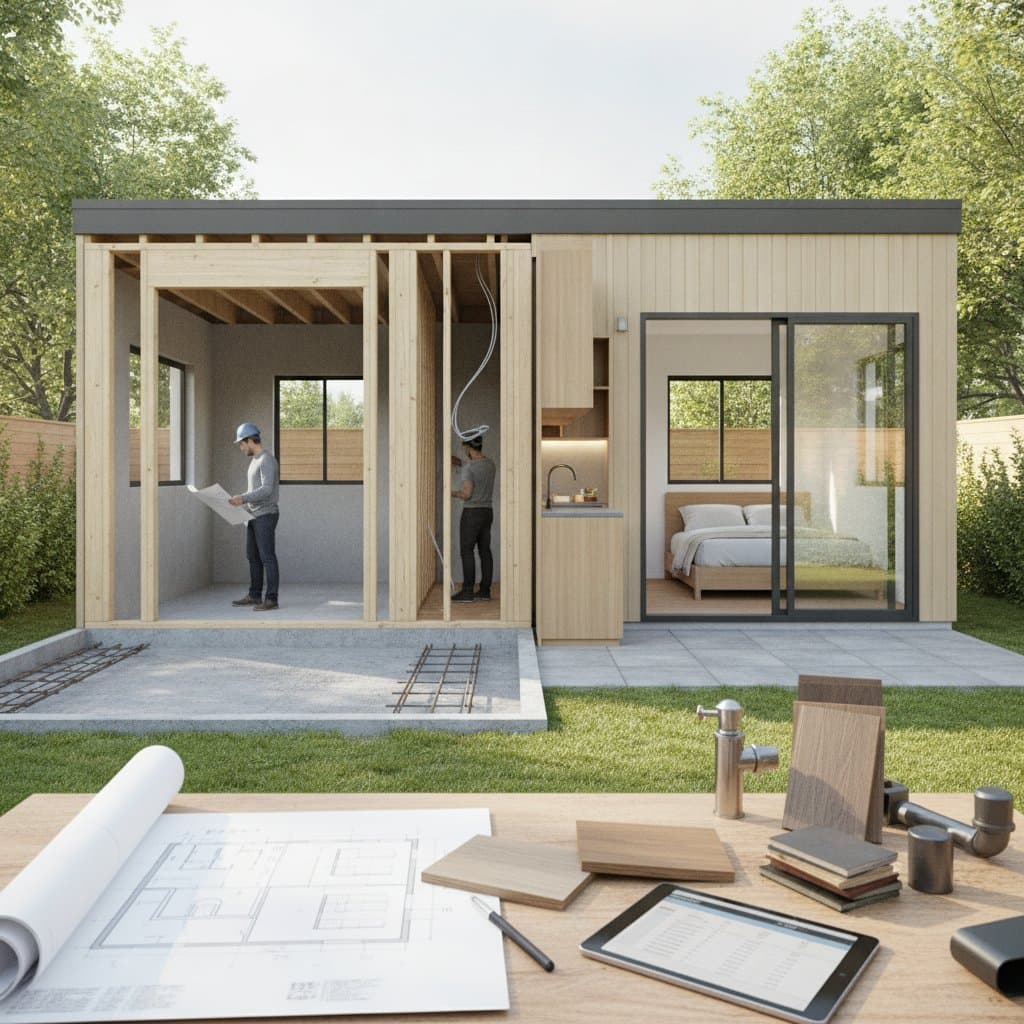
What You Can Do Yourself
Skilled homeowners may manage tasks like minor demolition, painting, installing trim, laying flooring, and basic landscaping. Executing these properly can yield savings of $5,000 to $15,000.
Tasks That Require Licensing or Specialty Tools
Certain elements demand certified expertise:
- Electrical wiring and connections to main services
- Plumbing lines for supply and drainage
- Gas piping installations
- Structural framing and roofing assembly
Undertaking these without credentials invites safety risks and inspection failures, potentially invalidating insurance policies or affecting property warranties.
Safety Risks and Code Issues
Accessory dwellings adhere to identical standards for fire safety, energy efficiency, and structural integrity as main homes. Deficiencies in wiring, vapor barriers, or emergency exits often trigger violations. Verify jurisdiction-specific regulations prior to finalizing designs.
Warranty Impacts
Amateur interventions in mechanical installations typically nullify manufacturer guarantees. Retain records from qualified professionals for electrical and plumbing work to preserve warranty eligibility.
How To Save Without Regret
Practical Substitutions
- Select vinyl plank flooring over hardwood; it offers comparable durability at half the price and better moisture resistance.
- Install stock cabinets rather than bespoke units; customize with paint or hardware upgrades as needed.
- Choose fiberglass shower units instead of custom tiling to minimize labor demands.
Sequence and Prep That Reduce Labor Hours
Thorough site preparation averts setbacks. Arrange utility locates before digging, procure materials ahead of schedule, and maintain clear access for deliveries and reviews.
Off-Season Timing or Batch Projects
Scheduling during quieter periods may lower contractor bids by 5% to 10%. Combining the granny flat with concurrent improvements, like driveways or fences, often secures bundled pricing.
Compare at Least Three Quotes
Employ this evaluation framework:
- Itemized project scope
- Specified material grades and brands
- Inclusion of surface preparation and site cleanup
- Coverage of permits and waste removal
- Defined warranty conditions and timelines
- Milestone-linked payment terms
Inquire about anticipated delays, subcontractor involvement, and inspection protocols with each bidder.
Step By Step Hiring Guide
Contractor Vetting Checklist
- Confirm active licensing and comprehensive insurance.
- Solicit references from comparable accessory dwelling completions.
- Examine contract templates and proposed payment structures.
- Ensure provisions for design, permitting, and utility integrations.
- Discuss oversight approaches and update frequencies.
Scope Notes
Document precise details in the agreement: total square footage, foundation specifications, roof configuration, window quantities, heating and ventilation systems, and desired finish quality. Ambiguous descriptions invite unexpected charges.
Payment Schedule Basics
Structure disbursements to align with progress:
- 10% upon agreement execution
- 30% following foundation pour
- 30% after rough mechanical installations
- 20% post-drywall and interior completions
- 10% at occupancy approval
Authorize payments solely after successful phase inspections.
Timeline and Scheduling
Lead Times for Materials
- Prefabricated modules: 8 to 12 weeks
- Specialized windows or doors: 6 to 10 weeks
- Cabinetry and surfaces: 4 to 8 weeks
- Utility permissions: 2 to 6 weeks
Typical Crew Days on Site
Basic prefab setups require 30 to 45 workdays. Comprehensive custom constructions extend to 90 to 120 days.
Inspection Touchpoints
Anticipate inspections at key stages: foundation integrity, framing stability, preliminary plumbing and electrical, insulation compliance, and final habitability. Build flexibility into timelines for official availability.
Maintenance and Lifespan
Care Routines
Conduct annual checks on roofs, drainage systems, and exterior cladding. Service HVAC filters quarterly, clear vents routinely, and verify smoke alarm functionality.
Common Failures and Early Warnings
- Cracks in the foundation indicate potential drainage deficiencies.
- Ongoing dampness along baseboards points to plumbing concerns.
- Intermittent lighting or circuit interruptions signal overload issues.
When to Repair vs Replace
Roofs younger than 15 years warrant repairs; older ones benefit from full replacement. Out-of-warranty appliances frequently prove more economical to substitute than service.
Regional Notes
Seaside areas incur premiums for wind-resistant and anti-corrosion specifications. Northern climates demand enhanced insulation and frost-resistant bases, boosting concrete and lumber outlays. Dense urban developments add $10,000 to $25,000 for navigation and regulatory hurdles.
Making It Happen
Launch your granny flat initiative with a defined scope and grounded financial plan. Obtain three itemized proposals, allocate 10% to 15% for unforeseen expenses, and consult zoning authorities upfront. Monitor advancements weekly and record all modifications formally.