How Much Does Waterproof Flooring Cost? Pricing Guide
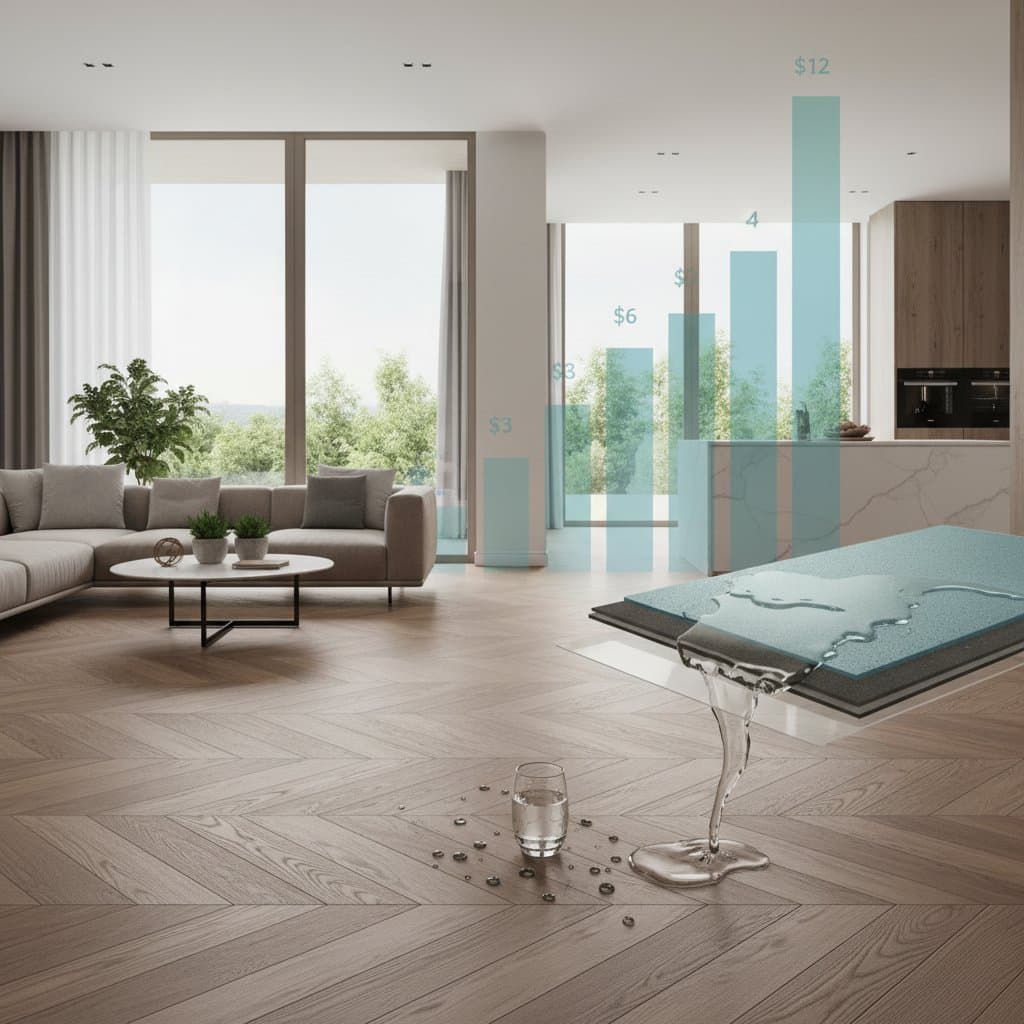
Waterproof flooring protects homes from water damage while improving comfort and durability. Professional installation typically costs between $3 and $12 per square foot. Most homeowners pay around $7 per square foot for standard projects. This price covers materials, labor, and subfloor preparation.
Three main factors shape total expenses. These include flooring material type, installation complexity, and project size. Geographic location and moisture exposure also affect pricing. Proper waterproof flooring can reduce long-term maintenance costs.
Investing in water-resistant flooring protects property value. It also improves indoor air quality by preventing mold growth. Homeowners gain peace of mind when the right material withstands heavy use for decades.
Detailed Cost Breakdown
Waterproof flooring prices vary by material and installation needs. The national range of $3 to $12 per square foot covers entry-level vinyl through premium stone or engineered hardwood.
Primary Pricing Structure
- Low-end materials such as sheet vinyl or basic vinyl planks start near $2.50 per square foot.
- Mid-range options like luxury vinyl tile and ceramic tile average $5 to $8 per square foot.
- High-end selections such as porcelain tile, waterproof laminate, and engineered hardwood reach $10 to $12 per square foot.
Labor costs add $1.50 to $4 per square foot. This depends on region and subfloor condition. Minimum service charges range from $300 to $500. These cover equipment setup and base preparation.
Size and Scope Factor
Larger projects benefit from lower per-unit pricing. A 200-square-foot basement installation might cost $1,400. A 1,000-square-foot full-floor renovation could approach $6,500. Each additional 100 square feet typically adds $600 to $700.
Basements and bathrooms cost more per square foot. This results from moisture barriers and sealing requirements. Complex patterns or diagonal installations can raise labor costs by 10 to 15 percent.
Material and Quality Tiers
Entry-level options include sheet vinyl and basic vinyl planks. These cost $2.50 to $4 per square foot. They resist minor spills but last under a decade in high-traffic areas.
Mid-range choices feature luxury vinyl plank or ceramic tile. These average $5 to $8 per square foot. They offer enhanced durability, waterproof cores, and warranties that last 15 to 25 years.
Premium selections cover porcelain tile, waterproof engineered hardwood, and hybrid flooring. These cost $9 to $12 per square foot. They provide realistic finishes, lifetime warranties, and strong moisture protection.
Complexity Variables
Accessibility challenges increase costs in small bathrooms or multi-level stairs. Removing old flooring adds $1.50 to $2 per square foot. Uneven subfloors may require leveling at $2 to $5 per square foot. High-moisture climates often need vapor barriers that raise total costs by 10 to 20 percent.
Service Types and Comprehensive Pricing
Basic or Standard Service Package
A typical installation package includes site inspection and moisture testing. It covers subfloor preparation, material delivery, professional installation, and final cleanup. This package costs $5 to $8 per square foot. It takes one to three days for an average room.
Premium or Comprehensive Service
Premium installations add full moisture mitigation and acoustic underlayment. They include custom thresholds, enhanced warranties, and maintenance plans. This tier costs $9 to $14 per square foot. It represents a 25 to 40 percent premium over standard service.
Add-On Services
- Floor removal and disposal costs $1.50 to $2.50 per square foot.
- Subfloor leveling runs $2 to $5 per square foot.
- Radiant heat installation adds $6 to $10 per square foot.
- Baseboard replacement costs $4 to $8 per linear foot.
- Moisture barrier membrane runs $1 to $3 per square foot.
Homeowners save 10 to 15 percent by bundling services. Off-peak seasons often feature additional discounts.
Professional vs. DIY Analysis
DIY Cost Breakdown
DIY installation appeals to budget-conscious homeowners. Materials for a 200-square-foot project cost $600 to $1,000. Click-lock vinyl planks simplify the process for beginners.
Required tools include a utility knife, spacers, rubber mallet, tape measure, and underlayment. Optional rentals add $40 to $80. The total DIY cost averages $3 to $5 per square foot. This excludes time investment and potential rework.
Professional Advantages
Certified installers ensure precise fitting and warranty protection. They complete projects faster and maintain consistent quality. Professionals utilize specialized tools and reduce the risk of costly errors.
DIY suits small rectangular spaces with minimal moisture. Professional installation works best for basements, bathrooms, or high-value materials. The cost of mistakes can surpass initial savings when water damage occurs.
Actionable Cost-Saving Strategies
Timing Optimization
Installations cost less during off-peak seasons. Contractors offer 5 to 15 percent discounts for midweek bookings. Scheduling during dry months improves adhesive performance.
Smart Shopping Tactics
Multiple quotes can cut project costs by 10 percent or more. Request itemized estimates to compare breakdowns. Bulk purchases or in-house financing sometimes provide extra savings.
Preparation Actions
Homeowners lower labor expenses by removing furniture and baseboards beforehand. They clean subfloors thoroughly and ensure workspace clearance. Each step can save $50 to $150 per room.
Market Dynamics and Considerations
Geographic Variations
Costs fluctuate by region. Urban areas charge 15 to 25 percent more than rural communities. Flood-prone zones require moisture testing that adds $1 to $2 per square foot.
Value Indicators
Waterproof flooring can raise home resale value by 3 to 5 percent. Energy-efficient underlayments improve insulation and lower heating costs by up to 8 percent. Maintenance expenses also drop over time.
Related Services
Tile regrouting and sealing costs $2 to $6 per square foot. Subfloor waterproofing adds $1.50 to $3 per square foot. Moisture barrier painting runs $1 to $2 per square foot. Coordinating these services together yields 10 percent savings.
Maximizing Your Investment
Select materials that match climate, room usage, and budget. Vinyl plank suits high-moisture areas. Porcelain or engineered hardwood fits upscale spaces. Verify installer certifications and request warranties in writing.
Regular cleaning and prompt spill management preserve the protective layer. Manufacturer-approved cleaners prevent residue buildup. Waterproof flooring delivers durable protection and enhanced daily comfort when chosen and maintained with care.