Impact Glass vs Smart Glass for Hurricane Protection
Quick Comparison
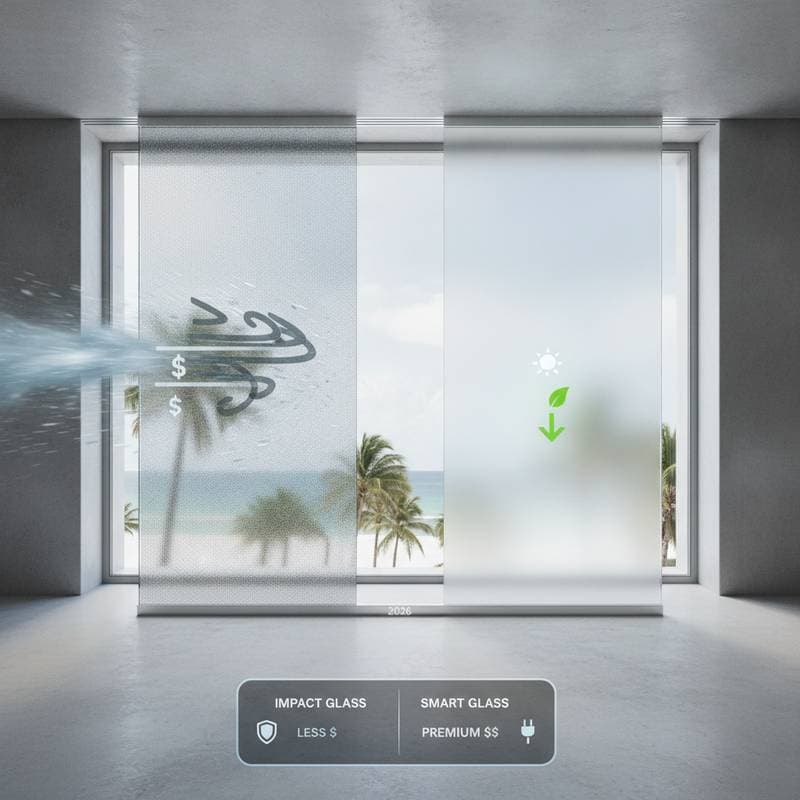
- Impact glass delivers reliable hurricane resistance at a lower upfront cost.
- Smart glass provides privacy and energy control but requires higher investment.
- Installed costs range from 60 to 130 dollars per square foot for impact glass and 120 to 250 dollars per square foot for smart glass.
- Selection depends on local storm risk, energy priorities, and expected length of ownership.
Core Differences
Hurricane rated windows feature laminated or specially engineered glass designed to withstand high winds and flying debris. Impact glass incorporates a durable interlayer that contains fragments if the outer layer breaks. Smart glass applies electronic coatings that allow users to adjust tint or opacity through controls or automation. Some versions combine both impact resistance and smart features.
These options differ in initial price, ongoing performance, and maintenance demands.
Advantages and Limitations
Impact Glass
Advantages
- Satisfies most coastal building codes without additional shutters.
- Costs less than smart glass options.
- Requires only routine cleaning for upkeep.
- Comes in many frame materials and styles from numerous manufacturers.
Limitations
- Offers no automatic control over light or heat beyond basic tints.
- Adds weight that may restrict certain frame designs.
- Replacement costs exceed those of standard glass once damage occurs.
Smart Glass
Advantages
- Adjusts glare, privacy, and solar heat through simple switches or sensors.
- Integrates with home automation systems for scheduled operation.
- Reduces ultraviolet exposure and can lower cooling expenses.
- Creates a contemporary appearance valued in premium markets.
Limitations
- Typically costs twice as much as impact glass.
- Requires electrical connections and power supply.
- Involves more involved repair procedures.
- Faces restricted availability in certain regions.
Best Applications
Impact glass performs well in coastal zones that demand code compliant protection and where simple durable systems are preferred. Smart glass suits homeowners who seek combined storm defense and energy management while planning extended residency.
Both types lose effectiveness if frames lack proper strength, seals degrade, or installations fail to match local wind load requirements.
Installation Process
Required Tools
- Tape measure
- Level
- Pry bar
- Screw gun
- Drill bits
- Caulk gun
- Silicone sealant
- Safety glasses
- Gloves
Estimated Time
One to two hours per window.
Difficulty Level
Moderate to high based on window size and existing structure.
- Prepare the opening by removing old trim and debris. Measure the rough opening and verify level framing.
- Test fit the new unit and confirm uniform gaps.
- Apply continuous silicone sealant along the sill and sides.
- Fasten the frame with approved stainless screws while maintaining plumb alignment.
- Fill gaps with low expansion foam and install trim.
- Connect wiring for smart glass and verify tint functions.
- Inspect all seals and electrical responses.
- Recycle old materials and finish interior trim.
Check local wind load ratings and permit needs before purchase.
Pricing Details
Impact glass windows typically install between 60 and 130 dollars per square foot. Smart glass windows range from 120 to 250 dollars per square foot. Larger custom sizes, higher wind ratings, and electrical work increase expenses. Standard sizes with vinyl frames and bulk orders reduce costs.
Replacement becomes necessary when frames corrode or seals fail completely.
Professional versus Owner Installation
Owners can handle measurements, trim removal, and final cleaning. Professional installation is required for upper story work, code mandated certifications, electrical integration, or permit processes. Certified installers use approved materials, conduct leak testing, and supply full warranties.
Ongoing Care
Inspect and clean twice yearly around hurricane season. Use mild soap for glass surfaces. Clear weep holes and check caulk integrity. Test smart controls and wiring for corrosion. Proper maintenance prevents moisture intrusion and preserves tint performance.
Other Protection Options
Hurricane shutters provide lower cost defense for existing windows yet require manual deployment. Window film adds limited reinforcement without meeting full codes. Plywood offers basic temporary coverage at minimal expense but blocks visibility.
Common Questions
Only laminated models of smart glass meet hurricane standards. Impact glass reduces some air leakage yet delivers less energy savings than coated smart versions. Power loss in smart glass returns it to a default state while retaining impact protection. Service life reaches 20 to 30 years with regular attention. Insurance discounts often apply after certified installation. Resale value gains from smart glass vary by market.
Preparation Steps
- Record accurate measurements for every opening.
- Review local rating requirements.
- Obtain three or more detailed quotes.
- Confirm installer credentials and warranty coverage.
- Arrange electrical planning for smart glass selections.
- Schedule seasonal seal inspections.
- Retain all documentation for insurance purposes.
Final Selection Guidance
Determine whether storm resistance or combined energy features represent the priority. Impact glass meets code requirements at a moderate price and supports long term reliability in high risk areas. Smart glass adds control capabilities that justify added expense when extended ownership and automation are planned. Confirm all ratings and follow local regulations to secure lasting protection.