2026 ADU Costs: What Granny Flats Really Cost Now
Accessory dwelling units, commonly called ADUs or granny flats, have moved from a niche option to a mainstream housing strategy. Homeowners view them as a way to generate rental income, house family members, or add long-term property value. Yet the financial reality of building an ADU is complex.
Understanding what these units actually cost requires more than scanning a few contractor estimates. It involves careful analysis of design choices, regulatory requirements, financing terms, and hidden expenses that appear only after construction begins. This editorial review breaks down the true cost structure of ADUs with a methodical approach that protects homeowners from financial surprises.
Cost Structure Analysis
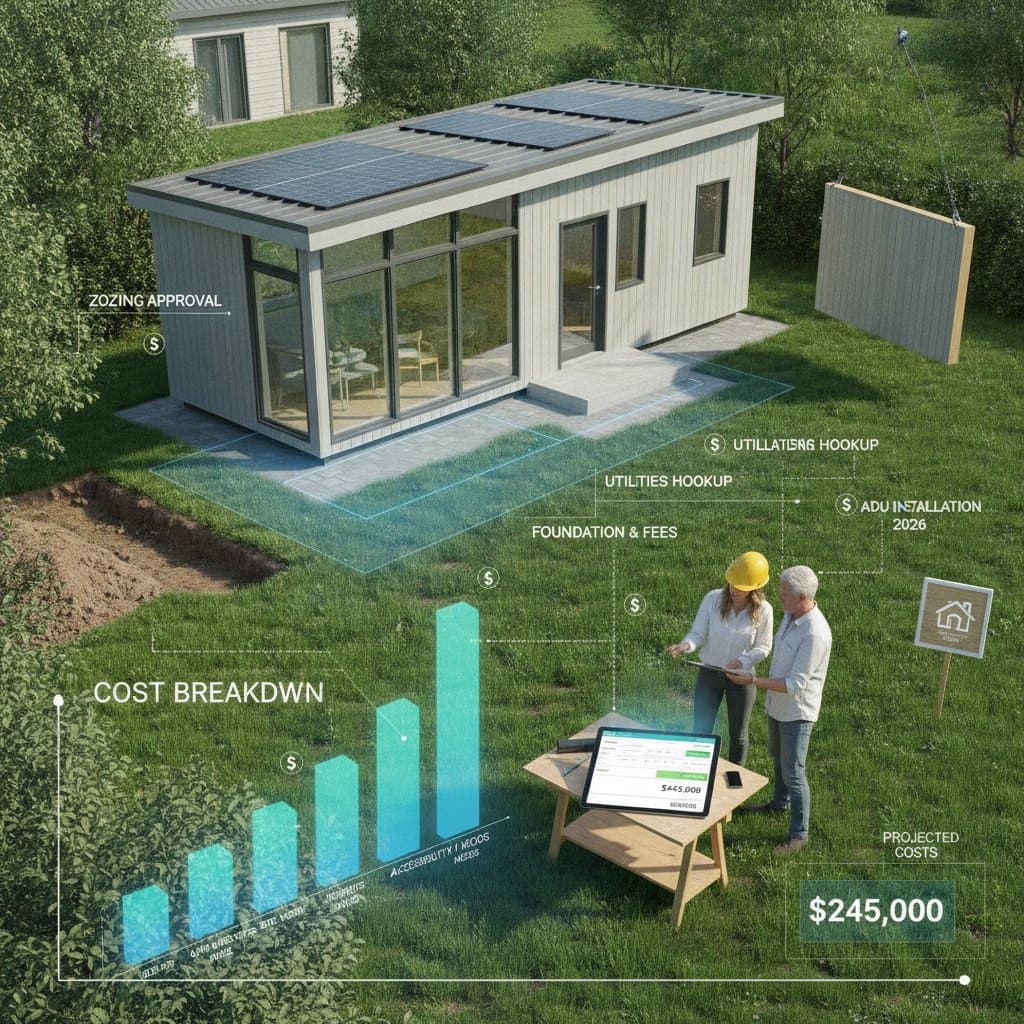
A realistic ADU budget includes layered costs that extend well beyond the basic building price. They can be grouped into five categories.
- Base Construction Costs: Materials, labor, and site work form the core of spending. Current estimates range widely, typically between 250 and 500 dollars per square foot depending on finish quality, location, and accessibility.
- Soft Costs: Architectural plans, engineering reviews, permit submissions, and utility connection fees usually add 15 to 25 percent to the total project cost.
- Utility Upgrades: Many properties require electrical panel replacements, sewer line extensions, or water pressure adjustments. These can add several thousand dollars or more.
- Furnishings and Fixtures: Cabinets, flooring, and appliances often exceed early estimates. Owners who target rental income usually spend extra on durability and energy efficiency.
- Contingency and Financing: A prudent financial plan includes a contingency reserve of at least 10 percent and accounts for interest payments if construction is financed through a loan.
When these elements are combined, a 500 square foot detached ADU can easily reach a total project cost between 180000 and 250000 dollars. Larger or more customized designs can surpass that range quickly.
Common Coverage Limitations in ADU Contracts
ADU builders often promote turnkey packages, but contract language can obscure what is actually included. Many agreements exclude work that is essential for project completion, leaving homeowners responsible for unplanned expenses.
Typical exclusions include landscaping restoration after excavation, driveway modifications or parking additions, fencing pathways and outdoor lighting, impact fees charged by local governments, and utility connection costs beyond a fixed allowance. Before signing, homeowners should ask for a complete inclusion and exclusion list in writing. If a builder resists such transparency, that is a warning sign of possible cost escalation later.
Comparing Service Levels and Provider Options
Homeowners face three primary approaches when selecting an ADU solution: hiring a general contractor, working with a design build firm, or purchasing a prefabricated model. Each option offers different control levels and risk profiles.
| Provider Type | Typical Cost Range | Control Over Design | Risk Factors | Ideal For |
|---|---|---|---|---|
| General Contractor | Moderate to High | High | Cost overruns due to coordination gaps | Experienced homeowners |
| Design Build Firm | Moderate | Medium | Limited design flexibility | Homeowners seeking streamlined process |
| Prefabricated ADU | Low to Moderate | Low | Transportation and site prep issues | Budget conscious buyers |
Evaluating each provider type requires balancing cost predictability, customization, and risk tolerance. Prefabricated models appear cheaper, but delivery, foundation, and hookup costs often erode expected savings.
Hidden Costs and Common Pitfalls
Many homeowners underestimate the indirect costs tied to ADU construction. They may focus on square foot pricing and overlook peripheral expenses. Common oversights include permit delays that extend loan interest payments, old or undersized utility lines that often need replacement, poor soil conditions that require reinforcement or grading, design changes mid project that trigger expensive change orders, and underestimated site preparation on sloped lots or tight access points.
Building a financial cushion for these possibilities prevents project interruptions and debt accumulation.
Protecting Your Investment
Review every line item in proposed contracts against actual site conditions before committing funds. Secure written confirmation on utility allowances and permit responsibilities from the chosen provider. Schedule a pre construction soil assessment to identify foundation adjustments early. Allocate the contingency reserve in a separate account that requires dual approval for releases. These steps convert cost uncertainties into managed variables that support both immediate completion and lasting property returns.