AMS Home Guides Logo
Home
Remodeling Cost ComparisonsAbout
AMS Home Guides Logo

Your comprehensive resource for home guides, cost guides, and home warranty information.

HomeAboutAll ArticlesSearchPrivacyTerms

© 2026 AMS Home Guides. All rights reserved.

  1. Home
  2. /
  3. Cost Guides
  4. /
  5. Why Flood Coverage Pays 40% Less Than Real Repairs
Cost Guides

Why Flood Coverage Pays 40% Less Than Real Repairs

bySusan Weiland
2026-07-05 04:24:46July 5, 2026
4 min read
Featured image for Why Flood Coverage Pays 40% Less Than Real Repairs
2026-07-05 04:24:46
AMS - Home Guides, Cost Guides, Home Warranty

Why Flood Insurance Often Covers 40 Percent Less Than Actual Repair Costs

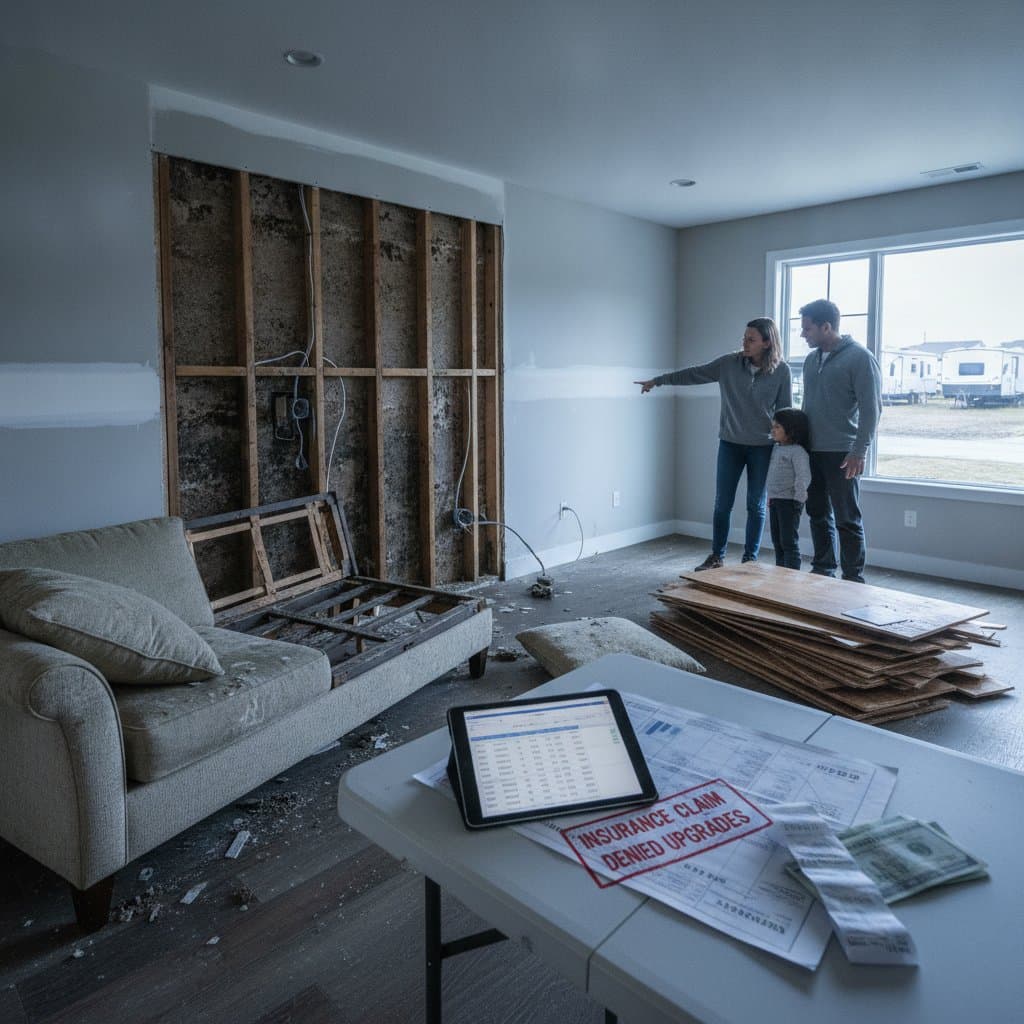
Flooding ranks among the costliest disasters for homeowners. Even with a policy in place, the difference between insurance payouts and full restoration expenses frequently reaches 40 percent or more. Homeowners who understand these shortfalls in advance can adjust coverage, set aside funds, and reduce out-of-pocket costs when water enters the home.

Primary Reasons Insurance Payouts Fall Short

  • Policy limits on the building and contents commonly sit below current replacement prices.
  • Depreciation calculations lower payments for older finishes and fixtures.
  • Standard exclusions omit mold removal, foundation work, and site grading.
  • Updated building codes require electrical, plumbing, or elevation changes that policies do not fund.
  • Local labor and material rates often exceed the national pricing tables insurers use.
  • Processing delays allow secondary damage such as mold to develop, and that damage is usually excluded.

Elements That Increase Actual Restoration Expenses

Hidden damage behind walls and under floors routinely adds several thousand dollars to repair invoices. Water from rivers or sewers carries contaminants that demand specialized extraction and disposal. After regional floods, shortages of drywall, lumber, and flooring push prices higher, while scarce contractors charge premium rates. Compliance with current codes may require new wiring, insulation, or raised utilities that insurance treats as upgrades rather than covered repairs.

A complete restoration returns the property to safe, functional condition. It includes drying, material removal, structural fixes, finish work, and final inspections. Policies aim only to restore the pre-flood state and do not cover design upgrades or comfort improvements.

Restoration Sequence Homeowners Should Expect

  1. Document every damaged area with photographs and retain receipts for temporary repairs.
  2. Extract standing water and operate dehumidifiers and fans for three to seven days.
  3. Remove saturated drywall, flooring, and insulation down to sound framing.
  4. Apply antimicrobial treatments and verify air quality before new materials are installed.
  5. Replace framing, subfloors, and any affected electrical or plumbing lines.
  6. Install drywall, flooring, cabinetry, and paint.
  7. Complete code inspections and final cleaning before reoccupancy.

Moderate projects finish in four to eight weeks. Larger rebuilds can extend across several months.

Tools and Materials That Support Long-Term Resilience

Essential Equipment

  • Wet-dry vacuum
  • Moisture meter
  • Utility knife and pry bar
  • Industrial fans and dehumidifiers
  • Protective goggles, gloves, and respirators

Recommended Materials

  • Mold-resistant drywall
  • Closed-cell foam insulation
  • Pressure-treated lumber
  • Vapor barriers and sealants
  • Low-VOC primers and paints

These choices limit future moisture problems and can support lower premiums by demonstrating mitigation efforts.

Ongoing Upkeep That Protects Repairs

Quarterly inspections of sump pumps and backflow valves prevent repeat flooding. Cleaning gutters before rainy seasons and maintaining proper grading around the foundation reduce water entry points. Battery backups for sump systems and fresh seals around openings further lower risk. Consistent maintenance extends the service life of restored areas.

Regional Factors That Affect Costs and Planning

Coastal properties face saltwater corrosion that shortens the life of wiring and metal components. Inland sites often contend with rising groundwater that undermines basements and slabs. In colder zones, slower drying increases mold risk. Contractors familiar with local codes and conditions complete work more efficiently. Some jurisdictions provide grants for elevation or drainage improvements that offset expenses insurance will not cover.

Common Questions About Flood Policies

Does flood insurance cover mold? Most policies exclude mold unless the homeowner proves the growth resulted directly from covered water and that prompt action was taken to limit it.

Can insurance funds be used for upgraded materials? Upgrades are permitted, yet the policyholder pays the difference between like-kind replacement and higher-grade options.

Why do payouts fall below contractor estimates? Insurers rely on standardized cost databases that update slowly. Regional price surges or labor shortages frequently exceed those figures.

Do building and contents coverage overlap? Building coverage addresses the structure and attached fixtures. Contents coverage applies only to personal property. An updated inventory prevents disputes over items.

Does elevating a home lower future expenses? Raising utilities and living spaces above expected flood levels reduces premiums and prevents repeated damage.

Steps to Close Coverage Gaps Before the Next Event

Review current limits against local construction costs and consider endorsements for code upgrades or additional living expenses. Maintain basic drying equipment and establish relationships with licensed restoration contractors in advance. These actions narrow the gap between payouts and real expenses while shortening recovery time.

You may also like

Image for Cut Household Water Use in Half with Greywater Systems

Cut Household Water Use in Half with Greywater Systems

July 4, 2026
Image for Granny Flat Build Costs Break Down by Unit Type

Granny Flat Build Costs Break Down by Unit Type

July 4, 2026
Image for Multigenerational Home Renovations Cost $160K on Average

Multigenerational Home Renovations Cost $160K on Average

July 4, 2026

Tagged:

insurance,water,costs,flood,damage,gaps,expenses,restoration,flood-damage-costs,water-restoration-expenses

Recent Articles by Susan Weiland

Image for Cut Household Water Use in Half with Greywater Systems

Cut Household Water Use in Half with Greywater Systems

July 4, 2026
Image for Solar Roof Warranties Change in 2026: What to Expect

Solar Roof Warranties Change in 2026: What to Expect

July 3, 2026
Image for Solar Roof Systems Cost $15K–$70K in 2026

Solar Roof Systems Cost $15K–$70K in 2026

July 2, 2026

Related: insurance

Image for Home Warranty vs Insurance: What AI Claims Reveal

Home Warranty vs Insurance: What AI Claims Reveal

June 21, 2026
Image for Why Home Warranties Don't Cover Storm Damage

Why Home Warranties Don't Cover Storm Damage

June 19, 2026
Image for Home Warranty Costs $600-900 vs Insurance $1,200+

Home Warranty Costs $600-900 vs Insurance $1,200+

June 17, 2026
Image for New Insurance Rules Make Basement Flood Systems Mandatory

New Insurance Rules Make Basement Flood Systems Mandatory

May 22, 2026
Image for Flood Proofing Cuts Damage Risk 80% for $12,400

Flood Proofing Cuts Damage Risk 80% for $12,400

May 17, 2026

Cost Guides

Granny Flat Build Costs Break Down by Unit Type

Building a granny flat or ADU in 2026 requires precise cost planning. This guide details construction ranges by unit type, financing factors, and steps to control expenses from permit to completion.

July 4, 2026

Home Elevation Costs $80K to $250K for Flood Safety

Elevating a home for flood protection costs $80,000 to $250,000 and involves lifting the structure above flood levels to reduce damage and insurance costs. This professional-only process includes engineering, new foundations, and utility extensions. Proper design, permits, and maintenance ensure decades of protection, grant eligibility, and compliance with evolving floodplain regulations.

July 2, 2026

Solar Roof Systems Cost $15K–$70K in 2026

Planning a solar roof in 2026? This guide details real costs from 15K to 70K after incentives, system types, installation factors, payback periods, and maintenance requirements for typical homes.

July 2, 2026

Outdoor Kitchen ROI: Real Costs Beyond Install

Outdoor kitchens add lifestyle appeal, yet value depends on cost control. Basic models begin at 8000 dollars while custom builds reach 40000 dollars. With proper care, ROI averages 50 to 70 percent. Attention to installation details, maintenance routines, and warranty terms helps homeowners approach this upgrade as a calculated investment.

July 1, 2026

True Cost Structure of Building an ADU in 2026

Building an ADU in 2026 involves far more than base construction costs. From design and permits to utilities, financing, and long term maintenance, every detail affects total investment. This guide reveals true pricing realities, hidden expenses, and smart planning strategies.

July 1, 2026

Flood Proofing Your Home Costs $28,800 in 2026

In 2026 flood proofing costs average $28,800 and range from $12,000 to $52,000. This guide covers cost drivers, DIY limits, contractor selection, and maintenance practices for effective climate adaptation.

June 30, 2026

Modular Homes Cost $140-$320 Per Square Foot in 2026

Modular homes built in 2026 range from $140 to $320 per square foot, with total project costs between $250,000 and $540,000 for an average size home. This guide explains cost drivers, construction steps, and practical planning considerations.

June 29, 2026

Solar Panel Payback: 8-12 Years With Hidden Costs

Learn the factors affecting solar panel returns in 2026, from installation expenses to incentives. Discover practical ways to shorten payback periods and achieve greater energy savings.

June 28, 2026

Modular ADUs Cost $180K on Average in 2026

Learn the true costs of adding a modular ADU in 2026, typically ranging from $120,000 to $260,000. Understand how site preparation, finishes, and design decisions influence total price, ROI potential, and project timeline.

June 28, 2026

ADU Costs Jump 35% as Labor and Materials Soar

ADU construction costs have risen 35 percent due to higher labor, material, and permit expenses. Strategic planning and design decisions can still keep projects affordable. Explore timing guidance, budgeting tactics, and value-maximizing choices for homeowners evaluating an accessory dwelling unit.

June 26, 2026

Flood Proofing Your Home: Real Costs and Protection Levels

Floodproofing balances cost, protection level, and building type. This guide covers dry and wet methods plus elevation, with real cost ranges and guidance on professional support.

June 26, 2026

Modular Homes Cut Build Time But Limit Design Changes

Modular homes offer faster builds, lower costs, and consistent quality compared to traditional construction, but limit design flexibility and require careful site planning. Learn how pricing, permits, and timelines align to make modular living a smart choice depending on land, layout, and goals.

June 25, 2026

Solar and Battery Costs Drop as Tech Improves in 2026

By 2026 solar panels continue to become more affordable while battery backups gain capacity and durability. Combining both technologies with available incentives maximizes savings and supports long term energy independence for homeowners.

June 24, 2026

Solar Panel Costs Drop While Warranties Extend to 25 Years

Review expected solar panel costs in 2026 along with warranty protections and installation considerations. Understand how roof type, labor, and equipment affect pricing plus steps for planning and maintenance.

June 24, 2026

Kitchen Island Installation Runs $3K to $8.5K in 2026

Review what kitchen islands cost in 2026, from 1800 dollar prefab units to 15000 dollar custom builds. Explore how materials, labor, and design choices affect pricing, timelines, and resale value along with proven methods to compare quotes and decide between DIY and professional installation.

June 20, 2026

Multi-Gen Home Renovation Costs: What to Expect in 2026

Multi-generational renovations require clear budgets and strong protections. This 2026 cost guide details real price ranges, hidden fees, and steps to protect your investment while creating adaptable family living spaces.

June 19, 2026

Hidden Solar Costs Add $2,000 to $8,000 in 2026

Solar panel projects in 2026 deliver savings yet carry extra expenses for permits, roof repairs, electrical upgrades, and maintenance. Clear planning helps homeowners control totals and select installers wisely.

June 19, 2026

Flood-Resistant Flooring Cuts Restoration Costs 45%

Flood-resistant flooring in 2026 costs $4 to $18 per square foot. Homeowners can reduce flood damage expenses by up to 45 percent with vinyl, tile, epoxy, or sealed concrete. This guide details pricing tiers, installation factors, and practical steps for long-term protection.

June 19, 2026

ADU Costs Range $120K to $350K in 2026

Homeowners planning an accessory dwelling unit in 2026 can expect costs between 120000 and 350000 dollars. Project timelines typically span four to twelve months from permitting through final inspection. Careful attention to design, materials, and local regulations helps control expenses while maximizing long term value.

June 17, 2026

Flood Flooring Runs $3-$18 Per Square Foot in 2026

Protect your home from water damage with flood-resistant flooring. This guide details 2026 pricing, material comparisons, and practical installation advice for vinyl, tile, epoxy, rubber, and sealed concrete.

June 17, 2026

Categories

Appliance & System Coverage
Cost Guides
Home Guides
Home Warranty Basics
Outdoor & Exterior Guides
Remodeling Cost Comparisons
Room-by-Room Guides