AMS Home Guides Logo
Home
Remodeling Cost ComparisonsAbout
AMS Home Guides Logo

Your comprehensive resource for home guides, cost guides, and home warranty information.

HomeAboutAll ArticlesSearchPrivacyTerms

© 2026 AMS Home Guides. All rights reserved.

  1. Home
  2. /
  3. Cost Guides
  4. /
  5. Federal Solar Credits Cut System Costs 30% in 2026
Cost Guides

Federal Solar Credits Cut System Costs 30% in 2026

byEric Melton
2026-07-05 04:29:23July 5, 2026
4 min read
Featured image for Federal Solar Credits Cut System Costs 30% in 2026
2026-07-05 04:29:23
AMS - Home Guides, Cost Guides, Home Warranty

2026 Brings Major Federal Incentives for Solar Homes

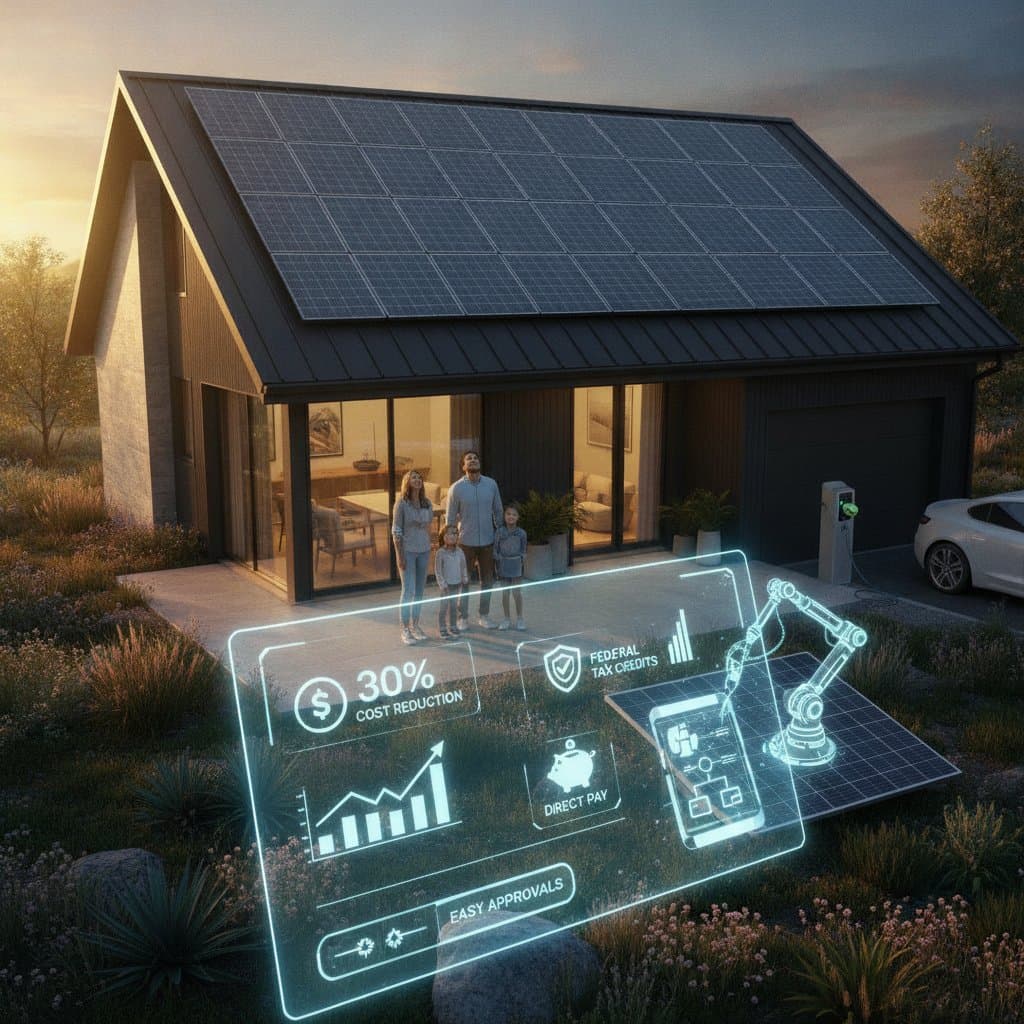
Federal solar incentives expand in 2026 with higher credits and simpler qualification processes. Homeowners can claim larger tax credits and grants for residential solar systems. Lower hardware costs combined with streamlined permits create favorable conditions for installation this year.

Pros and Cons

Pros

  • Cuts total system cost by up to 30 percent or more.
  • Raises home resale value and lowers monthly energy costs.
  • Offers long-term savings with little maintenance.
  • Expands access through grants for lower-income households.

Cons

  • Still requires upfront payment before credits arrive.
  • Roof condition or shading can limit output.
  • Installation quality varies by contractor.
  • Local permit delays may slow project completion.

Step-by-Step: How to Claim the 2026 Federal Solar Incentives

Tools and materials

  • Tape measure
  • Voltage tester
  • Roof safety harness
  • Drill and fasteners rated for roofing
  • Smartphone or camera for documentation

Time: 2 to 3 days for planning and paperwork, 1 to 2 days for installation.
Difficulty: Moderate to high, depending on roof access and wiring familiarity.

  1. Check your roof condition. Inspect for leaks, loose shingles, or soft spots. Replace or repair before installation.
  2. Measure usable roof area. You need roughly 100 square feet per kilowatt of solar capacity.
  3. Pull your past electric bills. Average them to estimate system size.
  4. Get at least three quotes. Compare cost per watt, warranty, and timeline.
  5. Ask about incentive paperwork. A good installer prepares federal and local forms for you.
  6. Submit the federal credit application. Keep digital copies of invoices and photos of installed panels.
  7. Schedule inspection. Local inspectors confirm wiring and mounting meet code.
  8. Activate the system. Your utility installs a smart meter and switches your home to net metering.

Inspect the finished work. Panels should sit flat, wiring runs should remain neat, and the inverter display should show active power flow. Recycle cardboard packaging and old roof materials. Dispose of damaged shingles at a local waste facility.

DIY vs Pro

Safe for DIY if:

  • You are comfortable working on roofs with proper safety gear.
  • You can handle electrical connections under a licensed electrician supervision.
  • You have time to manage permits and inspections.

Hire a pro when:

  • You see roof rot, cracked rafters, or outdated electrical panels.
  • You need trenching for ground mounts or battery storage wiring.
  • Your local code requires licensed installation for rebate eligibility.

A certified installer uses advanced layout software to model sunlight exposure and energy yields. They handle interconnection agreements with your utility and ensure all wiring meets national and local code. Their work also keeps your warranty valid, which protects you from out-of-pocket repairs.

Alternatives

Community Solar:
Best if you rent or have heavy shading. You buy a share of a larger off-site array and receive bill credits for your portion of the power.

Solar Lease or Power Purchase Agreement:
Best if you want zero upfront cost. A company owns the panels, maintains them, and sells you the power at a set rate. You lose the tax credit but skip maintenance duties.

Battery Storage Add-On:
Best if your area faces frequent outages. Adds backup power and can increase savings through time-of-use rate control. The federal incentive also covers part of the battery cost if installed with solar.

Checklist

  • Inspect roof for damage or age concerns.
  • Gather electric bills and calculate average usage.
  • Get multiple quotes with itemized costs.
  • Verify installer licenses and warranty terms.
  • File for federal and local incentives promptly.
  • Schedule inspection and connect to the grid.
  • Monitor output monthly to spot performance drops.

Code and Safety Notes

Solar wiring must meet National Electrical Code Article 690. Roof penetrations require flashing and sealant rated for UV exposure. Disconnect switches must remain accessible to emergency responders. Inverters and meters must carry UL certification. Verify that your homeowner insurance covers renewable energy systems. Failure to meet these standards can void warranties or delay utility approval. Always request final inspection sign-off before turning on your system.

Environmental and Energy Benefits

Solar power reduces reliance on fossil fuels and stabilizes long-term energy costs. It lowers household emissions, supports grid stability, and reduces strain during high-demand seasons. Over its lifespan, a residential solar system offsets many times the energy used to produce it. Panels are recyclable at the end of their service life, and most major manufacturers now offer take-back programs.

Planning Your Installation Timeline

Start by checking your electric bills and roof condition. The new federal incentives reward early action with higher credits and simpler paperwork. Choose a certified installer who can document compliance and maximize your savings. Once installed, monitor your system through the inverter app or web portal. Track monthly savings and set reminders for seasonal cleaning. If output drops appear, schedule a professional checkup.

You may also like

Image for Cut Household Water Use in Half with Greywater Systems

Cut Household Water Use in Half with Greywater Systems

July 4, 2026
Image for Granny Flat Build Costs Break Down by Unit Type

Granny Flat Build Costs Break Down by Unit Type

July 4, 2026
Image for Multigenerational Home Renovations Cost $160K on Average

Multigenerational Home Renovations Cost $160K on Average

July 4, 2026

Tagged:

installation,solar,costs,guide,incentives,panel,federal,solar-installation-guide,2026,solar-panel-costs-2026

Recent Articles by Eric Melton

Image for Robot Mower Coverage: Motors Yes, Blades No

Robot Mower Coverage: Motors Yes, Blades No

July 2, 2026
Image for Home Warranties Now Cover Heat Pumps and Smart Climate Tech

Home Warranties Now Cover Heat Pumps and Smart Climate Tech

July 2, 2026

Related: installation

Image for Cut Household Water Use in Half with Greywater Systems

Cut Household Water Use in Half with Greywater Systems

July 4, 2026
Image for Solar Roof Systems Cost $15K–$70K in 2026

Solar Roof Systems Cost $15K–$70K in 2026

July 2, 2026
Image for True Cost Structure of Building an ADU in 2026

True Cost Structure of Building an ADU in 2026

July 1, 2026
Image for Granny Pod Costs: $90K-$250K for 2026 Installs

Granny Pod Costs: $90K-$250K for 2026 Installs

June 29, 2026
Image for Solar Panel Payback: 8-12 Years With Hidden Costs

Solar Panel Payback: 8-12 Years With Hidden Costs

June 28, 2026

Cost Guides

Granny Flat Build Costs Break Down by Unit Type

Building a granny flat or ADU in 2026 requires precise cost planning. This guide details construction ranges by unit type, financing factors, and steps to control expenses from permit to completion.

July 4, 2026

Home Elevation Costs $80K to $250K for Flood Safety

Elevating a home for flood protection costs $80,000 to $250,000 and involves lifting the structure above flood levels to reduce damage and insurance costs. This professional-only process includes engineering, new foundations, and utility extensions. Proper design, permits, and maintenance ensure decades of protection, grant eligibility, and compliance with evolving floodplain regulations.

July 2, 2026

Solar Roof Systems Cost $15K–$70K in 2026

Planning a solar roof in 2026? This guide details real costs from 15K to 70K after incentives, system types, installation factors, payback periods, and maintenance requirements for typical homes.

July 2, 2026

Outdoor Kitchen ROI: Real Costs Beyond Install

Outdoor kitchens add lifestyle appeal, yet value depends on cost control. Basic models begin at 8000 dollars while custom builds reach 40000 dollars. With proper care, ROI averages 50 to 70 percent. Attention to installation details, maintenance routines, and warranty terms helps homeowners approach this upgrade as a calculated investment.

July 1, 2026

True Cost Structure of Building an ADU in 2026

Building an ADU in 2026 involves far more than base construction costs. From design and permits to utilities, financing, and long term maintenance, every detail affects total investment. This guide reveals true pricing realities, hidden expenses, and smart planning strategies.

July 1, 2026

Flood Proofing Your Home Costs $28,800 in 2026

In 2026 flood proofing costs average $28,800 and range from $12,000 to $52,000. This guide covers cost drivers, DIY limits, contractor selection, and maintenance practices for effective climate adaptation.

June 30, 2026

Modular Homes Cost $140-$320 Per Square Foot in 2026

Modular homes built in 2026 range from $140 to $320 per square foot, with total project costs between $250,000 and $540,000 for an average size home. This guide explains cost drivers, construction steps, and practical planning considerations.

June 29, 2026

Solar Panel Payback: 8-12 Years With Hidden Costs

Learn the factors affecting solar panel returns in 2026, from installation expenses to incentives. Discover practical ways to shorten payback periods and achieve greater energy savings.

June 28, 2026

Modular ADUs Cost $180K on Average in 2026

Learn the true costs of adding a modular ADU in 2026, typically ranging from $120,000 to $260,000. Understand how site preparation, finishes, and design decisions influence total price, ROI potential, and project timeline.

June 28, 2026

ADU Costs Jump 35% as Labor and Materials Soar

ADU construction costs have risen 35 percent due to higher labor, material, and permit expenses. Strategic planning and design decisions can still keep projects affordable. Explore timing guidance, budgeting tactics, and value-maximizing choices for homeowners evaluating an accessory dwelling unit.

June 26, 2026

Flood Proofing Your Home: Real Costs and Protection Levels

Floodproofing balances cost, protection level, and building type. This guide covers dry and wet methods plus elevation, with real cost ranges and guidance on professional support.

June 26, 2026

Modular Homes Cut Build Time But Limit Design Changes

Modular homes offer faster builds, lower costs, and consistent quality compared to traditional construction, but limit design flexibility and require careful site planning. Learn how pricing, permits, and timelines align to make modular living a smart choice depending on land, layout, and goals.

June 25, 2026

Solar and Battery Costs Drop as Tech Improves in 2026

By 2026 solar panels continue to become more affordable while battery backups gain capacity and durability. Combining both technologies with available incentives maximizes savings and supports long term energy independence for homeowners.

June 24, 2026

Solar Panel Costs Drop While Warranties Extend to 25 Years

Review expected solar panel costs in 2026 along with warranty protections and installation considerations. Understand how roof type, labor, and equipment affect pricing plus steps for planning and maintenance.

June 24, 2026

Kitchen Island Installation Runs $3K to $8.5K in 2026

Review what kitchen islands cost in 2026, from 1800 dollar prefab units to 15000 dollar custom builds. Explore how materials, labor, and design choices affect pricing, timelines, and resale value along with proven methods to compare quotes and decide between DIY and professional installation.

June 20, 2026

Multi-Gen Home Renovation Costs: What to Expect in 2026

Multi-generational renovations require clear budgets and strong protections. This 2026 cost guide details real price ranges, hidden fees, and steps to protect your investment while creating adaptable family living spaces.

June 19, 2026

Hidden Solar Costs Add $2,000 to $8,000 in 2026

Solar panel projects in 2026 deliver savings yet carry extra expenses for permits, roof repairs, electrical upgrades, and maintenance. Clear planning helps homeowners control totals and select installers wisely.

June 19, 2026

Flood-Resistant Flooring Cuts Restoration Costs 45%

Flood-resistant flooring in 2026 costs $4 to $18 per square foot. Homeowners can reduce flood damage expenses by up to 45 percent with vinyl, tile, epoxy, or sealed concrete. This guide details pricing tiers, installation factors, and practical steps for long-term protection.

June 19, 2026

ADU Costs Range $120K to $350K in 2026

Homeowners planning an accessory dwelling unit in 2026 can expect costs between 120000 and 350000 dollars. Project timelines typically span four to twelve months from permitting through final inspection. Careful attention to design, materials, and local regulations helps control expenses while maximizing long term value.

June 17, 2026

Flood Flooring Runs $3-$18 Per Square Foot in 2026

Protect your home from water damage with flood-resistant flooring. This guide details 2026 pricing, material comparisons, and practical installation advice for vinyl, tile, epoxy, rubber, and sealed concrete.

June 17, 2026

Categories

Appliance & System Coverage
Cost Guides
Home Guides
Home Warranty Basics
Outdoor & Exterior Guides
Remodeling Cost Comparisons
Room-by-Room Guides