Understanding 2026 Granny Flat and ADU Construction Costs
Accessory dwelling units, known as granny flats, offer homeowners a way to increase living space and generate value. These independent structures support family housing, rental income, or workspace needs. Accurate budgeting requires attention to construction expenses, permit fees, and ongoing ownership factors.
Project Types and Their Cost Implications
Homeowners can choose among detached cottages, attached additions, or garage conversions. Detached units demand new foundations, separate utilities, and independent roofs, which raise material and labor expenses. Attached units share infrastructure with the main house and lower some costs while limiting design options. Garage conversions often start at the lowest price point but require added reinforcement and insulation to meet living standards.
Zoning rules, lot dimensions, and utility access determine which option fits a property. Selecting the correct configuration early prevents budget overruns later.
Core Cost Categories
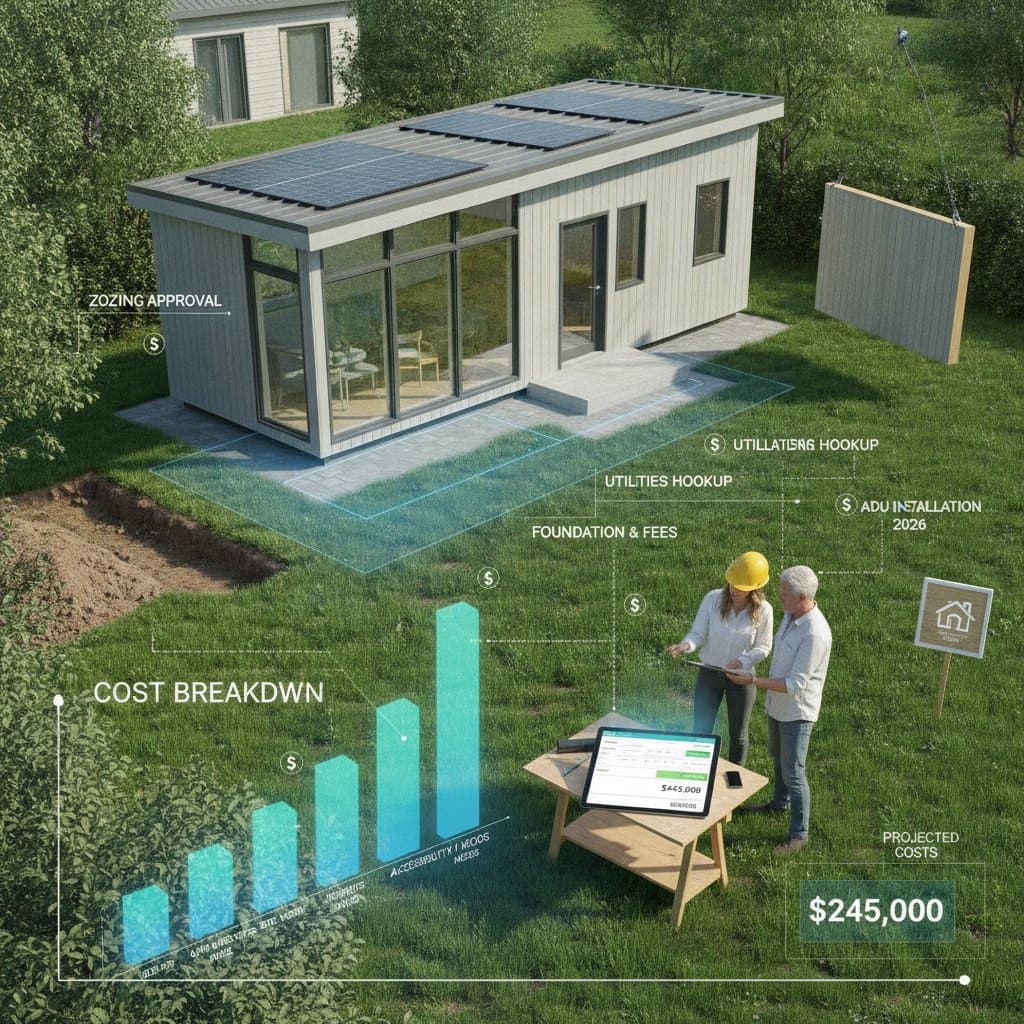
Construction expenses fall into six main areas. Base building covers materials, labor, and site work. Permit and inspection fees vary by municipality and include utility connection charges. Design and engineering produce drawings and compliance documents. Utility extensions add trenching costs when the unit sits far from existing lines. Site preparation handles grading and access. Final finishes include cabinets, flooring, and appliances.
Review each category in every contractor bid. Headline prices that omit line items frequently lead to change orders.
Cost Ranges by Unit Type
| Unit Type | Typical Total Cost | Size Range | Common Inclusions | Frequent Exclusions |
|---|---|---|---|---|
| Garage Conversion | $120,000 to $180,000 | Up to 500 sq ft | Basic electrical and insulation | New foundation or major structural work |
| Attached ADU | $200,000 to $280,000 | Up to 700 sq ft | Shared utilities and framing | Separate roof or extensive site work |
| Detached Granny Flat | $260,000 to $420,000 | Up to 900 sq ft | Full foundation and independent systems | Landscaping, appliances, and fencing |
These ranges reflect current material and labor markets. Obtain three detailed quotes before finalizing any budget.
Construction Sequence
A clear process helps track progress and payments. Begin with an initial meeting to set goals and receive a preliminary estimate. Next, engineers assess surveys, zoning, and utilities. Submit plans for permit review and revise as required. Once approved, work proceeds through excavation, framing, and inspections, with payments tied to milestones. Final inspections close the project and activate warranties.
Items Usually Outside Base Contracts
Many agreements exclude upgrades to electrical panels or sewer lines when existing systems lack capacity. Unstable soil triggers extra foundation engineering. Changes after permit issuance incur redesign fees. Landscaping, fencing, appliances, and furnishings remain homeowner responsibilities unless listed.
Read the scope of work carefully. Assume any missing item will cost extra.
Ownership Expenses Beyond Construction
Ongoing costs include roof and HVAC maintenance, higher insurance premiums, and increased property taxes. Financing through home equity loans or construction loans adds interest over time. Project a multi-year cash flow that includes these items and compare it against expected rental income or resale gain.
Selecting a Builder
Verify active residential licenses and proof of liability plus workers compensation insurance. Request completed project photos and contact recent clients. Examine payment schedules, change order rules, and warranty length before signing.
Investment Decision Steps
Compare the cost of building against buying a property that already has an ADU. Study local rental demand and occupancy rates. Divide total project cost by projected annual income to estimate payback time. Check how similar units affect nearby sale prices. Confirm how the addition influences future refinancing options.
Common Project Risks
Demand itemized quotes instead of lump sums. Secure all required permits before work starts. Avoid contractors who subcontract to the lowest bidder without oversight. Limit custom features that exceed local resale value. Plan layouts that allow future maintenance access.
Contract Essentials
List every material brand and deliverable. Define how price adjustments occur for unforeseen conditions. Tie completion dates to measurable stages. Specify warranty coverage periods. Outline termination rights for both parties.
Protecting Long Term Value
Maintain a reserve for repairs, keep insurance current, and schedule annual inspections. Retain all project records, warranties, and receipts to support future sales or tax filings. A disciplined approach from planning through maintenance turns the granny flat into a reliable asset.