Whole Home Generator Installation and Coverage Costs
A whole home generator supplies automatic backup power when the main electrical service fails. It keeps essential systems such as heating, cooling, refrigeration, and lighting running smoothly during outages. The cost of installing one depends on generator size, fuel type, and electrical complexity. Understanding the full scope helps homeowners plan with confidence.
Summary Box
What it is: A permanently installed generator that powers an entire home during outages.
Why it matters: Provides uninterrupted power for safety, comfort, and property protection.
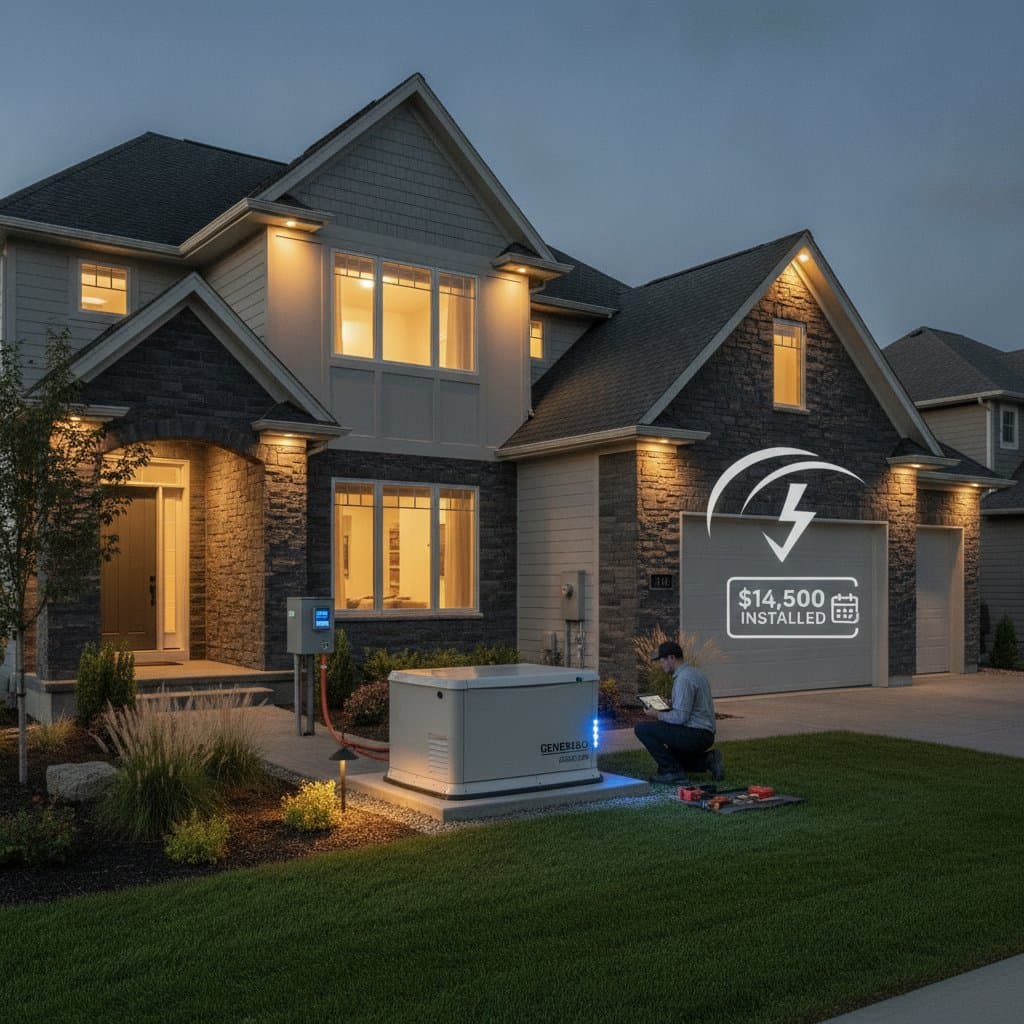
Typical cost and what changes it: Total installed cost ranges from $7,000 to $20,000, depending on size, fuel, and site conditions.
When to hire a pro: Always. Electrical and gas connections require licensed contractors.
How long it takes: Usually 2 to 5 days, including permits and utility coordination.
Maintenance interval: Service every 6 to 12 months for oil, filters, and testing.
Anatomy of a Whole Home Generator System
Each system includes several main parts that work together for reliability:
- Generator Engine: The motor that converts fuel into mechanical energy.
- Alternator: Converts mechanical energy into electricity.
- Automatic Transfer Switch (ATS): Detects outages and switches the home load.
- Fuel Supply Line: Connects to natural gas, propane tank, or diesel supply.
- Electrical Panel Connection: Distributes power to circuits through breakers.
- Base Pad or Platform: Stabilizes the generator and keeps it above grade.
- Weatherproof Enclosure: Protects internal components and reduces noise.
If any of these parts fail, the system may not start or transfer power correctly. Regular inspection prevents costly downtime.
Step-by-Step Installation Process
- Load Calculation: Determine the total wattage needed to power essential or entire circuits.
- Generator Sizing: Choose a unit rated slightly above the calculated load to prevent overload.
- Site Preparation: Create a level pad of concrete or compact gravel near the electrical panel.
- Fuel Connection: A licensed plumber or gas fitter connects lines to the fuel source with proper regulators.
- Electrical Wiring: The electrician installs the automatic transfer switch and ties it to the main panel.
- Testing and Commissioning: The installer verifies startup, transfer timing, and voltage output.
- Inspection and Permit Closure: Local code officials inspect gas and electrical work before final approval.
This process usually takes several days, including coordination with utility and inspection schedules.
DIY vs Pro
Installing a whole home generator is not a casual project. It involves gas piping, high-voltage wiring, and code inspections. Only licensed professionals should connect fuel and electrical systems.
| Factor | DIY Level | Safety Risk | Tools Required | Permit or Code | Time Required | Warranty Impact |
|---|---|---|---|---|---|---|
| Site prep only | Moderate | Low | Shovel, level, gravel | Usually no | 1 day | None |
| Electrical connection | Not DIY | High | Specialized meters, conduit | Yes | 1 to 2 days | Voids warranty |
| Fuel connection | Not DIY | High | Pipe threading, leak tests | Yes | 1 day | Voids warranty |
Bottom line: Homeowners can prepare the site, but electrical and fuel work must be done by licensed pros to meet code and preserve warranty coverage.
Maintenance and Lifespan
With proper care, a whole home generator lasts 15 to 25 years. Maintenance includes:
- Oil and filter change: Every 100 to 200 hours of operation.
- Battery test: Monthly visual check and annual load test.
- Air filter replacement: Once per year or as needed.
- Fuel system inspection: Annually for leaks and regulator performance.
- Exercise cycle: Automatic weekly self-test ensures readiness.
Service contracts from authorized dealers cost about $200 to $400 per year, including tune-ups and inspection reports.
FAQs
How big should my whole home generator be?
Most homes need between 20 and 30 kilowatts to power all circuits.
Does a generator add home value?
Yes, buyers often see it as a premium upgrade, especially in outage-prone areas.
Can I run a generator on both propane and natural gas?
Many models are dual-fuel capable, but setup must match local fuel supply.
Selecting the Right System for Your Needs
Begin with a professional load assessment to match generator capacity to household demands. Factor in local fuel availability and site constraints before finalizing equipment and installation plans. This approach delivers dependable backup power tailored to specific home requirements.