Why Soundproof a Home Office in 2026? Understanding Costs and Returns
Soundproofing a home office reduces external noise intrusion, sharpens focus during work, and enhances overall property appeal. Expenses generally range from $1,000 to $6,000, influenced by room dimensions and selected materials. The benefits, including heightened productivity and long-term comfort, often justify the initial outlay.
Defining Soundproofing for Home Offices
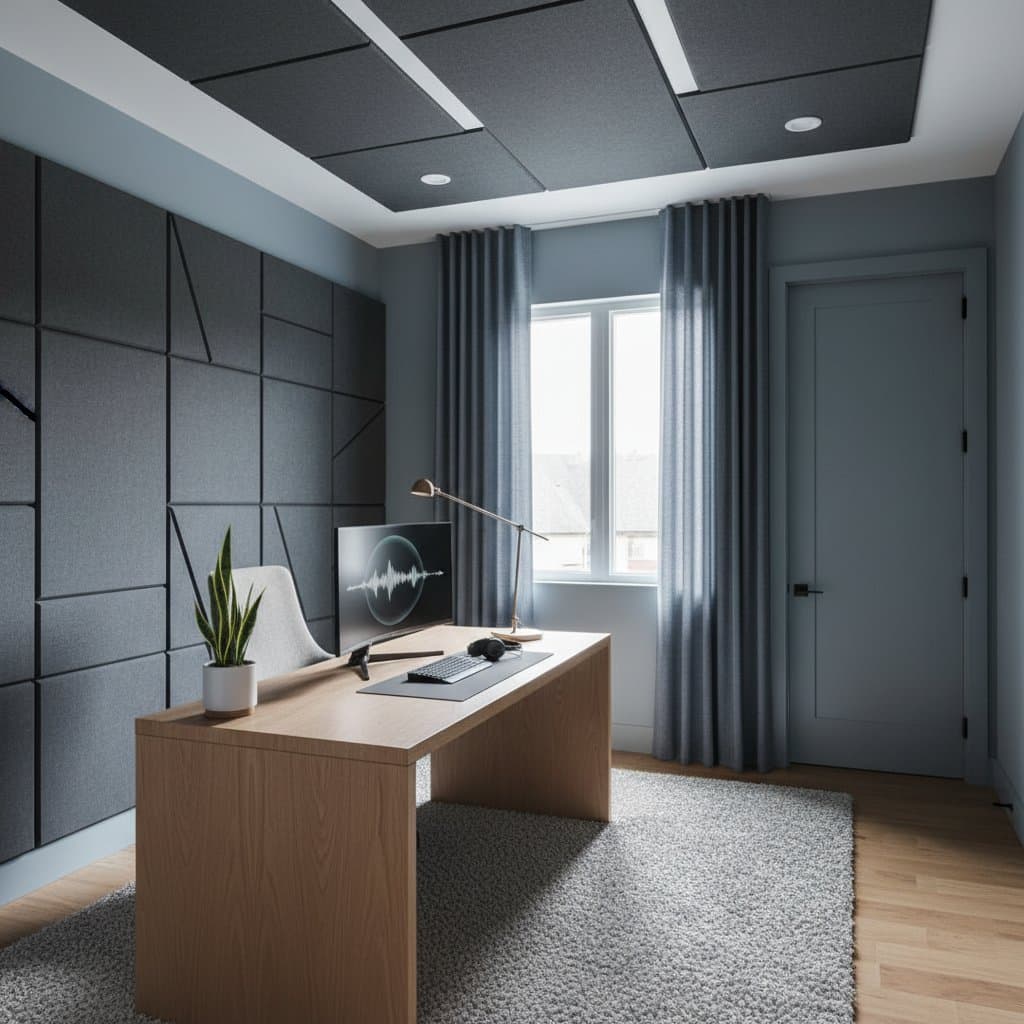
Soundproofing involves techniques to block or absorb sound transmission through walls, ceilings, floors, and doors. Key principles include adding mass for density, ensuring airtight seals, and controlling vibrations to prevent noise travel. In a home office setting, effective soundproofing isolates external disturbances while containing internal sounds, such as conversations or equipment hum, to maintain privacy.
Indicators That Soundproofing Is Necessary
Several cues signal the need for improved acoustic control in a home office. Consider upgrades if external sounds like traffic, neighbor conversations, or household appliances disrupt concentration. Complaints from clients about echo or ambient noise during virtual meetings also highlight deficiencies. Shared walls with noisy areas, requirements for high-quality audio recording, or unintended sound leakage to family members further underscore the value of intervention. These issues point to inadequate isolation and absorption within the space.
Breaking Down Costs and Influencing Factors
The total expense for soundproofing varies based on room size, existing construction, and desired noise reduction level. Larger spaces or complex builds increase material and labor needs. Below is a detailed overview of common components:
| Line Item | Typical Range | Notes and Variables |
|---|---|---|
| Acoustic Panels | $200 to $800 | Coverage area and material type determine price; fabric-wrapped options add aesthetic value. |
| Additional Drywall | $300 to $1,200 | Incorporates damping compounds like green glue for enhanced vibration control. |
| Door and Window Seals | $100 to $350 | Includes weatherstripping, door sweeps, and acoustic caulk to seal gaps effectively. |
| Mineral Wool Insulation | $250 to $700 | Installed in wall cavities to absorb sound waves and provide thermal benefits. |
| Professional Labor | $500 to $2,500 | Depends on access, wall complexity, and regional labor rates. |
For a typical 10x12-foot office, expect a median investment of about $3,000. Budget-conscious DIY approaches start at $1,000, focusing on seals and basic panels. Premium professional setups, featuring comprehensive isolation with high-end materials, can reach $6,000. Returns manifest through superior work efficiency, elevated home resale potential, and sustained daily comfort.
Essential Safety and Compliance Considerations
Prioritize safety during soundproofing projects by wearing hearing protection and dust masks when handling insulation or cutting drywall. Secure ladders firmly and fasten panels properly to avoid falls or instability. Review local building codes prior to modifying walls or ceilings, ensuring all changes align with regulations. Never obscure electrical outlets, switches, or ventilation systems. Select fire-rated materials for any enclosed areas to meet safety standards and prevent hazards.
Adapting to Regional and Environmental Conditions
Soundproofing strategies should account for local climate and building characteristics to maximize effectiveness. In colder regions, materials like mineral wool serve dual purposes by insulating against heat loss while blocking noise. Humid environments benefit from mold-resistant panels to maintain air quality. Arid areas require flexible sealants that withstand expansion and contraction from temperature fluctuations. Urban settings demand attention to traffic-facing walls and windows for robust external noise barriers. In rural or windy locations, target rooflines and attics to curb airborne sound paths.
Consult local regulations, particularly in multi-unit buildings, which may mandate minimum sound transmission ratings. Schedule installations during moderate weather to allow for open windows and proper ventilation during the process.
Key Terminology for Soundproofing
- Acoustic Panel: Wall-mounted absorber designed to reduce echoes and reverberations within a room.
- Decoupling: Method of isolating structural elements to minimize vibration transmission between surfaces.
- Damping Compound: Viscous layer applied between drywall sheets to dissipate sound energy.
- Flanking Path: Indirect noise route via gaps, ducts, or structural connections that bypass primary barriers.
- Mineral Wool: Fibrous insulation material effective at attenuating both sound and thermal transfer.
- Resilient Channel: Flexible metal track that suspends drywall, interrupting vibration paths.
- STC Rating: Sound Transmission Class metric evaluating a assembly's ability to block airborne sound, with higher numbers indicating better performance.
- Weatherstripping: Pliable material applied to door and window frames to seal against air and sound infiltration.
- Mass Loaded Vinyl: Dense, flexible barrier sheet added to walls or floors for superior sound blocking.
Steps to Implement Effective Soundproofing
Begin by assessing your space: measure dimensions, identify noise sources, and evaluate current construction. Select materials based on budget and needs, prioritizing high-STC options for walls adjacent to noisy areas. For DIY efforts, start with simple seals around doors and windows, then add insulation and panels. Engage professionals for structural changes like decoupling or new drywall layers to ensure precision.
Test results post-installation by playing sounds and checking for leakage. Maintain the setup by inspecting seals annually and avoiding modifications that could compromise integrity. This approach yields a quieter, more productive office tailored to 2026 standards, fostering focus and professional poise.