The Hidden Costs of Installing Solar Panels in 2026
Installing solar panels promises long term energy savings. The process involves more than panels alone. Homeowners must account for permits, structural work, electrical upgrades, and ongoing care to avoid budget overruns.
Core Components of a Solar System
A solar installation uses photovoltaic cells to turn sunlight into electricity. Panels attach to roofs or ground mounts. An inverter changes direct current to alternating current for household use. Systems connect to the grid or add batteries for storage.
The primary aim remains lower utility bills and greater energy independence. Total expenses extend well beyond equipment. Preparation steps, permits, and maintenance determine the true investment.
Pre Installation Inspection Points
Examine the home structure and electrical service before any commitment. Key indicators for added work include the following:
- Roof age exceeds ten years or shows damage such as curled shingles and leaks.
- Breaker panel lacks space for additional circuits.
- Attic ventilation appears inadequate or framing seems undersized.
- Power fluctuations occur regularly, pointing to wiring concerns.
Address these items first. Later panel removal for repairs increases overall lifetime expenses.
Detailed Cost Breakdown
National Price Ranges
| Line Item | Typical Range | Notes and Variables |
|---|---|---|
| Solar panels | 6,000 - 12,000 | Size and efficiency determine final figures |
| Inverter | 1,000 - 3,000 | String models cost less than microinverters |
| Mounting hardware | 1,000 - 2,000 | Roof material influences attachment choices |
| Labor | 3,000 - 6,000 | Crew rates and project scope affect totals |
| Permit and inspection fees | 200 - 1,000 | Local rules create wide variation |
| Electrical upgrade | 500 - 3,000 | Older homes often require 200 amp service |
| Roof repair or replacement | 2,000 - 10,000 | Needed when shingles near end of service life |
| Structural engineering | 300 - 1,000 | Many jurisdictions mandate this review |
| Utility interconnection | 100 - 500 | Application or meter fees may apply |
| Maintenance and cleaning | 150 - 400 per year | Access and dust levels set frequency |
Primary Cost Influences
Roof type matters. Tile and metal surfaces require more time than asphalt shingles. Larger systems increase hardware and labor needs. Homes with 100 amp service frequently need upgrades. Local permit rules and incentive timing also shift net outlays.
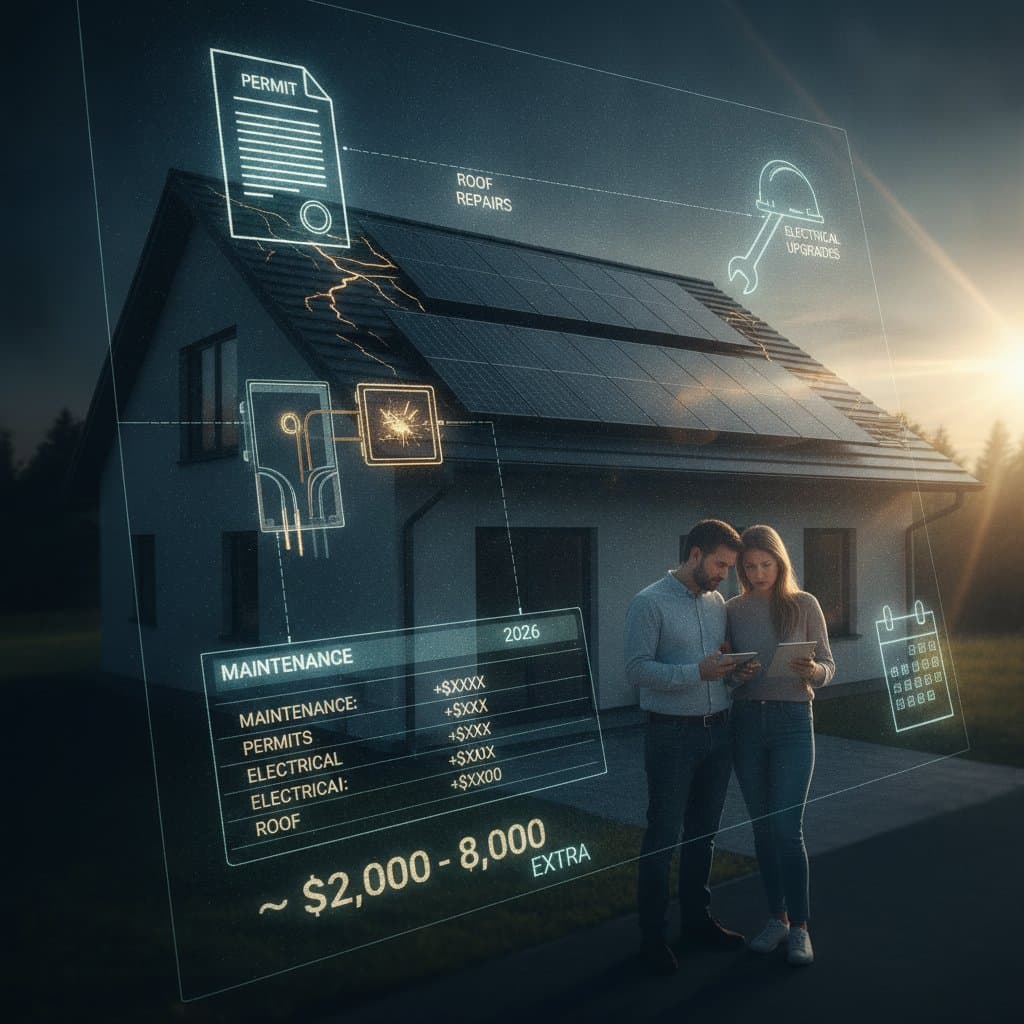
A typical homeowner pays near 20,000 dollars after incentives. Additional items can push totals to 25,000 dollars or higher.
Safety and Compliance Requirements
Installations must satisfy electrical, structural, and fire standards. Required elements include accessible disconnect switches, properly grounded conduit, sealed roof penetrations, clear fire pathways, and verified load calculations.
Shut off power before any electrical work. Use insulated tools and protective gear. Avoid tasks on wet surfaces.
Regional and Seasonal Considerations
Climate affects performance and hardware selection. Cold areas need steeper angles for snow shedding. Hot regions benefit from panels with strong temperature ratings and airflow. Humid zones require corrosion resistant parts. Arid locations call for regular cleaning. Coastal sites demand marine grade materials.
Permit demands vary. Some areas require engineer certification or fire setbacks. Material choices depend on roof type. Asphalt accepts standard rails while tile needs specialized hooks. Metal roofs allow clamp systems without penetrations.
Installer schedules fill quickly in spring and summer. Fall and winter may offer lower rates yet introduce weather delays. Book early to secure preferred dates.
Next Steps for Homeowners
Review inspection findings and obtain multiple quotes that list every line item. Confirm incentive timelines and schedule work during slower seasons when possible. This approach keeps total costs predictable and supports a reliable installation outcome.