Unlocking Tax Savings Through Home Office Expenses
Establishing a home office enhances productivity while introducing expenses that impact household finances and tax filings. Homeowners often miss opportunities to offset renovation, equipment, and maintenance costs through deductions. A methodical evaluation of these elements enables significant savings and adherence to tax rules.
Identifying Eligible Home Office Spaces
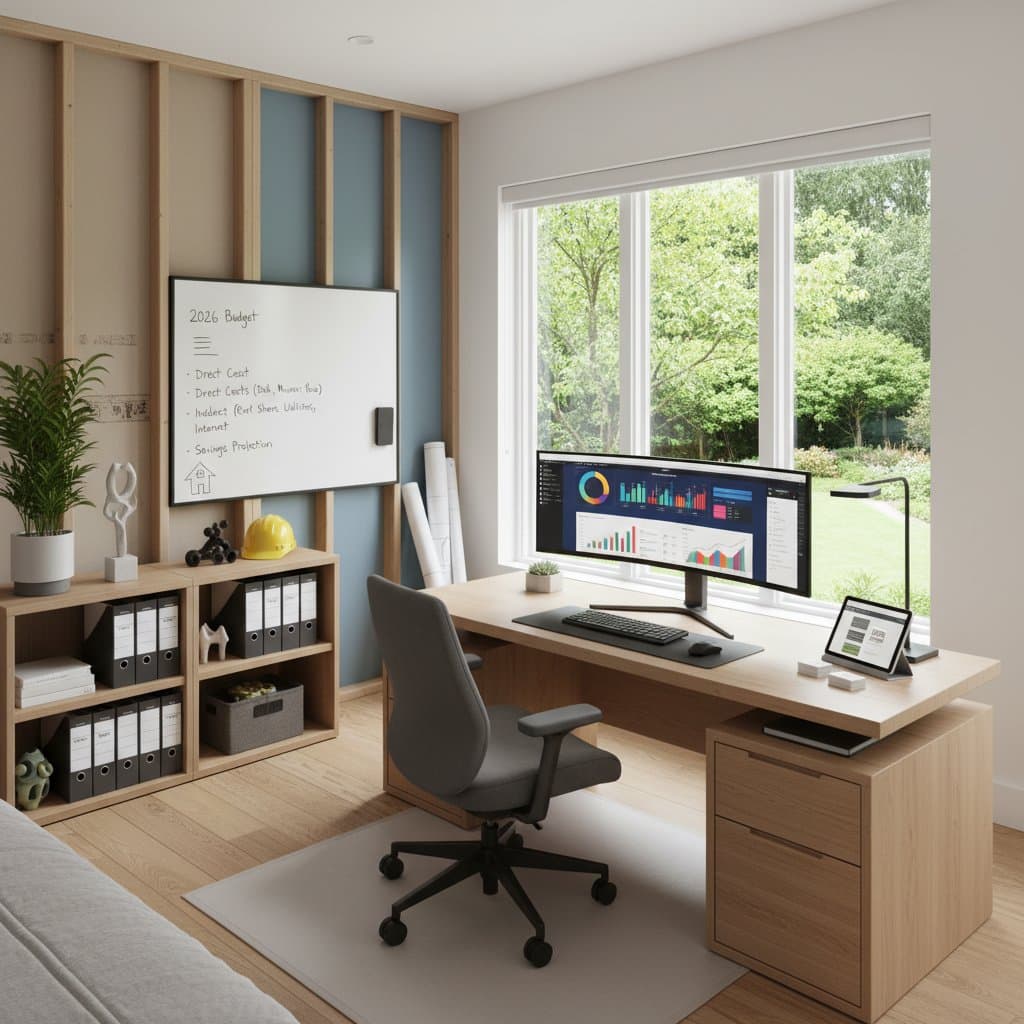
A home office qualifies as any dedicated area used solely for business, such as a spare room, attic conversion, or separate structure. Tax benefits hinge on exclusive and regular professional use. Qualifying expenses encompass building supplies, illumination, surfaces, and prorated utilities when the space satisfies IRS criteria for business exclusivity.
Categorizing Deductible Expenses
Tax rules divide home office costs into direct and indirect types. Direct expenses pertain exclusively to the office, including wall treatments or custom storage installations. Indirect expenses, such as climate control or home protection policies, allocate across the residence based on business-use proportions.
Key deductible elements include:
- Building and modification supplies specific to the office
- Workstations, adjustable seating, and supportive accessories
- Computing devices, output tools, and connectivity systems
- Professional application licenses
- Proportional shares of energy, coverage, and real estate levies
Documentation demands rigor: preserve purchase proofs, billing statements, and utilization logs to substantiate claims in reviews.
Breaking Down Setup and Ongoing Costs
Home office budgeting distinguishes initial investments from recurring outlays. Initial costs cover structural work, cabling, coverings, illumination, and furnishings. Recurring expenses involve connectivity, power, temperature regulation, upkeep, and sanitation.
Plan for both to avoid shortfalls. Underestimating year-round environmental controls in a isolated workspace inflates actual spending. Deduction values tie to the business percentage of total square footage, influencing utility allocations.
Calculating Deduction Benefits
Home office claims yield real financial relief, scaled by precise computations. Opt for the simplified option at a fixed rate per square foot or the actual expense method for detailed logging. The latter maximizes returns for major upgrades or purchases, though it requires meticulous tracking.
To project savings:
- Determine the business-use ratio of total living area.
- Sum yearly residence costs like services, loan interest, and protections.
- Apply the ratio to each indirect category.
If the office represents 10 percent of the home, deduct 10 percent of eligible indirect costs. Direct office-only expenses qualify in full.
Documenting and Claiming Deductions
Start with thorough records. Essential items include:
- Site diagrams illustrating office dimensions relative to the entire property.
- Purchase journals noting items, acquisition dates, and business purposes.
- Visual proofs of configurations, particularly for alterations.
- Service bills demonstrating steady patterns aligned with percentages.
Examiners verify business exclusivity; minimal personal activity risks disqualification. Retain files across several years for potential inquiries.
Recognizing Non-Deductible Items
Certain costs fall outside eligibility. Excluded examples:
- Improvements enhancing general property appeal over business utility.
- Fixes in communal zones like dining or relaxation areas.
- Items selected for style rather than operational efficiency.
- Tools shared between personal and professional applications.
These boundaries curb excessive assertions. A workspace enhancement in a multipurpose area, such as a surface update, lacks deductibility despite convenience.
Assessing Professional Service Expenses
Engaging specialists for modifications or systems demands verification of credentials, protections, and detailed proposals. Solicit bids from several providers to gauge reasonable rates and detect overcharges.
Conduct a full expense review incorporating:
| Service Type | Monthly Range | Initial Charge | Maximum Coverage | Notable Restrictions |
|---|---|---|---|---|
| Basic Modification Option | $200 to $400 | $50 | $5,000 | Surface enhancements |
| Standard Wiring Solution | $300 to $600 | $75 | $8,000 | Personal circuits |
| Advanced Space Adaptation | $500 to $900 | $100 | $12,000 | Common zones |
Such breakdowns highlight variations in depth and protections. Confirm inclusions for supplies, approvals, and follow-up assistance.
Analyzing Long-Term Financial Impacts
Home office commitments surpass upfront spending. Utility demands grow, coverage rates may rise, and updates accumulate over time. A comprehensive ownership assessment balances tax advantages against ongoing burdens.
Consider a $10,000 project generating $1,000 yearly deductions. Evaluate this against preservation, asset decline, and market effects. A convertible office potentially elevates resale worth without complicating transitions.
Implementing Compliance and Risk Controls
Inaccurate reporting invites fines. Log all figures and specialist interactions meticulously. Engage fiscal experts to sidestep mistakes and track regulatory shifts.
Develop a upkeep schedule. Periodic attention to surfaces, power points, and setups upholds efficiency and deduction integrity.
Building Sustainable Financial and Workspace Value
A well-planned home office delivers productivity and fiscal rewards. Strategic choices in providers, methods, and tracking foster enduring security.
Viewing expenses holistically elevates routine setups to calculated ventures. Through diligent preparation, precise logging, and ongoing review, achieve a versatile environment paired with reliable tax optimizations.