2025 Costs: Converting a Home Office to a Guest Room
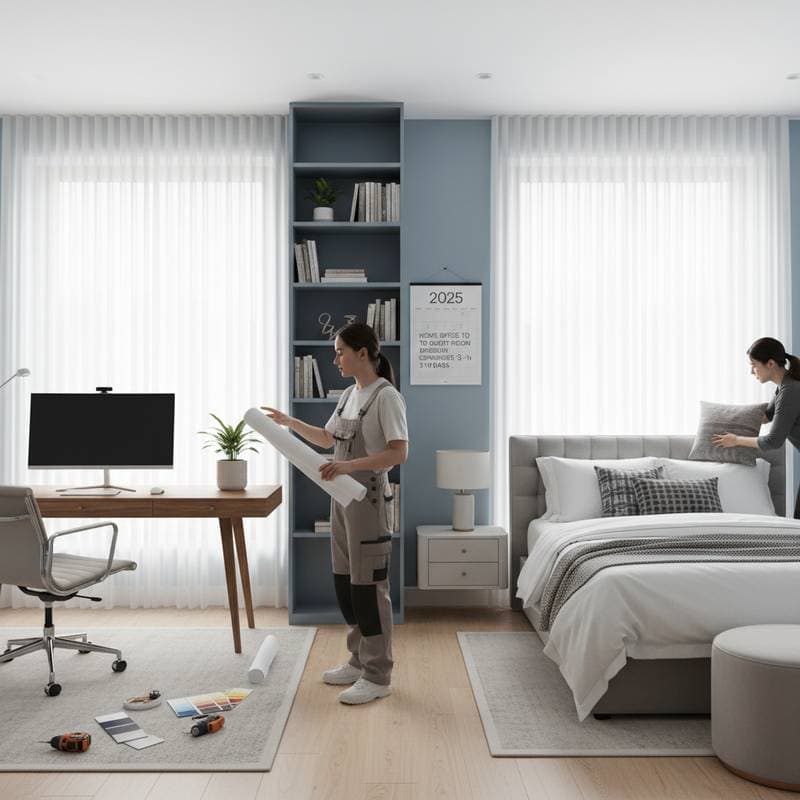
Converting a home office into a guest room provides valuable flexibility for homeowners. This transformation accommodates visiting family or friends while enhancing the property's appeal to future buyers. Such a project requires minimal structural changes, focusing instead on targeted updates to repurpose the space effectively.
Most conversions involve cosmetic and functional adjustments, with expenses varying according to material choices and the extent of modifications. Homeowners often complete these updates without extensive renovations, preserving the room's utility.
Quick Overview: Budget $1,200 to $9,000 for a standard conversion. Basic refreshes remain affordable at the lower range, whereas additions like electrical enhancements, new flooring, or custom built-ins push costs toward the upper limit.
Essential Planning Steps
Before selecting paint colors or rearranging items, evaluate several key elements to ensure the project aligns with your needs.
- Assess room dimensions and configuration: Calculate available floor area and vertical space. For instance, a standard full-size bed requires a minimum of 30 inches of clearance on each side to allow easy movement.
- Define the room's primary function: Determine if the space will retain office capabilities or shift entirely to guest accommodations.
- Review electrical and illumination needs: Guest areas benefit from ambient lighting sources, unlike the focused task lights common in offices.
- Evaluate seclusion and acoustics: Consider the door's position, options for window treatments, and measures to reduce external noise.
- Plan for storage solutions: Options include installing a closet, freestanding wardrobe, or drawers beneath the bed to accommodate visitor belongings.
- Verify temperature regulation: Inspect existing heating, air conditioning, and airflow systems to guarantee consistent comfort throughout the seasons.
Addressing these factors early prevents costly adjustments later and helps create a space that serves multiple purposes seamlessly.
Detailed Cost Analysis and Influencing Variables
Typical conversions range from $1,200 to $9,000, with many projects averaging $4,000 to $5,000. These figures account for materials, labor, and minor installations, assuming no major demolition.
Budget-Friendly Options ($1,200 to $3,000):
- Refreshing wall surfaces and trim with fresh paint coats.
- Mounting blackout curtains to promote restful sleep.
- Acquiring a sleeper sofa or daybed as a multifunctional furniture piece.
- Selecting coordinating bedding sets and supplemental lamps.
Moderate Investments ($3,000 to $6,000):
- Installing durable flooring such as carpet tiles or laminate planks.
- Incorporating a compact closet organizer for efficient space use.
- Modernizing outlets or installing overhead fixtures for better illumination.
- Choosing quality furniture and accents that blend style with utility.
Premium Upgrades ($6,000 to $9,000):
- Customizing with a wall-mounted Murphy bed or integrated cabinetry.
- Enhancing walls with additional insulation or acoustic panels.
- Embedding recessed lights or a ceiling fan for improved airflow.
- Engaging professionals for design consultations and structural tweaks.
Elements That Drive Expenses:
- Existing room state: Repairs to outdated paint, patched drywall, or deteriorated floors add preparatory labor.
- Utility modifications: Extending wiring for new outlets or adjusting HVAC ducts demands skilled technicians.
- Furniture selections: Opting for hardwood pieces or tailored storage units elevates the total outlay.
- Regional labor differences: Contractor fees fluctuate based on local market conditions and demand.
By prioritizing essentials like bedding and lighting first, homeowners can scale the project to fit their financial parameters.
Deciding Between DIY and Professional Assistance
Many aspects of this conversion suit hands-on homeowners, while others require expert intervention to meet safety standards.
Tasks Suitable for DIY:
- Applying paint, repairing minor wall imperfections, and updating trim details.
- Constructing and positioning furniture according to manufacturer guidelines.
- Securing curtain hardware or window shades in place.
- Swapping outlet plates or bulb fixtures, provided no wiring alterations occur.
Areas Requiring Professionals:
- Rewiring for additional circuits or smart features.
- Relocating or expanding heating and cooling components.
- Fabricating and securing built-in storage or fold-down beds.
- Implementing insulation upgrades or load-bearing adjustments.
Required Expertise: Intermediate skills suffice for most elements. Allocate 15 to 30 hours across the project phases. Prioritize safety by wearing protective gear during surface preparation or tool use. Disconnect power sources at the main panel prior to any electrical handling, and adhere to municipal building regulations.
This approach allows cost savings through self-directed efforts, balanced with professional input where precision matters most.
Ongoing Upkeep and Longevity
A completed guest room demands routine care to sustain its appeal and functionality over time.
- Wall surfaces: Refresh minor marks with touch-up paint every two to three years.
- Floor coverings: Clean with vacuuming or gentle mopping; plan carpet replacement after 8 to 10 years of regular foot traffic.
- Furniture maintenance: Inspect and secure loose hardware on frames or mechanisms once a year.
- Bedding care: Launder items thoroughly and store them in airtight containers during periods of non-use.
- Climate systems: Replace air filters quarterly and ensure vents remain unobstructed.
With consistent attention, the space will provide reliable comfort for a decade or more, incurring few extra expenses.
Common Questions
What impact does a guest room have on property value?
An additional bedroom, thoughtfully designed, can increase market worth by 5 to 10 percent. This boost depends on regional preferences and the room's adaptability for office or leisure uses.
Is it possible to retain office elements in a guest setup?
Certainly. Substitute bulky seating with a slim-profile chair and install a retractable or pivot desk. Pair this with a convertible sofa to maintain dual functionality without clutter.
Does a bedroom require built-in storage to qualify officially?
In many real estate markets, listings demand a closet alongside a compliant escape window. To maximize appeal, integrate a freestanding unit or custom shelving if space allows.
Are space-saving beds a smart investment?
Installed Murphy beds range from $2,000 to $4,000 and excel in compact areas by concealing during the day. They prove ideal for multifunctional rooms in city dwellings or creative studios.
Executing Your Conversion Plan
Approach the home office to guest room shift with attention to usability, expense management, and enduring benefits. Initiate with foundational elements like sleep arrangements and air quality, then layer in aesthetics. Precise measurements and a clear blueprint guide efficient progress, while recognizing limits ensures professional support when needed. This methodical process yields a versatile haven that elevates everyday living and future marketability.