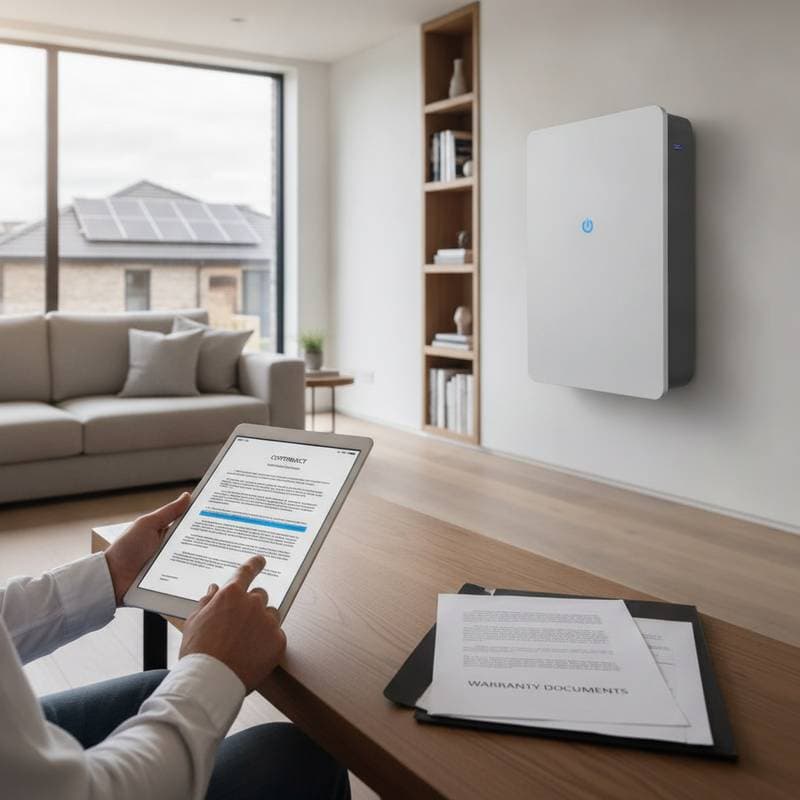
2026 Home Battery Warranty Facts Every Owner Needs
Home battery systems store excess solar power, supply backup during outages, and cut grid dependence. Many owners overlook warranty details before purchase. These agreements set the duration of protection and the conditions for valid claims. Clear knowledge of terms prevents disputes and safeguards investments.
Defining the Home Battery Warranty
A home battery warranty outlines what the manufacturer or installer will repair or replace after failure. Coverage splits into product warranty and performance warranty. The product warranty addresses defects in materials and workmanship. The performance warranty ensures the battery keeps a stated percentage of original capacity across years.
Most warranties contain limiting clauses. These clauses decide whether a claim succeeds when capacity fades or parts fail.
Cost Structure and Value Assessment
Warranties form part of the purchase price and shape long-term costs. A $10,000 system with ten-year coverage may cost less overall than a $12,000 system with fifteen-year performance guarantees. Longer terms reduce replacement risk even when the initial price rises.
Service fees for technician visits usually range from $75 to $150. Some policies limit repairs to $500 per event. Homeowners pay any amount above that cap. Checking these figures helps forecast cash flow and return on investment.
Step-by-Step Warranty Process
Homeowners follow five stages when filing a claim.
- Report the issue to the manufacturer or installer with error codes and performance logs.
- A technician examines system data through remote access or an on-site visit.
- The provider reviews the report and approves or denies the claim.
- Approved repairs or replacements occur, either by shipped parts or certified technicians.
- Post-service testing confirms the system meets requirements and coverage stays active.
Complete records of receipts and serial numbers shorten each stage.
Coverage Limitations and Exclusions
Warranties exclude damage unrelated to manufacturing defects. Common exclusions cover improper installation by uncertified crews, exposure to floods or extreme temperatures, charge cycles beyond roughly 5,000, unauthorized software changes, and neglected maintenance such as blocked vents.
Reviewing these limits before problems arise reduces the chance of denied claims.
Financial Implications of Warranty Terms
Strong warranties lower repair expenses. Weak terms shift costs to owners. Calculate total ownership cost by adding purchase price, service fees, and expected lifespan. Some policies reduce payout value as the system ages. A claim filed at year five may cover only half the replacement cost.
Evaluating Warranty Options Systematically
Compare options with a short checklist.
- Decide whether long performance guarantees outweigh higher upfront cost.
- Verify that capacity retention matches expected daily use, typically 70 to 80 percent at term end.
- Confirm required maintenance such as annual inspections.
- Check whether coverage transfers to a new owner upon sale.
- Note any aggregate payout caps across multiple claims.
This sequence keeps decisions grounded in data rather than marketing claims.
Risk Mitigation and Consumer Protection
Maintain dated records of every software update and service visit. Verify technician credentials before any work begins. Request written manufacturer approval before third-party repairs. If a claim is denied, ask for a written explanation and use any offered mediation process.
Reading the Fine Print
Examine performance thresholds, cycle limits, and operating temperature ranges. Small wording differences matter. A guarantee of 80 percent capacity may refer to nominal rather than usable storage, which lowers actual output.
Implementing These Warranty Strategies
Systematic review of terms, consistent documentation, and verified service protect both finances and energy supply. Owners who treat warranty documents as financial tools gain reliable coverage that extends well past installation day.