Payback: Annual energy savings of $100 to $200, plus increased buyer interest in sustainable features that support the high ROI.
Timeline: Three days for appliance delivery, installation, and ventilation routing.
Smart Storage and Organization Solutions
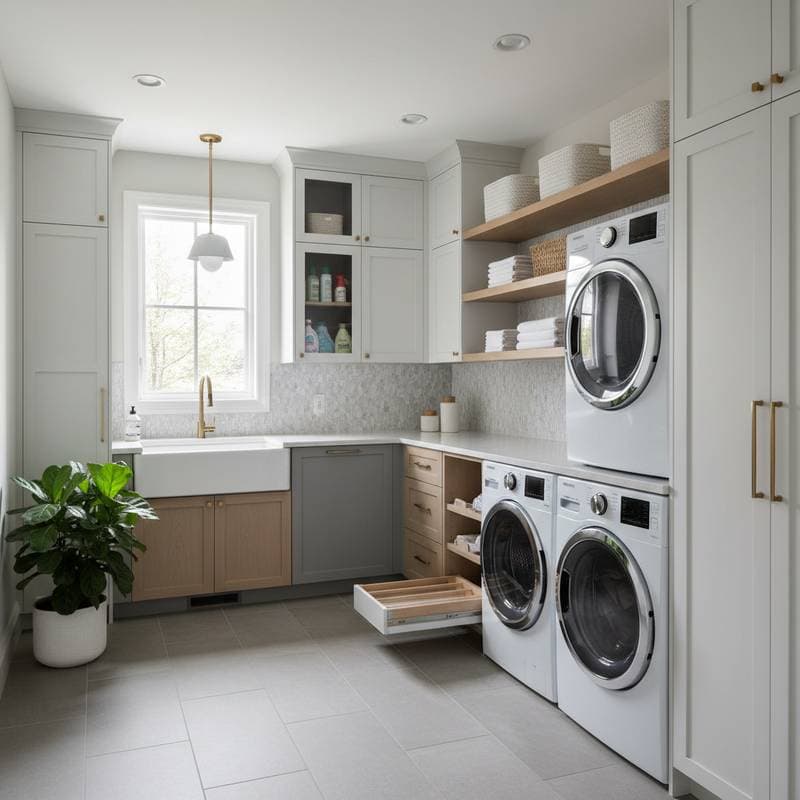
Effective storage transforms cluttered spaces into streamlined hubs. Install wall-mounted cabinets above the appliances to store detergents and supplies, freeing floor area. Pull-out hampers and drying racks integrated into doors maximize vertical space without compromising aesthetics.
Consider built-in ironing boards that fold away and adjustable shelving for linens. These elements cater to varied household needs, from small apartments to large family homes.
Storage upgrade costs:
- Custom cabinetry: $800 to $2,000
- Organizational accessories: $150 to $400
- Sink and folding station: $400 to $900
Payback: Enhanced organization boosts daily efficiency, making the space a selling point that justifies premium pricing at resale.
Timeline: One to two days for assembly and secure mounting.
6. Smart Features
Integrating smart technology appeals to tech-savvy buyers and streamlines operations. Wi-Fi-enabled washers allow remote cycle monitoring and scheduling during low-energy periods. Leak sensors provide instant notifications to mobile devices, averting water damage.
Smart upgrade options:
- Wi-Fi enabled washer/dryer pair: $2,500 to $4,000
- Smart leak sensor kit: $50 to $150
- Smart plug or outlet for energy monitoring: $30 to $80
Payback: Reduced energy expenses and proactive damage prevention preserve property value, aligning with the 75 percent ROI potential.
Timeline: One day for installation and app configuration.
Prioritizing Safety, Codes, and Warranties
Laundry remodels involve plumbing and electrical work, requiring strict adherence to local codes. Obtain permits for any modifications to supply lines, drains, or circuits to avoid fines and ensure insurability.
Install ground-fault circuit interrupter outlets near water sources and secure all fixtures to prevent tipping. For upper-level installations, add leak pans beneath washers to protect subfloors.
Permits and inspections:
- Plumbing permits for new supply lines or floor drains
- Electrical permits for circuit changes or added outlets
- Mechanical permits for dryer vent relocation
Warranty considerations:
- Improper venting may void dryer warranties
- Omitting leak pans under second-floor washers risks invalidating builder warranties on water damage
Personal protective equipment:
- Safety glasses for cutting and drilling tasks
- Gloves for handling tiles and adhesives
- Dust mask or respirator during sanding of drywall or concrete
Compliance safeguards health and maintains the remodel's value for resale.
Long-Term Maintenance and Expected Lifespan
Regular maintenance extends the remodel's durability and performance. Establish a routine to inspect components and address wear promptly.
Maintenance cadence framework:
| Stage | Tasks | Frequency |
|---|---|---|
| After install | Check hose connections, caulk joints, test drain pan | First month |
| Seasonal | Clean vent ducts, test GFCI outlets, inspect light covers | Twice a year |
| Annual | Re-seal grout lines, check cabinet hinges, flush washer drain line | Once a year |
| End of life | Replace hoses, upgrade valves, refresh paint | Every 8 to 10 years |
Service life expectations:
- Washers and dryers: 10 to 15 years
- Cabinets and counters: 15 to 20 years
- Flooring and sink fixtures: 20 years with proper sealing
These practices ensure the space remains functional, supporting sustained home value.
DIY vs. Professional: A Practical Comparison
Decide between self-directed efforts and expert involvement based on project scope and skill level. DIY suits simple swaps, while professionals handle complex integrations.
Quick Comparison Table: DIY vs Professional Remodel
| Line item | Spec or scope | DIY approach | Hire a pro | Variance notes |
|---|---|---|---|---|
| Appliance replacement | Plug-in swap | Possible | Recommended if vent or outlet changes | Code compliance |
| Sink and counter install | Plumbing tie-in | Risky | Best for plumber | Leak prevention |
| Cabinet install | Basic screw-mount | Possible | Better if walls uneven | Finish alignment |
| Flooring | Peel-and-stick vinyl | Possible | Required for tile or drain slope | Waterproofing quality |
| Lighting and vent | Fixture replacement | Possible | Required for new circuit | Electrical safety |
Balance approaches to control costs while achieving professional results.
Preparation Checklist for Success
Thorough preparation minimizes disruptions and errors. Gather tools and secure permissions in advance.
Readiness Checklist
| Category | Items |
|---|---|
| Tools required | Drill, stud finder, pipe wrench, level, tile cutter, safety glasses |
| Skills required | Basic plumbing, electrical awareness, finish carpentry |
| Safety gear | Gloves, mask, non-slip shoes, hearing protection |
| Permits needed | Plumbing, electrical, and venting where new runs occur |
| Prep tasks | Measure space, shut off water, clear access, protect flooring |
| Weather or site constraints | Avoid tile or paint work in high humidity or cold conditions |
Address these items to proceed confidently.
Executing Your Laundry Remodel Plan
Begin with precise measurements and a detailed budget allocation. Sketch layout adjustments prior to selecting materials, ensuring compatibility with existing infrastructure.
Follow this sequence: demolition, rough-in for plumbing and electrical, flooring installation, cabinet and counter mounting, fixture setup, and final painting with trim. Opt for a hybrid model where homeowners manage cosmetic tasks like painting and shelving, while licensed professionals tackle plumbing and electrical elements.
Retain all receipts and permit documentation as proof of quality work for potential buyers. A meticulously remodeled laundry room reflects thoughtful home stewardship. Emphasize robust construction, effective moisture management, and subdued operation to create a serene environment. Upon completion, label utility shutoffs, store manuals accessibly, and verify safety mechanisms. These steps secure your investment and instill confidence in future owners regarding the remodel's integrity.