Soundproofing Your Home Office in 2026: Realistic Costs and Strategies
Remote work has transformed the home office into a vital space where distractions can hinder performance. Soundproofing addresses this by minimizing external noises from traffic, household activities, or neighboring sounds, thereby enhancing privacy during virtual calls and boosting overall productivity. For an average 120-square-foot room, the investment ranges from $800 to $3,500, varying with the extent of modifications and material quality.
Quick Overview: Budget $800 for basic treatments like seals and panels, or up to $3,500 for comprehensive solutions involving structural changes. These costs include materials and labor, with DIY efforts reducing expenses by 30 to 50 percent.
Evaluating Soundproofing Methods
Selecting the appropriate method depends on your noise challenges, budget, and DIY comfort level. Basic options focus on absorption within the room, while advanced techniques target transmission through walls and floors. Below is a comparison of common approaches, including estimated costs for a standard home office.
| Method | Description | Advantages | Disadvantages | Estimated Cost (2026) |
|---|---|---|---|---|
| Acoustic Panels | Foam, fabric-covered, or wooden panels affixed to walls and ceilings | Simple installation, aesthetic appeal, reduces echoes effectively | Minimal impact on noises from outside structures | $200–$800 |
| Insulated Walls | Mineral wool, fiberglass, or cellulose blown into existing wall cavities | Superior blocking of airborne and impact sounds, durable over time | Involves wall access, potentially disruptive | $1,000–$2,500 |
| Double Drywall | Additional drywall layer applied with damping compound and green glue | High sound transmission class (STC) rating, robust construction | Increases wall thickness, requires skilled labor | $1,200–$2,800 |
| Seals and Sweeps | Acoustic caulk, weatherstripping, and door sweeps to close air gaps | Inexpensive, fast to apply, improves overall seal | Addresses only minor leaks, not core noise paths | $50–$200 |
| Acoustic Windows | Laminated glass upgrades or insert panels for existing frames | Effectively dampens street or environmental noise | High price tag, often needs professional fitting | $500–$1,500 per window |
| Floor Coverings | Thick carpets, rugs, or underlayment to absorb vibrations and echoes | Affordable, easy to source, enhances room comfort | Limited to internal sound control, not isolation | $100–$400 |
Each method contributes to a layered defense against noise. For instance, combining panels with seals often yields noticeable improvements without major renovations.
Step-by-Step Implementation Timeline
Most projects for a modest home office span two to seven days, allowing for drying times and minimal disruption. Professionals may complete structural work in three to five days, while DIY extends the timeline due to learning curves.
-
Assess Noise Sources: Conduct a thorough audit by recording ambient sounds or using a smartphone decibel meter app. Identify primary paths, such as thin walls or unsealed doors, to prioritize efforts.
-
Prepare Surfaces: Clean and seal all gaps with acoustic caulk around outlets, baseboards, and frames. This foundational step prevents sound leakage and costs under $100.
-
Install Core Treatments: Add insulation to cavities if accessing walls, or mount panels directly. For ceilings, lightweight foam tiles provide quick echo reduction.
-
Upgrade Openings: Fit doors with solid-core replacements or sweeps, and consider window inserts. Ensure alignments are precise to maintain airtight seals.
-
Enhance with Absorbers: Place rugs, heavy curtains, and bookshelves strategically. These soft furnishings diffuse remaining reverberations without additional construction.
Test the setup post-installation by simulating meeting noises and measuring reductions with your app.
Essential Materials and Tools
Gathering supplies upfront streamlines the process. Opt for products rated for sound transmission class (STC) of 45 or higher for optimal results.
Key Materials:
- Acoustic foam panels or fabric-wrapped absorbers (various sizes for custom fit)
- Mineral wool batts or blown-in cellulose insulation
- Non-hardening acoustic caulk and spray foam sealant
- Adhesive weatherstripping and magnetic door seals
- Automatic door sweeps or drop seals
- 5/8-inch soundproof drywall sheets or mass-loaded vinyl rolls
Required Tools:
- Precision utility knife for cutting materials
- Cordless drill with bits and screws for mounting
- Digital measuring tape and bubble level for accuracy
- Heavy-duty caulk gun for even application
- Protective eyewear, dust mask, and gloves for safety
- Sturdy ladder for ceiling access
Prioritize ventilation during adhesive or sealant use, and dispose of waste responsibly to avoid indoor air quality issues.
Long-Term Maintenance for Durability
Quality installations endure 15 to 25 years, but regular care preserves effectiveness. Inspect seals and panels every six months, reapplying caulk where cracks appear. For fabric elements, gentle vacuuming removes dust buildup that could muffle absorption.
If rearranging the space, such as adding desks or speakers, re-evaluate acoustics. Minor adjustments, like repositioning rugs, often suffice. In high-use environments, budget $50 to $100 annually for touch-ups to sustain noise levels below 40 decibels.
Adapting to Regional Factors
Local conditions influence choices and costs. In humid climates like coastal areas, choose mold-resistant fiberglass over cellulose to prevent moisture retention. Colder regions benefit from insulation that also provides thermal barriers, potentially lowering heating bills by 10 to 15 percent.
Urban dwellers facing constant traffic or siren sounds should invest in STC 50+ materials for walls and windows. Rural setups, dealing more with internal echoes from hard surfaces, prioritize absorptive panels and furnishings. Always check local building codes for modifications involving electrical or structural elements.
Common Questions Addressed
What level of noise reduction is realistic? Comprehensive soundproofing reduces transmission by 40 to 70 percent, translating to 10 to 20 decibel drops. Results vary with original noise intensity and execution precision.
Is soundproofing possible without drywall removal? Absolutely. Surface applications like panels, MLV sheets, and perimeter seals achieve 20 to 40 percent improvement, ideal for renters or temporary setups.
How effective are acoustic panels against external sounds? They excel at internal echo control but offer limited external blocking. Pair them with insulation for balanced protection in noisy environments.
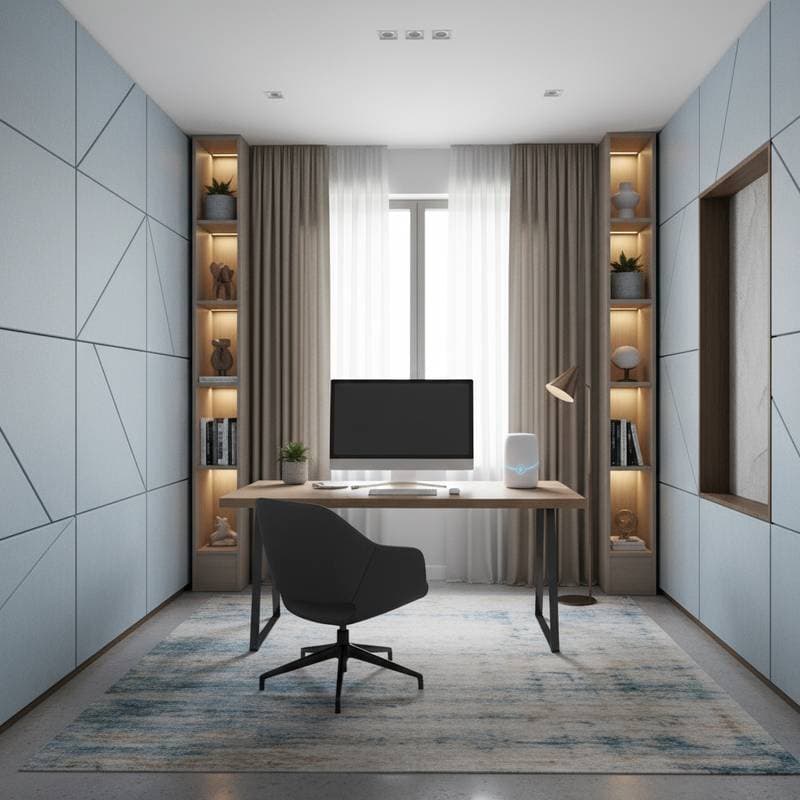
Will soundproofing affect room aesthetics? Modern options blend seamlessly; choose neutral fabrics or wood finishes to complement decor while functioning effectively.
Building Your Ideal Quiet Zone
Investing in soundproofing equips your home office for sustained remote success. Start with a targeted assessment to allocate funds wisely, then layer treatments for cumulative benefits. The result is a focused sanctuary that elevates daily output and reduces stress, ensuring you thrive in 2026's dynamic work landscape.