The Real Return on Investment from Soundproofing Your Home Office
Quick Overview
- Soundproofing reduces noise distractions and enhances concentration.
- Expenses vary from several hundred dollars for basic do-it-yourself solutions to thousands for comprehensive acoustic modifications.
- Benefits include increased productivity, greater privacy, and a more professional workspace.
Understanding Soundproofing
Soundproofing prevents sound from traveling between areas. In a home office setting, this involves blocking external noises and minimizing internal echoes. Methods include installing insulation, acoustic panels, door seals, and floor underlays. When implemented correctly, these measures produce a serene, controlled environment that supports focused work and professional audio quality during calls or recordings.
Advantages and Disadvantages
Advantages
- Enhances concentration and overall work efficiency.
- Improves audio clarity during calls, positively influencing client perceptions.
- Provides privacy for confidential discussions.
- Potentially increases property value through comprehensive room enhancements.
- Lowers stress levels caused by persistent background noise.
Disadvantages
- Advanced treatments may exceed the expense of standard remodeling projects.
- Certain approaches require modifications to walls or ceilings, possibly necessitating permits.
- Improper installation diminishes performance.
- Returns may prove limited if the office sees infrequent use or exists in an already quiet location.
Situations Where Soundproofing Succeeds or Falls Short
It succeeds when
- External street noise or internal household sounds disrupt calls or meetings.
- Audio or video recording occurs in the home.
- Walls adjoin other units or rooms containing televisions or musical instruments.
- Confidentiality proves essential for client or business communications.
It falls short when
- Primary noise originates from structural elements, such as plumbing or HVAC vibrations, with treatments limited to walls.
- Air gaps around doors, windows, or outlets remain unsealed.
- Inexpensive foam panels lacking sufficient mass or absorption properties are selected.
Step-by-Step Guide to Soundproofing for Functionality and Value
Required Tools and Materials
- Acoustic caulk
- Weatherstripping tape
- Door sweep
- Mineral wool or acoustic insulation
- Mass loaded vinyl (MLV)
- Acoustic panels or fabric-wrapped fiberglass boards
- Safety goggles, gloves, and hearing protection
Estimated Time and Skill Level
- Basic sealing tasks: 2 to 4 hours, suitable for beginners
- Wall and ceiling modifications: 1 to 3 days, requiring intermediate to professional skills
Step 1: Inspect and Seal Air Gaps
Examine doors, windows, and outlets for visible light or air drafts, as these gaps permit sound leakage. Apply acoustic caulk or weatherstripping tape to affected areas. Install a door sweep to address the bottom gap. Immediate improvements become evident, particularly against traffic or hallway disturbances.
Step 2: Incorporate Mass into Walls
Lightweight walls facilitate sound transmission. Introduce mass loaded vinyl behind drywall or dense insulation between studs to mitigate transfer in both directions. For scenarios where walls cannot be accessed, affix thick acoustic panels or position bookshelves loaded with dense materials to build mass.
Step 3: Address Ceiling and Floor Treatments
Rigid surfaces reflect sound waves. Place a dense rug over a felt pad to dampen footfall impacts. If noise penetrates from above, fit acoustic ceiling tiles or suspension systems equipped with isolation clips. In multi-level homes, apply soundproof underlayment beneath carpet or laminate flooring.
Step 4: Control Internal Reflections
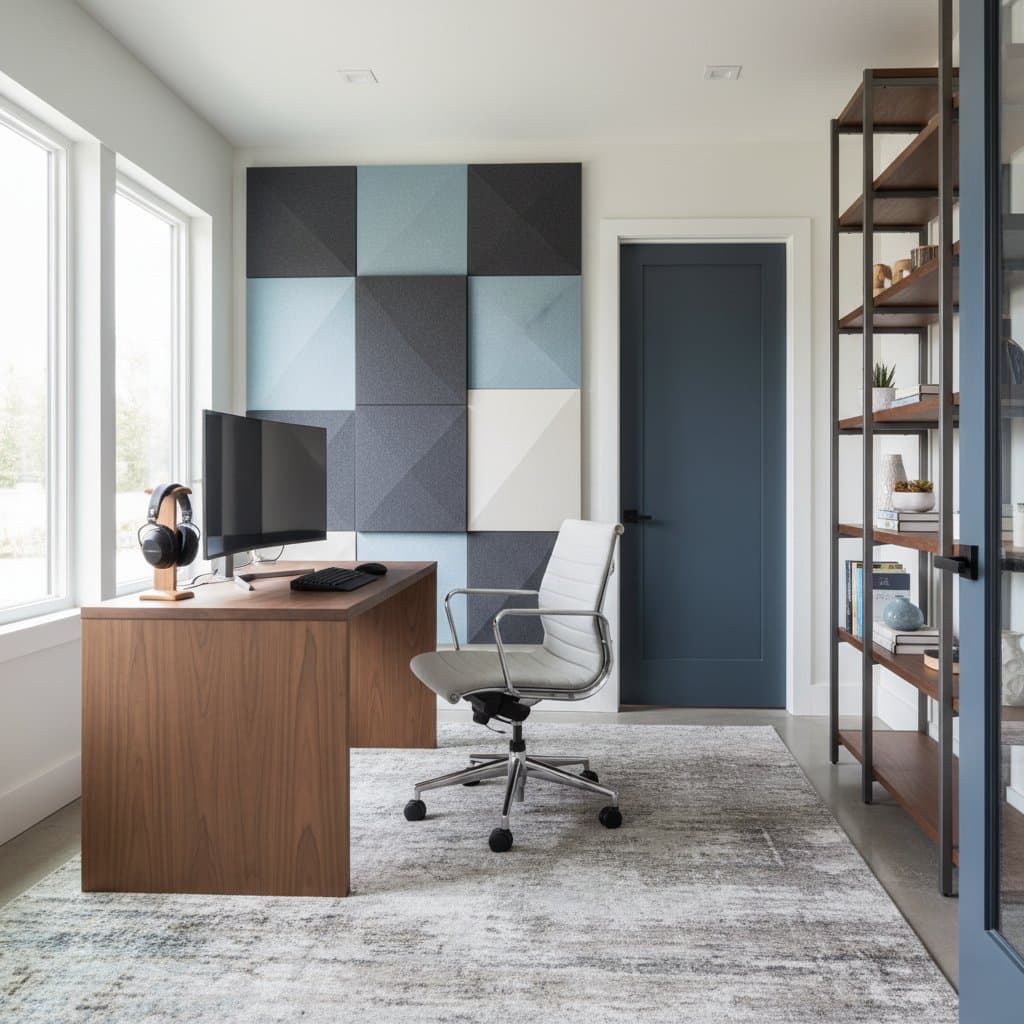
A quiet room may still produce harsh acoustics. Mount acoustic panels on opposing walls or in corners to absorb echoes. Foam wedges or fabric-covered panels establish a balanced sound environment, resulting in clearer voice reproduction during calls and recordings.
Step 5: Test and Refine
Generate a consistent tone using a speaker and circulate through the room to identify leakage or echo points. Reinforce panels or sealant in areas where sound appears sharp or inconsistent. This adjustment phase delivers a refined, controlled acoustic quality.
Step 6: Finalize and Maintain
Remove dust from panels and seals via vacuuming every few months. Inspect caulk and tape annually for deterioration. Replace any elements showing cracks or peeling. Regular upkeep preserves long-term effectiveness.
Expense Breakdown
Overall Range: $300 to $5,000
Budget Options ($300 to $800)
- Include weatherstripping, caulk, rugs, and entry-level panels.
- Rely on do-it-yourself installation with basic tools.
Moderate Investments ($1,000 to $2,500)
- Encompass additional insulation, MLV applications, and acoustic doors.
- Incorporate labor for drywall or ceiling adjustments.
Premium Solutions ($3,000 to $5,000+)
- Feature complete room overhauls with double drywall, resilient channels, and bespoke panels.
- Involve professional planning and execution.
Cost-Increasing Factors
- Irregular framing in older structures.
- Extensive window or glass door surfaces.
- Requirements for new drywall or electrical adjustments.
Cost-Reducing Factors
- Compact room dimensions.
- Pre-existing insulation or carpeted surfaces.
- Do-it-yourself efforts focused on straightforward repairs.
Strategic Timing for Upgrades Over Repairs
Integrate soundproofing with necessary wall or ceiling repairs, such as patching or repainting. Shared labor efforts minimize overall expenses while yielding superior outcomes.
Do-It-Yourself Versus Professional Services
Suitable for Do-It-Yourself
- Sealing doors, outlets, and baseboards.
- Mounting acoustic panels or rugs.
- Fitting door sweeps or underlayment.
Recommend Professional Involvement When
- Walls or ceilings require opening.
- Electrical or ventilation systems face alterations.
- Mass loaded vinyl or double drywall configurations are planned.
Distinct Professional Approaches
Professionals evaluate sound transmission class (STC) ratings and engineer layered systems tailored to specific noise sources. They identify and mitigate flanking paths via studs or ducts. Such expertise ensures studio-level silence and adherence to local codes where applicable.
Upkeep and Preventive Measures
Recommended Schedule: Biannual inspections.
Key Activities
- Verify seals and caulk integrity for cracks.
- Dust panels and ventilation openings.
- Monitor for emerging leaks following home modifications like new flooring or HVAC installations.
Desired Results
Maintain uniform quietness and absence of visible gaps. A pristine acoustic setup sustains workflow efficiency and mitigates cumulative fatigue.
Alternative Strategies
White Noise Generators
Effective for minor disturbances, these devices mask rather than eliminate sound. Expenses remain low, though privacy protections prove inadequate.
Noise-Canceling Headsets
Appropriate for renters or interim arrangements, they attenuate airborne sounds but overlook structural vibrations. They aid concentration without supporting professional recording needs.
Portable Soundproof Enclosures
Suitable for compact or communal living spaces, these units form isolated quiet zones yet may induce claustrophobia.
Select alternatives according to work-from-home frequency and noise sensitivity in tasks.
Frequently Asked Questions
Does soundproofing enhance resale value?
Affirmative, particularly with high-quality, visible implementations. Remote workers view it as a desirable amenity, comparable to integrated storage or intelligent wiring systems.
Is soundproofing possible without wall alterations?
Yes. Employ door seals, substantial curtains, rugs, and wall panels. Complete blockage eludes, but echoes diminish and intrusions lessen significantly.
Suffice acoustic foam alone?
No. It manages echoes yet fails to impede transmission. Pair with mass elements and seals for substantive impact.
Permits required?
Typically unnecessary for superficial applications. Consult codes if structural or electrical changes occur.
Durability expectations?
Quality materials endure years with cleanliness and dryness. Refresh seals or replace panels upon deformation or adhesion loss.
Actionable Checklist for Soundproofing Implementation
- Examine doors, windows, and outlets for gaps.
- Seal with acoustic caulk and weatherstripping.
- Install door sweep and dense rug.
- Position acoustic panels at ear level.
- Evaluate via sound playback and leak detection.
- Schedule cleaning and retesting quarterly.
Quantifying Returns on Investment
Soundproofing yields returns through reclaimed time and elevated output quality, extending beyond mere property appreciation. A hushed environment may reclaim hours of weekly productivity. For high-value hourly work or projects, recoupment occurs more swiftly than typical home improvements.
Appraisers seldom isolate soundproofing, yet they acknowledge enhancements in functionality, privacy, and aesthetic refinement. In client-facing or recording scenarios, this sophistication bolsters trust and fosters business expansion.
incidental energy efficiencies contribute marginally. Sealed gaps that curb sound also hinder air drafts, aiding thermal regulation. Annual reductions in heating or cooling demands accumulate additional value.
Expert Recommendations for Optimal Results
- Prioritize sealing prior to mass additions, as leaks undermine superior materials.
- Layer materials strategically: insulation targets low frequencies, panels address mids, and soft elements handle highs.
- Steer clear of budget foam assemblies claiming comprehensive isolation; they merely tame reflections without halting transmission.
- In recording setups, position microphones distant from walls and corners to evade residual reflections despite treatments.
- For adjacent walls, inquire about resilient channels from installers to isolate vibrations beyond standard insulation capabilities.
Implementing Your Soundproofing Plan
Commence with accessible one-day enhancements. Seal initial gaps, assess outcomes, and progressively incorporate layers aligned with financial capacity.
Upon entering a soundproofed, acoustically tuned home office, the transformation registers instantly. Communications transmit with precision. Concentration sharpens without delay. The space evolves into a dedicated professional haven, insulated from ambient intrusions.