Solar Roof vs Traditional Panels: Why Contracts Determine Your Best Choice
Homeowners evaluating solar investments face an increasingly complex financial decision when choosing between a full solar roof system and conventional solar panels. Both options reduce long-term electricity costs. Their installation methods, pricing models, and financial implications differ substantially.
A detailed analysis of cost structures, service processes, and coverage terms reveals that the choice requires an understanding of contract details, maintenance obligations, and total cost of ownership.
Defining Each System
A solar roof integrates photovoltaic cells directly into roof materials. Each tile functions as both a structural component and a power generator. This design eliminates the need for separate panels mounted on top of shingles.
Traditional solar panels are discrete units installed on top of an existing roof system. They generate power through surface exposure without altering the roof core structure. The underlying roof remains intact.
Cost Structure Analysis
Solar roofs are typically sold as a combined roofing and energy generation project. The homeowner pays for both roof replacement and solar installation under one contract. Traditional panels are sold as an add-on to an existing roof.
This approach reduces upfront scope but introduces future roof replacement costs if the roofing material ages before the panels reach the end of their service life.
Base Pricing Comparison
- Solar Roof: $18 to $28 per square foot. Site inspection and design fees range from $1,000 to $2,500. Warranties cover roofing and energy production with exclusions for non-covered weather events.
- Traditional Panels: $2.50 to $4.50 per square foot. Installation fees range from $500 to $1,500. Warranties cover modules and inverters for 10 to 25 years.
A homeowner installing a solar roof replaces the entire roofing structure at once. This eliminates future reroofing expenses for several decades. A homeowner installing traditional panels on an older roof may face removal and reinstallation costs later.
Additional Charges and Financing
Solar roof projects often include design, permitting, and structural reinforcement costs that can add 10 to 15 percent beyond base estimates. Financing may involve larger loans or extended terms because of the higher upfront outlay.
Some providers offer power purchase agreements. The homeowner pays a fixed rate for energy produced rather than owning the equipment outright. This can lower entry costs but reduces long-term equity in the system.
Installation Process
- Submit property information and recent utility bills. Providers model energy needs and recommend system sizes.
- Complete a site inspection to verify roof structure, shading, and electrical connections.
- Receive final designs with cost breakdowns. Complete financing approvals before scheduling installation.
- Install crews remove old roofing for a solar roof or attach mounting hardware for traditional panels.
- Obtain local inspection and utility approval. Monitor performance through software dashboards.
Coverage Limitations and Warranty Conditions
Solar roof warranties may advertise coverage for both energy production and roof durability. Exclusions often apply for improper maintenance or regional environmental conditions.
Traditional panels usually come with separate warranties for power output and hardware integrity. The underlying roof warranty can be affected if installation penetrations cause leaks.
Homeowners should verify that both the panel installer and the roofing manufacturer acknowledge each other warranty terms in writing.
Financial Implications and Total Cost of Ownership
A solar roof higher initial cost can be offset by combined savings on energy and roofing materials. The payback period may extend beyond a decade depending on energy rates and production efficiency.
Traditional panels deliver quicker financial returns with lower upfront costs. Removing and reinstalling panels during reroofing typically costs between $1,000 and $3,000.
Solar roof tiles are proprietary. Replacement parts may only be available from the original manufacturer. Traditional panels can often be replaced with compatible alternatives from multiple brands.
Decision Framework
- Determine roof age and condition. Homes with aging roofs may benefit from a solar-integrated system.
- Assess energy consumption. High-usage households gain more value from larger systems.
- Evaluate financing options. Compare loan interest rates, repayment terms, and tax incentives.
- Review warranty and maintenance terms. Identify responsibilities for cleaning and servicing.
- Model long-term savings with conservative assumptions for energy inflation.
Risk Mitigation
Solar investments involve multi-year commitments with complex contracts. Homeowners should verify licenses, read exclusions carefully, and demand transparent pricing.
Common pitfalls include vague warranty language, non-transferable service contracts, overstated energy production estimates, and mandatory arbitration clauses.
Request written performance guarantees and retain full copies of all signed documents.
Value Beyond Price
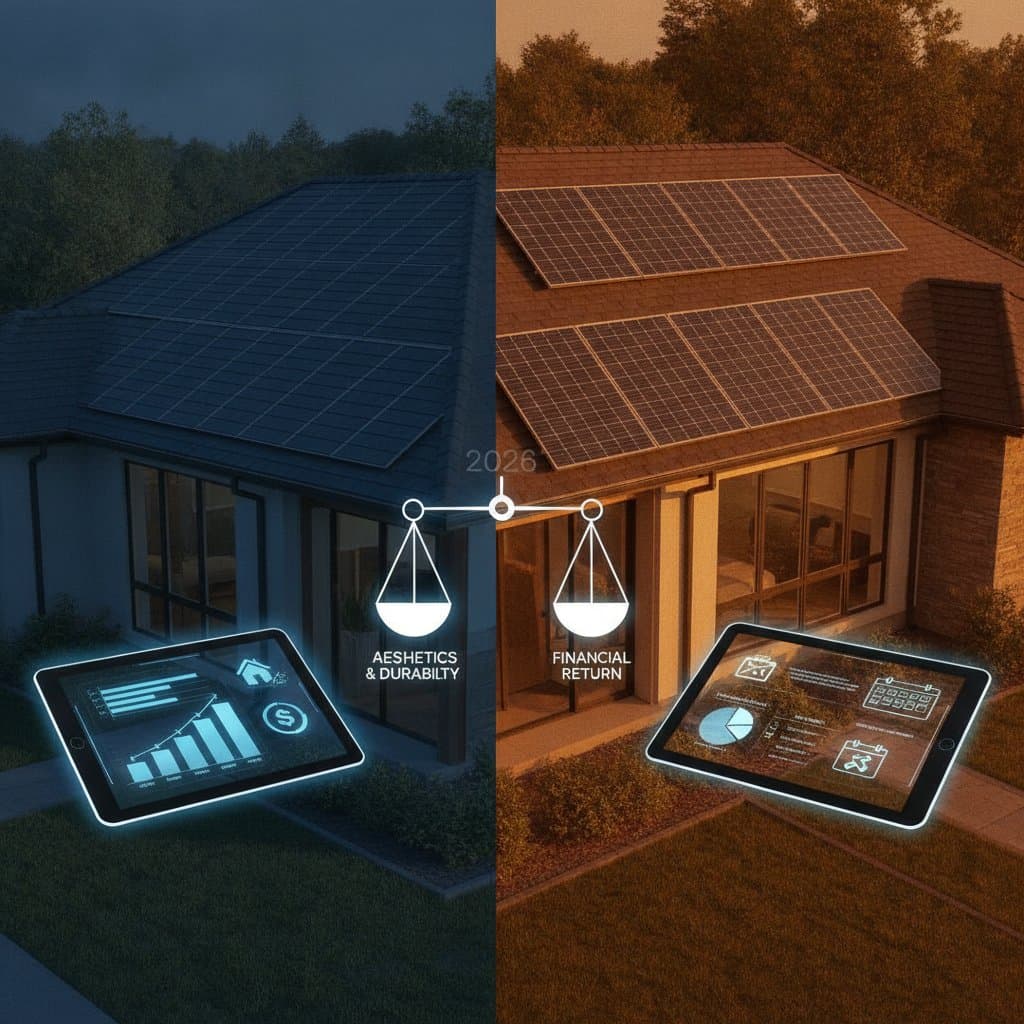
Solar roofs provide integrated aesthetics and potential property value enhancement. They rely heavily on proprietary technology. Traditional panels allow greater flexibility and easier upgrades as technology evolves.
When evaluating resale value, buyers may weigh visual appeal and warranty coverage. A solar roof presents a cleaner appearance. Traditional panels might deter buyers who dislike visible hardware.
Maintenance Obligations
Both systems require upkeep to maintain efficiency. Dust, pollen, and debris can lower output if not removed regularly. Solar roofs form a continuous surface that simplifies cleaning.
Traditional panels can be serviced individually. Solar roof repairs often require removing entire tile sections, which increases labor costs.
Routine maintenance averages between $150 and $300 annually for standard panels.
Contract Terms
Contracts for solar roofs often combine roofing warranties with production guarantees. Read every section describing performance benchmarks, output degradation rates, and coverage caps.
Dispute resolution procedures vary widely. Some providers require written notice within a short timeframe after discovering a defect. Homeowners should challenge any contract that restricts legal remedies.
Making the Right Choice
Homeowners who value integrated design and accept a higher initial investment may prefer solar roofs. Those who prioritize flexibility, faster payback, and easier maintenance often select conventional panels. The decision rests on matching system features to specific property needs and financial goals.