2026 Costs for Multi-Generational Home Additions
Families increasingly seek flexible living arrangements that accommodate multiple generations under one roof. Multi-generational home additions have evolved from occasional remodels into practical, mainstream choices for long-term housing needs. Homeowners frequently inquire about the associated costs, and this guide provides a detailed breakdown of expected expenses in 2026, factors that influence pricing, and strategies for selecting between do-it-yourself efforts, hybrid approaches, or professional construction.
These additions typically feature private, accessible areas such as a bedroom, bathroom, compact kitchenette, and independent entrance. The primary goal remains to equip homeowners with realistic 2026 cost projections for multi-generational additions, covering every phase from initial design to final completion.
Advantages, Drawbacks, and Ideal Applications
Advantages
- Increases functional square footage while enhancing the property's resale potential.
- Fosters family proximity with provisions for individual privacy and autonomy.
- Potentially qualifies as an accessory dwelling unit (ADU), opening opportunities for rental income or improved marketability.
Drawbacks
- Involves substantial initial investment, generally ranging from $240 to $400 per square foot.
- Local zoning requirements and permitting processes may extend timelines significantly.
- Integration with existing utilities can lead to challenges in allocation and upkeep.
Ideal Applications
Suburban or semi-urban properties with adequate side or rear yard space prove most suitable. Ensure access to sewer connections and sufficient electrical infrastructure to support the expansion without major overhauls.
Framework for Identifying Key Cost Influences
To forecast expenses accurately, consider this three-part framework that highlights primary drivers:
- Material Quality Levels: Opting for builder-grade materials reduces costs by 15 to 25 percent relative to custom selections. For instance, standard vinyl plank flooring and laminate countertops offer durability at a fraction of premium hardwood or granite prices.
- Labor Demands: Projects requiring second-story integrations or extensive plumbing rerouting increase expenses by 10 to 30 percent. Complex tasks, such as aligning new foundations with existing structures, demand skilled crews and additional time.
- Site Characteristics and Accessibility: Properties with narrow access, sloped terrain, or restricted driveway areas raise costs by 5 to 15 percent due to logistical hurdles. Equipment staging on uneven ground often necessitates specialized machinery or temporary reinforcements.
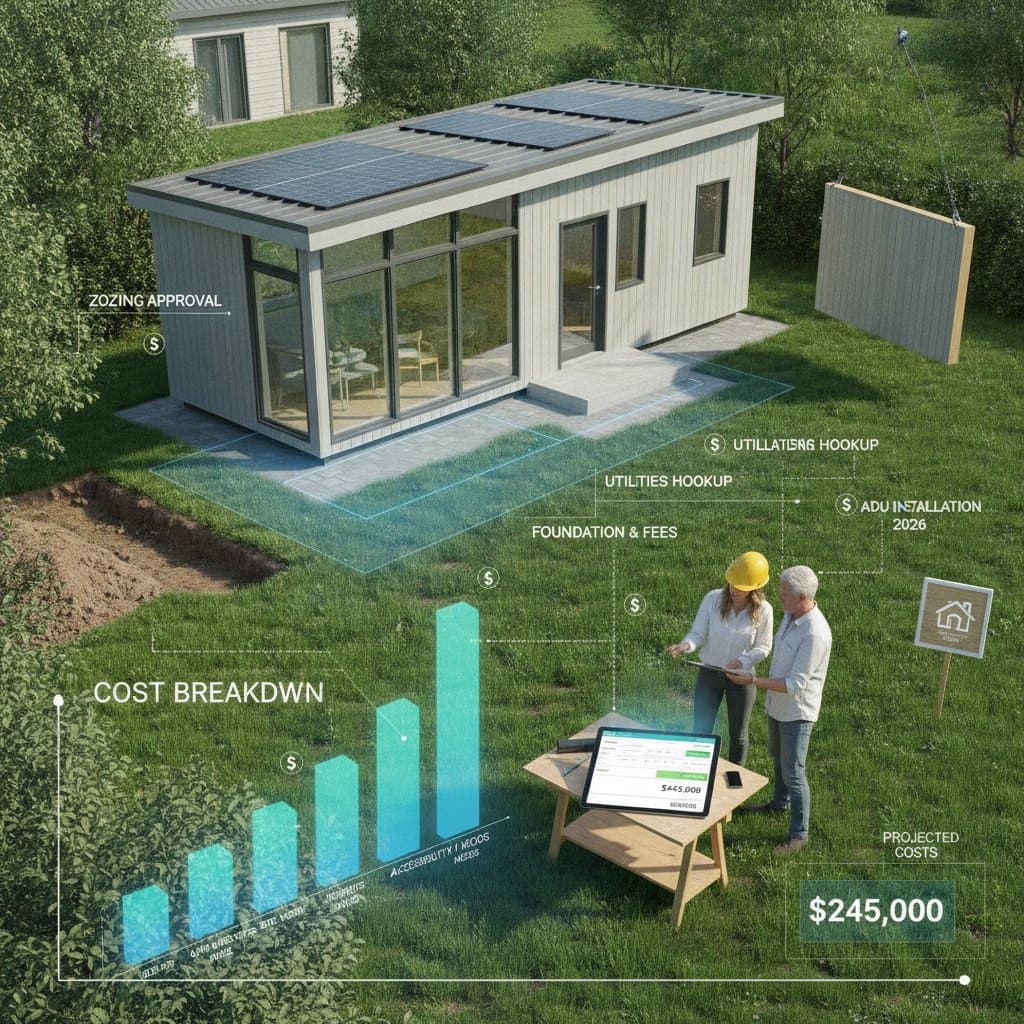
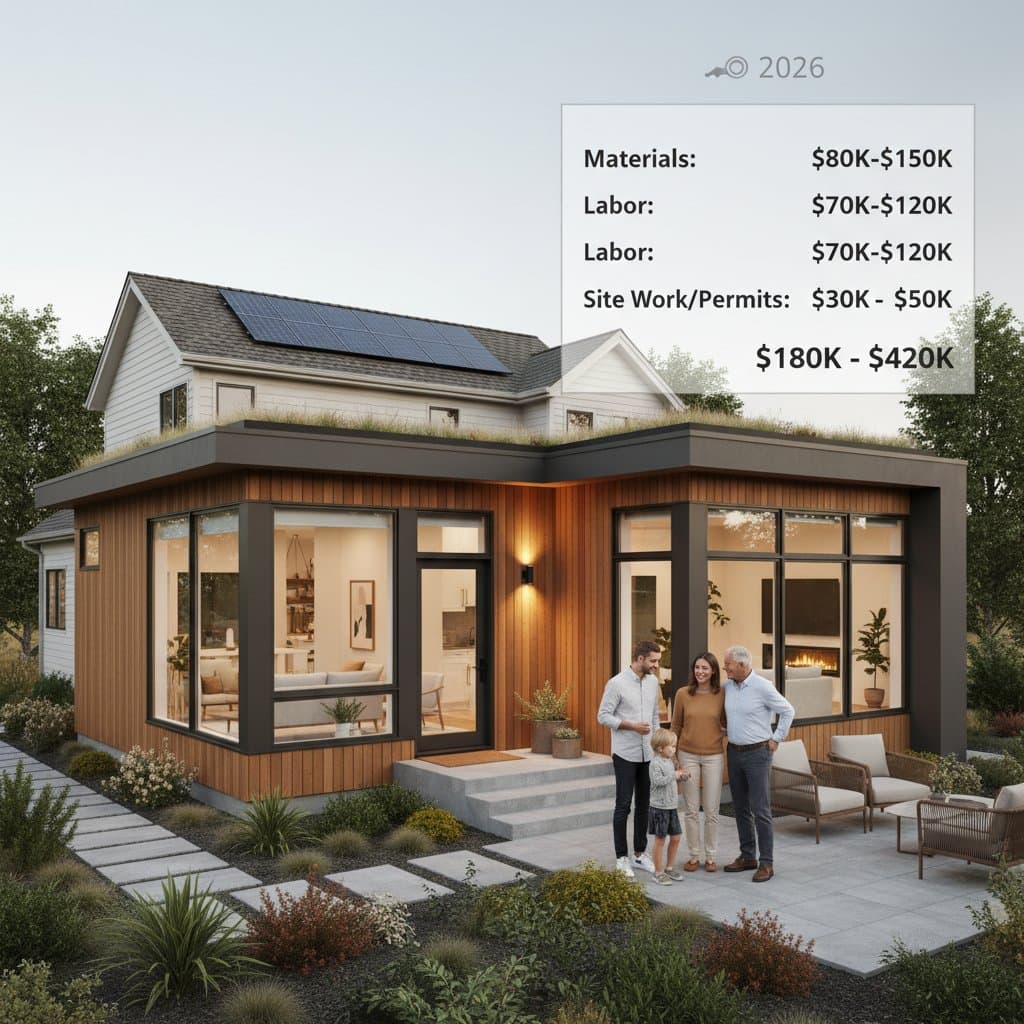
Overall, a standard 800-square-foot multi-generational addition in 2026 averages $180,000 to $420,000, depending on location, scope, and these variables.
Compliance Essentials: Safety, Permits, Building Codes, and Warranties
Adhering to regulations ensures safety and longevity. Key electrical requirements include arc-fault circuit interrupter (AFCI) and ground-fault circuit interrupter (GFCI) protection for all new circuits, with many homes needing a panel upgrade to at least 200 amps to handle increased load.
Plumbing systems should incorporate PEX or copper piping suitable for potable water, with hot water lines insulated to a minimum R-3 value to prevent heat loss and condensation issues. For heating, ventilation, and air conditioning (HVAC), systems must deliver 400 cubic feet per minute (CFM) of airflow per ton of capacity; dedicated zoning enhances temperature control and energy efficiency.
Fire safety mandates 5/8-inch Type X gypsum board for separations between living units. Egress windows in bedrooms require at least 5.7 square feet of clear opening for emergency escape. Accessibility features, such as 36-inch door widths and 60-inch turning radii in bathrooms, accommodate aging residents effectively.
Warranties vary by approach: Licensed contractors typically guarantee structural elements for 10 years, whereas do-it-yourself framing risks nullifying insurance coverage. Always verify local codes through your building department before starting.
Ongoing Maintenance Schedule and Expected Durability
Proper care extends the addition's lifespan to match the primary residence. Implement this structured maintenance plan:
- Post-Construction Inspection: Examine caulking, flashing, and site grading within the first month to address any settling.
- Seasonal Checks: Clear gutters twice yearly, test smoke and carbon monoxide detectors monthly, and replace HVAC filters every three months.
- Yearly Reviews: Assess roof integrity, siding connections, window seals, and foundation for cracks or shifts.
- Long-Term Replacements: Budget for roof renewal every 20 to 25 years, exterior repainting every 8 to 10 years, and water heater updates every 10 to 12 years.
Consistent upkeep prevents minor issues from escalating, preserving the structure's value over decades.
Selecting Contractors and Evaluating Bids
Solicit at least three comprehensive bids that outline identical project scopes, including detailed finish schedules, insulation ratings (such as R-19 for walls), and fixture inventories. This process reveals competitive pricing and service quality.
Sample Bid Comparison Table
| Line Item | Specifications | Contractor A | Contractor B | Contractor C | Variance Observations |
|---|---|---|---|---|---|
| Foundation | 6-inch reinforced concrete slab | $18,400 | $20,100 | $17,800 | Differences stem from soil testing vars |
| HVAC | 2-ton ductless mini-split | $9,800 | $12,200 | $11,000 | Variations due to equipment brands |
| Plumbing | 8 fixtures with PEX distribution | $15,200 | $16,900 | $15,700 | Covers rough-in, connections, and trim |
| Electrical | 200-amp service panel upgrade | $5,600 | $6,300 | $5,700 | Influenced by panel placement |
| Interior Finishes | LVP flooring, standard cabinets | $22,500 | $26,000 | $24,900 | Based on material grades and labor |
Disparities exceeding 15 percent often indicate inconsistencies in scope; request detailed explanations to align proposals. Incorporate essential contract provisions, such as fixed pricing for change orders, lien waivers upon payments, explicit warranty durations for workmanship and materials, and a timeline with defined milestones for progress tracking.
Addressing Typical Construction Challenges
Even robust projects encounter hurdles. Drywall cracks at corners often result from natural wood shrinkage; allow one heating cycle to pass, then reapply tape and compound for a seamless repair.
Floor level discrepancies arise from subfloor variations; install threshold strips or employ self-leveling compounds to create smooth transitions. HVAC imbalances, manifesting as uneven temperatures, resolve through damper adjustments or additional return air vents.
Window condensation signals excess indoor humidity or poor insulation; install bathroom exhaust fans rated at 50 CFM and seal gaps around frames. Document all interventions in a dedicated log, noting dates and outcomes for future reference.
Sustained Value and Family Advantages
A multi-generational addition expands living area by 30 to 40 percent without necessitating a full relocation. If zoned appropriately as an ADU, it generates rental income potential. Investment recovery typically reaches 60 to 80 percent upon resale, influenced by regional markets and finish quality.
Beyond finances, these spaces provide adaptable aging-in-place solutions and strengthen intergenerational bonds. Prospective buyers value pre-existing in-law suites, often paying premiums for such features.
Project Preparation Checklist
| Category | Essential Elements |
|---|---|
| Required Tools | Level, miter saw, power drill, framing square, ladder, personal protective equipment |
| Necessary Skills | Fundamental carpentry, precise measurements, timeline management |
| Safety Equipment | Work gloves, safety goggles, dust respirator, hearing protection, steel-toed footwear |
| Required Permits | Structural building, electrical, plumbing, HVAC, potential zoning approvals |
| Preliminary Steps | Conduct property survey, evaluate utility capacities, remove obstructing foliage |
| Site Considerations | Schedule around dry weather, test soil density, confirm delivery access for heavy materials |
Practical Strategies for Optimal Results
- Initiate design consultations well in advance, as permit approvals may backlog for several months.
- Align the addition's roof pitch and exterior siding with the main house to maintain aesthetic harmony and comply with homeowners' association rules.
- Incorporate ample storage solutions, like built-in closets, to minimize disorganization in daily use.
- Dedicate separate electrical circuits for the new area to facilitate independent metering and prevent system overloads.
- Install soundproofing materials, such as mineral wool batts in common walls, to enhance acoustic privacy between spaces.
Implementing Your Multi-Generational Expansion
Multi-generational additions integrate thoughtful design, regulatory adherence, and family-oriented planning. Begin by consulting your local planning department to verify ADU or in-law suite permissions. Engage a certified designer to prototype layouts that suit your household dynamics, followed by obtaining three comparable bids from vetted professionals.
Monitor expenses using the outlined cost framework, allocating 10 to 15 percent of the budget as a contingency for unforeseen needs like geotechnical adjustments or electrical enhancements. Upon completion, manage the addition as a enduring investment: Maintain a detailed upkeep record, inspect roofing and exteriors annually in spring, and verify smoke detection systems biannually.
Through meticulous budgeting, strict code observance, and diligent maintenance, a multi-generational addition delivers enduring returns in adaptability, safety, and familial unity across generations.