LVP versus Hardwood Flooring Costs and Value
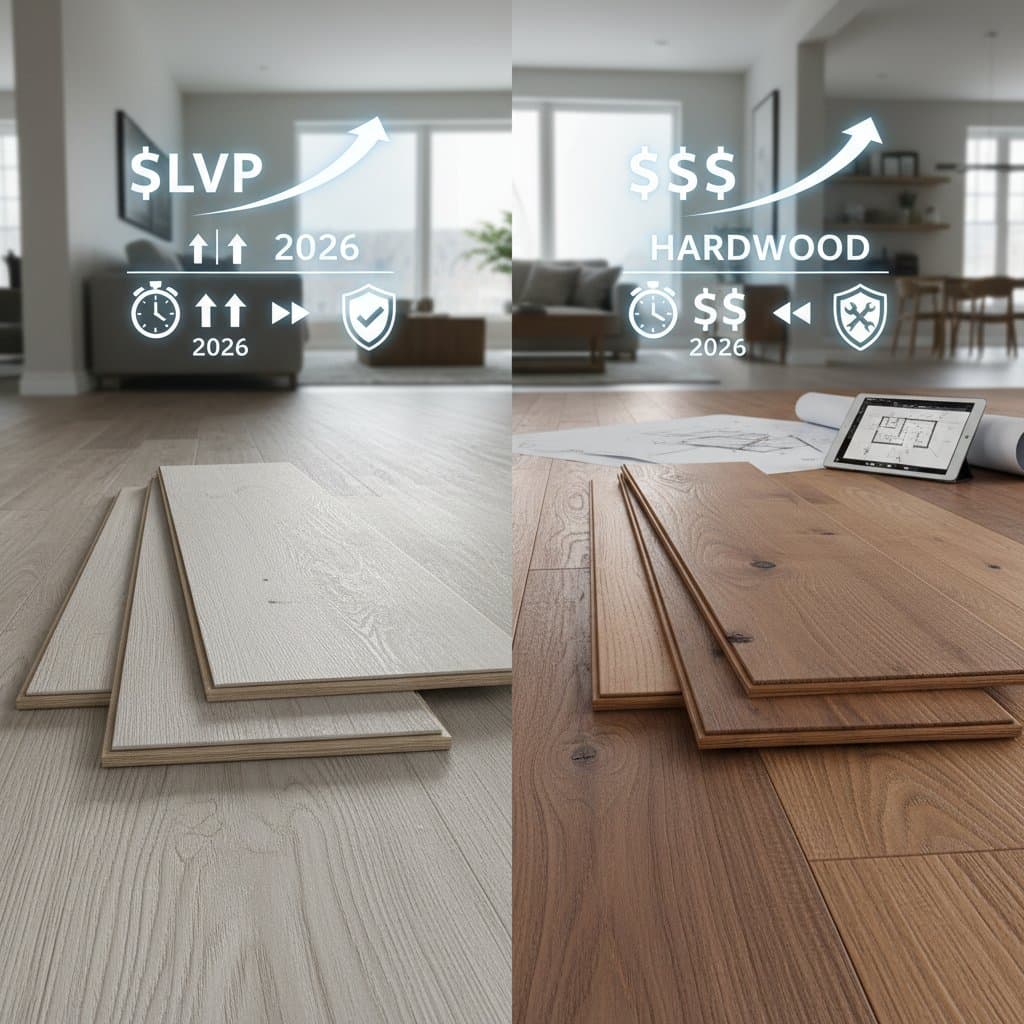
Homeowners comparing luxury vinyl plank and hardwood flooring focus first on total project cost, long term durability, and installation duration. Both options can deliver attractive results, yet their budgets, upkeep routines, and performance under daily use differ sharply. This guide supplies concrete price ranges, clear timelines, and practical selection criteria.
Advantages, Limitations, and Ideal Applications
Luxury vinyl plank offers lower material and labor expenses along with full waterproofing and strong scratch resistance. It installs quickly over existing surfaces and needs only routine sweeping. On the other hand, it cannot be sanded or refinished, may feel softer underfoot, and can show dents from heavy furniture.
Hardwood provides premium appearance and strong resale value. It accepts multiple rounds of sanding and refinishing across a lifespan that often exceeds fifty years. Its drawbacks include sensitivity to moisture changes, higher initial outlay, and longer installation plus finishing time.
Select luxury vinyl plank for basements, kitchens, bathrooms, and rental properties. Choose hardwood for living rooms, dining areas, and primary bedrooms where appearance and longevity matter most.
Installation Sequence and Daily Output
Proper safety equipment includes gloves, knee pads, safety glasses, and hearing protection. Begin every project by confirming the subfloor is level to within three sixteenths of an inch over ten feet and free of excess moisture.
Luxury Vinyl Plank Steps
- Remove baseboards and clear the workspace.
- Install underlayment if sound control or extra cushioning is required.
- Snap the first row along the longest straight wall.
- Maintain staggered end joints of at least six inches.
- Cut the final row to width and replace the baseboards.
Professional crews cover three hundred to five hundred square feet each day. Do it yourself projects typically require twice that duration.
Hardwood Steps
- Allow the wood to acclimate indoors for three days.
- Secure any loose subfloor boards and add a moisture barrier.
- Nail or glue planks while maintaining a three quarter inch expansion gap at all walls.
- Sand, stain, and apply finish coats when raw material is used.
Professionals install one hundred fifty to two hundred fifty square feet daily, then add one or two extra days for sanding and finishing.
Common Installation Errors
- Skipping subfloor leveling produces visible gaps and movement.
- Omitting expansion space allows wood to buckle during humidity changes.
- Using oil based cleaners damages protective finishes over time.
- Failing to test moisture content ruins adhesives and causes cupping.
- Poor transition details at doorways create trip hazards.
Decision Framework for Professional versus Owner Installation
| Factor | Luxury Vinyl Plank | Hardwood |
|---|---|---|
| Skill level | Moderate | Advanced |
| Safety considerations | Low | Medium due to dust and tools |
| Required tools | Basic cutting and measuring | Specialized nailers and sanders |
| Permit likelihood | Rare | Possible for structural work |
Proceed with do it yourself luxury vinyl plank only in small, open rooms on flat, clean subfloors. Engage professionals for hardwood projects, uneven surfaces, or complex transitions. Mistakes in either material can produce visible defects that lower resale value.
Required Preparation Items
- Tools: tape measure, circular saw, tapping block, spacers, and level.
- Skills: accurate cutting for luxury vinyl plank and precise fastening plus sanding for hardwood.
- Safety items: gloves, glasses, dust mask, and hearing protection.
- Site checks: remove old flooring, verify moisture levels, and avoid extreme humidity periods.
Selecting the Right Material for Your Situation
Review your room conditions, expected foot traffic, and available budget against the performance differences outlined above. This comparison supplies the specific numbers and steps needed to move forward with confidence.