Multigenerational Home Renovations Average $160000
Summary Box
National average cost: $160000
Typical range: $90000 to $320000
Low end and high end: $45000 for minor remodels to $550000 for full additions
Time to complete: 3 to 8 months
DIY or Pro: Mostly professional with limited DIY finish work
ROI or resale impact: 50 to 70 percent depending on layout and location
Updated: April
Cost Factors
Scope and size determine the bulk of expenses. A partial remodel that adds a second kitchen or accessible suite costs far less than a full wing addition. Projects under 600 square feet often stay below $150000. Conversions that add structural work or full kitchens cross $200000 quickly.
Material grade and finish affect the final price. Laminate flooring and prefab cabinets cut costs sharply. Custom cabinetry stone counters and tiled baths drive them higher. Match finishes to the rest of the home for resale value.
Site conditions and accessibility influence excavation and foundation expenses. Sloped lots septic systems or limited access raise costs. Flat open sites prove faster and cheaper to build on.
Labor market and season also play roles. Busy building seasons raise bids. Off peak months or winter framing can save 5 to 10 percent in some areas. Urban markets with tight labor pools trend higher across all trades.
Custom work and change orders add up fast. Every layout change after framing starts eats budget. A single design tweak mid project can add thousands. Finalize plans and material selections early.
How To Save Without Regret
Practical substitutions keep quality high while controlling spend. Use luxury vinyl plank instead of hardwood for lower cost and better moisture resistance. Install a prefabricated shower unit instead of custom tile. Choose mid range appliances that fit standard openings to avoid custom cabinetry.
Sequence and prep reduce labor hours. Have demolition framing and rough ins scheduled back to back. Gaps between trades cost money. Provide clear site access and remove furniture before crews arrive.
Off season timing or batch projects lower overall labor costs. Combining the addition with other work such as siding or roofing allows contractors to discount combined scopes since equipment and crews are already mobilized.
Compare at least three quotes and follow this checklist before signing. Scope must be itemized. Materials grade and brand must be listed. Surface prep and cleanup must be included. Permit and disposal fees must be included. Warranty terms and timeline must be stated. Payment schedule must tie to milestones.
Regional Notes
Prices vary sharply by region. West Coast markets average $250 to $400 per square foot due to land and labor costs. Midwest builds run $150 to $250 per square foot. Southern states often fall near $130 to $200 per square foot. Northeast projects trend higher for permits and weather delays.
Urban areas often require design review for exterior changes. Rural counties may allow detached accessory dwelling units more easily but can need septic upgrades. Always confirm zoning and utility capacity before finalizing plans.
Timeline and Scheduling
Design and permitting take 4 to 8 weeks. Site prep and foundation require 1 to 3 weeks. Framing and rough ins span 4 to 6 weeks. Inspections and insulation need 1 to 2 weeks. Drywall and finishes last 3 to 5 weeks. Final walkthrough and cleanup finish in 1 week.
Material lead times fluctuate. Custom windows or cabinets can push schedules by several weeks. Plan temporary living arrangements if major sections of the house become unusable during work.
Maintenance and Lifespan
Care routines protect the investment. Inspect caulking trim and seals yearly to prevent moisture entry. Clean HVAC filters quarterly especially with multiple household members. Test GFCI outlets and smoke detectors monthly. Keep gutters clear to protect new roof tie ins.
Common failures and early warnings deserve attention. Sticking doors or drywall cracks can signal settling. Water stains near additions often trace to flashing gaps. Uneven heating or cooling suggests duct leaks or undersized systems.
When to repair versus replace depends on severity. Minor drywall cracks or popped nails are cosmetic. Recurring moisture or foundation movement needs professional review. Mechanical systems typically last 10 to 15 years before upgrade.
Planning Your Project
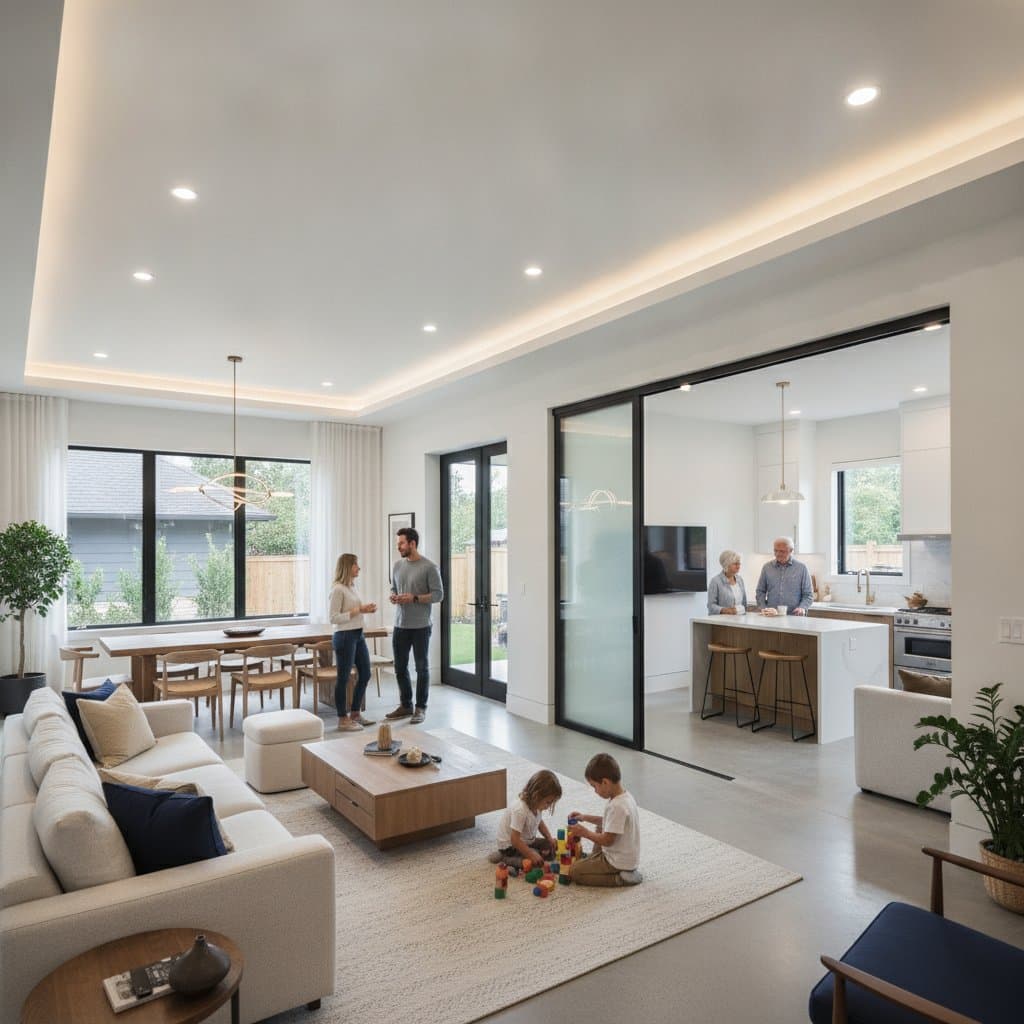
Building or renovating for multigenerational living requires clear decisions on roles privacy levels and cost limits. Families that address these elements early avoid friction later. Shared kitchens or separate wings each carry tradeoffs in budget comfort and long term flexibility.