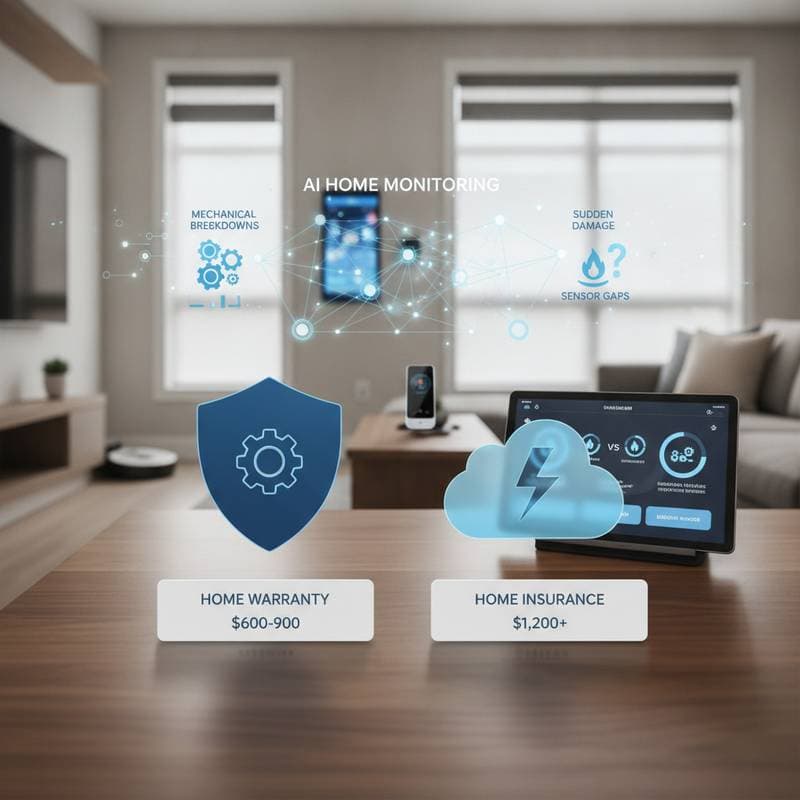
Home Warranty Costs Compared to Insurance
Summary of Key Costs and Timelines
Home warranty coverage averages between 600 and 900 dollars annually. Home insurance premiums typically range from 1200 to 2000 dollars per year. Service call fees under warranty plans fall between 75 and 150 dollars, while insurance deductibles often start at 500 dollars and can reach 2500 dollars.
Basic appliance warranties begin around 400 dollars. Comprehensive plans that include major systems reach up to 1200 dollars. Insurance for smaller homes in low risk areas can cost as little as 900 dollars, whereas high value properties may require 3500 dollars or more for full replacement coverage.
Warranty claims usually resolve within three to ten days. Insurance claims take seven to thirty days because of inspection requirements. Both types of coverage require work by licensed professionals, although homeowners may handle routine maintenance to preserve eligibility.
Primary Cost Influences
Property size directly affects pricing for both products. Larger homes increase insurance premiums according to rebuild costs and raise warranty fees when additional systems are added. Material quality also matters. High end finishes receive actual cash value or replacement cost treatment under insurance but often face caps at standard grade parts under warranty agreements.
Location and accessibility further shape expenses. Rural sites or high risk zones elevate insurance rates and may increase warranty dispatch fees when contractor availability is limited. Seasonal demand and labor shortages extend repair timelines for both policy types.
Custom installations such as integrated automation or radiant heating frequently fall outside standard definitions. These features may require special endorsements from insurers or fall entirely outside warranty terms.
Role of Smart Home Technology
AI monitoring devices now track moisture, temperature, and energy patterns in many homes. Leak sensors and smart thermostats can flag problems early, yet they create new coverage questions. Warranty providers may deny claims when alerts are ignored, treating the lapse as improper maintenance. Insurers sometimes grant discounts for connected devices but rarely cover the devices themselves.
When sensors fail to provide warnings, neither policy typically pays for resulting damage. This gap between detection capability and policy language leaves homeowners responsible for losses that older coverage language never anticipated. Registering devices and maintaining alert logs helps document responsible use during future claims.
Owner Performed Work Versus Professional Service
Homeowners can safely install plug in sensors, replace batteries, and monitor connectivity. Electrical integrations, hardwired valves, and HVAC connections require licensed tradespeople. Unauthorized modifications risk voiding both warranty and insurance protection.
Retain all service receipts and maintenance records. These documents demonstrate compliance when claims arise and protect coverage eligibility after any system adjustment.
Coverage Review Process
- Inventory every major system and appliance, including HVAC equipment, plumbing, electrical panels, and smart devices.
- Cross reference each item against policy declarations to identify insured, warrantied, or uncovered status.
- Examine exclusion language for references to maintenance, pre existing conditions, or software faults.
- Contact providers to learn whether monitoring data qualifies for discounts or satisfies proof requirements.
- Photograph serial numbers, retain installation records, and store alert histories in accessible cloud files.
- Conduct an annual review after any upgrade to confirm limits remain adequate.
Repair Scheduling Expectations
Specialized parts for heating or cooling systems may require one to four weeks for delivery. Warranty technicians often complete visits in a single day. Insurance repairs involving structural finishes frequently span multiple days and require adjuster approval before work begins.
Ongoing Care and Replacement Decisions
Monthly filter cleaning, drain clearing, and outlet testing reduce failure rates. Sensor batteries should be changed twice yearly. Early signs such as slow drainage or repeated breaker trips warrant prompt attention before larger failures occur.
Compare repair costs against half the replacement price. When repairs exceed that threshold, replacement generally provides better long term value, provided the policy covers full cost rather than prorated amounts.
Geographic Considerations
Coastal properties encounter accelerated corrosion that increases claim frequency. Freeze prone regions experience more pipe and furnace issues. Urban labor markets may charge higher rates yet offer faster contractor response. Verify local licensing rules before scheduling any work.
Aligning Protection for Modern Homes
Place current policy documents side by side and compare limits, deductibles, and procedures. Note how each carrier addresses data from smart devices. Provide monitoring logs when claims involve connected equipment. Consistent documentation strengthens credibility and supports faster resolutions while reducing overall risk exposure.