Multigenerational Homes: Design Costs Unveiled
Quick answer: A multigenerational home can cost anywhere from $260,000 to $750,000 for a full custom build or $90,000 to $300,000 for an addition or accessory dwelling unit (ADU). The range depends on size, layout complexity, finishes, and local labor rates.
| Project Type | Typical Cost Range | Timeframe | Difficulty | Key Risks |
|---|---|---|---|---|
| Full custom multigenerational home | $260,000 - $750,000 | 8–15 months | Pro-level | Design conflicts, zoning limits |
| Addition or conversion | $90,000 - $300,000 | 4–9 months | Intermediate to pro | Structural issues, permits |
| Detached ADU | $120,000 - $350,000 | 6–10 months | Pro-level | Utility connections, setbacks |
Why Multigenerational Homes Matter
Families increasingly opt to live with parents, adult children, or extended relatives. This arrangement offers shared expenses, integrated caregiving, and enhanced family bonds. The primary challenge involves designing spaces that provide privacy and functionality for all occupants.
Effective multigenerational designs harmonize individual autonomy with communal living. Such homes often increase property value while lowering ongoing housing costs over time.
Key Decisions Before You Build
Establish these core elements prior to engaging professionals or developing plans:
- Living arrangement: Opt for separate entrances or communal areas.
- Privacy level: Incorporate soundproof walls, dedicated bathrooms, or complete kitchen suites.
- Accessibility: Include step-free entries, wider doorways, and ground-level bedrooms.
- Zoning compliance: Verify local regulations for ADUs, duplexes, or multi-unit structures.
- Utility setup: Determine shared or independent metering for utilities and HVAC systems.
- Budget priorities: Allocate funds strategically to areas like kitchens, insulation, or surface treatments.
These decisions directly influence expenses, spatial organization, and future upkeep.
Comparing Design Options
1. Under One Roof
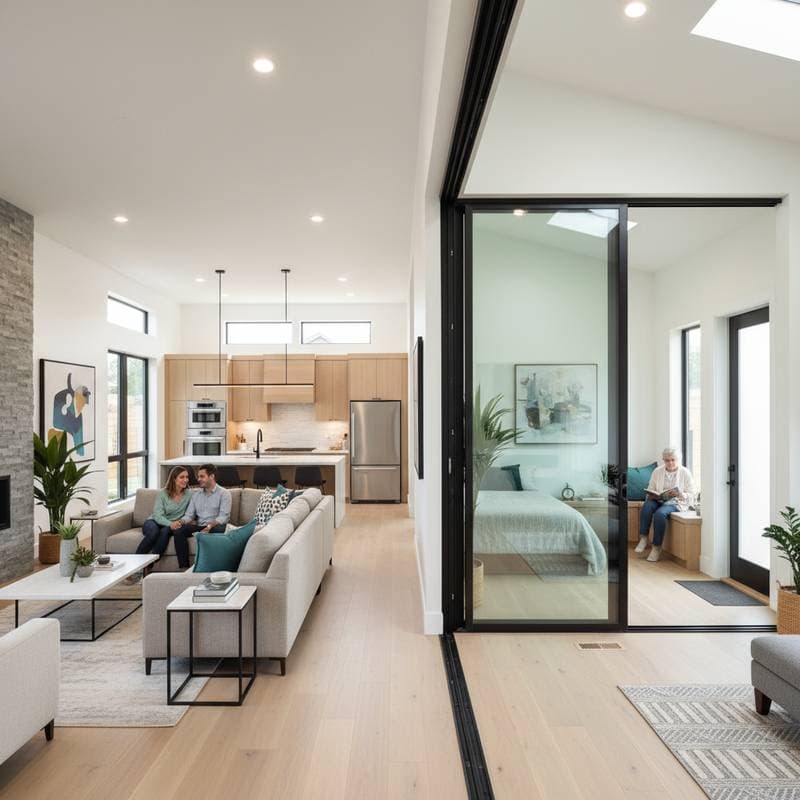
This method integrates all generations within a single building, featuring semi-independent zones. Consider options such as equipped basements with kitchenettes or ground-floor suites for elderly relatives.
Pros:
- Reduced overall expense compared to separate structures.
- Simplified utility sharing and maintenance.
- Promotes close family interactions.
Cons:
- Potential privacy issues without adequate soundproofing.
- Challenges in resale markets preferring traditional single-family designs.
Average cost: $260,000 to $550,000 for a 2,500- to 3,000-square-foot home.
2. Addition or Conversion
Extend the existing home with a new wing or repurpose a garage or basement to form a distinct living area, avoiding complete reconstruction.
Pros:
- Maintains outdoor space and aligns with neighborhood aesthetics.
- Eliminates the need for a new foundation in many cases.
- Accelerates completion relative to ground-up builds.
Cons:
- Intricate integration with current structure.
- Elevated costs for plumbing and HVAC modifications.
- Possible need for zoning exceptions.
Typical cost: $90,000 to $300,000, based on scale and material quality.
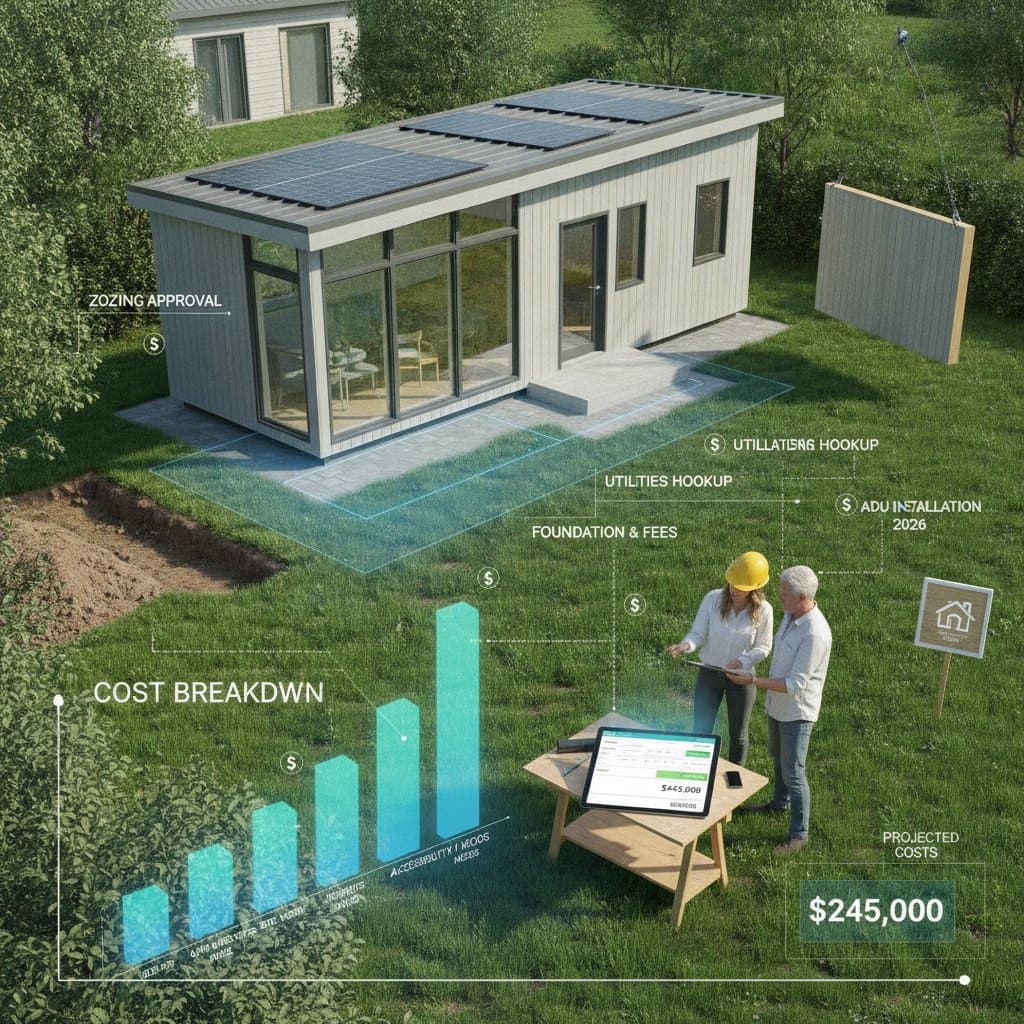
3. Detached ADU
Construct a standalone backyard unit or garage conversion to deliver complete separation while maintaining proximity.
Pros:
- Optimal privacy and adaptability.
- Potential for future rental revenue.
- Enhanced resale appeal in desirable locations.
Cons:
- Demands independent foundation and utility infrastructure.
- Rigid zoning restrictions on placement and size.
- Elevated cost per square foot.
Typical cost: $120,000 to $350,000 for 400 to 800 square feet.
What Drives Price Differences
Multiple factors determine cost variations:
- Size and layout complexity: Expanded areas and duplicate kitchens increase expenses.
- Foundation and site work: Challenging terrain, unstable soil, or vegetation clearance elevate preparatory costs.
- Finishes and materials: Bespoke cabinetry, premium tiles, or advanced appliances can significantly raise interior budgets.
- Utility connections: Extending lines for water, sewer, or electricity adds $5,000 to $25,000.
- Local labor and permit fees: These vary by region and market conditions.
Design fees typically comprise 8 to 15 percent of the total construction budget. Permits and inspections contribute an additional $4,000 to $12,000.
Typical Timeline and Sequence
Projects proceed through these phases:
- Concept and design: 4 to 8 weeks.
- Permitting and approvals: 2 to 10 weeks, varying by jurisdiction.
- Site prep and foundation: 3 to 6 weeks.
- Framing and rough-ins: 6 to 10 weeks.
- Finishes and inspections: 6 to 12 weeks.
Delays from weather, material shortages, or revisions are common. Allocate at least 10 percent contingency for both schedule and budget.
DIY vs Pro Work
Licensed experts handle most multigenerational projects to ensure code adherence. Critical elements like structural framing, plumbing, electrical, and HVAC demand professional oversight.
DIY suitable tasks:
- Painting and trim installation.
- Flooring placement.
- Basic cabinet assembly.
Hire a pro for:
- Foundation and framing.
- Electrical or gas installations.
- Roof integrations or load-bearing modifications.
Intermediate DIY skills suffice for aesthetic elements, but structural and mechanical components require professionals to guarantee safety and regulatory compliance.
Materials and Tools Checklist
Common materials:
- 2x4 or 2x6 framing lumber.
- R13 to R21 insulation.
- Drywall, joint compound, and primer.
- Standard 15-amp wiring and outlets.
- PEX or copper plumbing lines.
- Vinyl, laminate, or engineered wood flooring.
Basic tools:
- Circular saw and drill.
- Level, tape measure, and chalk line.
- Stud finder and utility knife.
- Caulk gun and safety gear.
Wear eye protection and a respirator during wood or drywall cutting. Ensure proper ventilation for painting or adhesive applications.
Maintenance, Care, and Lifespan
These designs feature additional fixtures and appliances, necessitating heightened upkeep.
- HVAC filters: Replace every 2 to 3 months in multi-zone systems.
- Plumbing: Conduct annual leak inspections, particularly with shared lines serving multiple kitchens.
- Exterior finishes: Repaint or seal wood elements every 5 to 7 years.
- Accessibility features: Regularly verify grab bars, ramps, and lighting for stability and illumination.
Routine maintenance supports efficient operation for decades.
Regional and Climate Factors
In colder regions, enhanced insulation and energy-efficient windows add $5,000 to $15,000. Humid areas prioritize moisture barriers and ventilation to avoid mold growth. Arid, hot climates favor reflective roofs and shaded exteriors to minimize cooling demands.
Zoning regulations differ across locales. Certain areas cap ADU dimensions or mandate owner residency. Confirm all setback and compliance rules early in the planning process.
Steps to Plan Your Build
Outline your family's usage patterns first, including daily habits, storage demands, and mobility needs. Communicate these details to designers or builders promptly to prevent expensive alterations.
On limited budgets, begin with a basement conversion or modest addition. Prioritize soundproofing and accessibility features upfront; these enhance usability and marketability.
For long-term residents, a thoughtfully executed multigenerational home yields financial savings and relational benefits. Grasp the costs, schedules, and compromises to select options that deliver comfort and respect across generations.