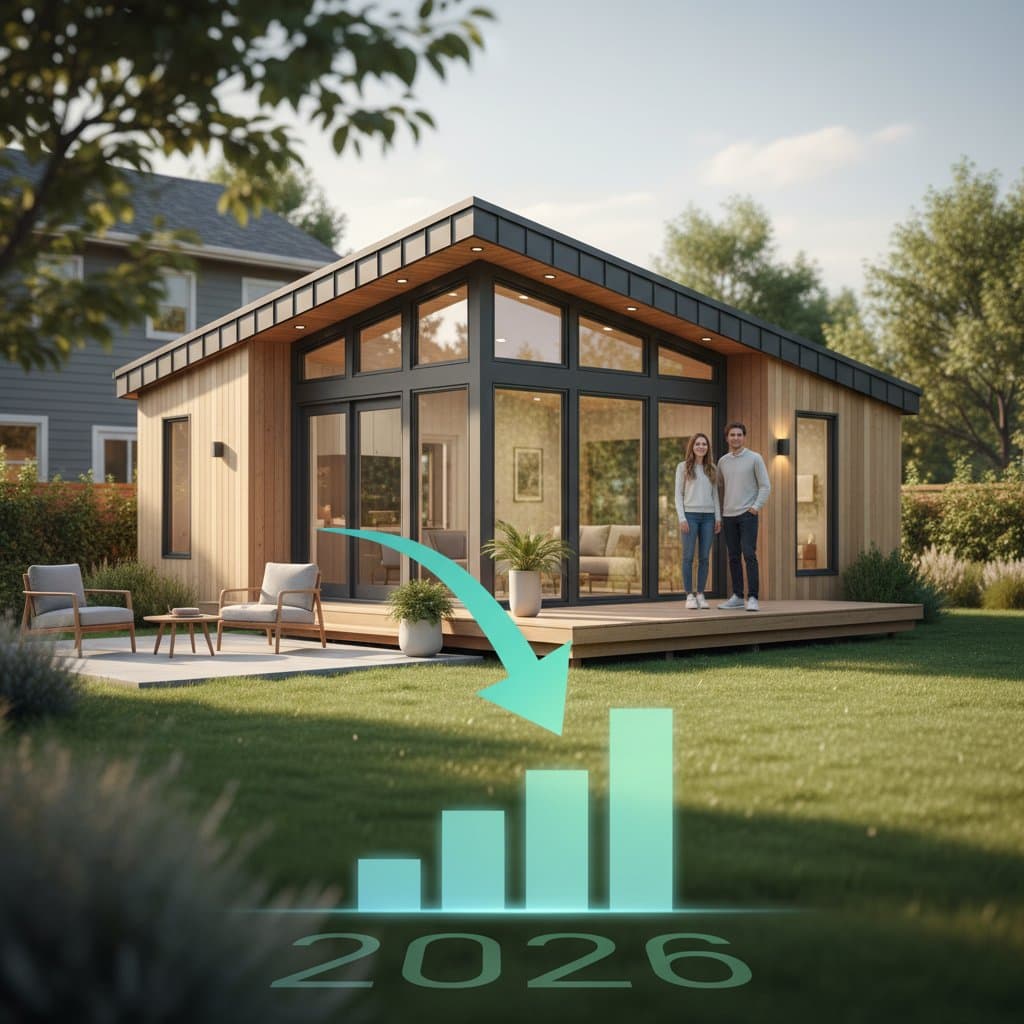
Modular ADUs: 30% Price Reduction Expected by 2026
Quick Overview
- Modular accessory dwelling units will likely decrease in price by approximately 30% in the near term.
- Declining material costs and accelerated factory assembly account for these reductions.
- For those considering a backyard addition, this change may render the project financially viable.
Understanding Modular ADUs
A modular accessory dwelling unit consists of a compact residence constructed in sections within a factory setting and then transported to the property for assembly. These units adhere to identical building codes as traditional site-built structures, yet production occurs in a controlled environment rather than on location. Essential elements such as plumbing, electrical systems, and interior finishes integrate during the factory phase, prior to delivery. Upon placement, connections to site utilities occur, followed by compliance with local inspections.
Advantages and Disadvantages
Advantages
- Construction timelines shorten because factory and site preparations proceed concurrently.
- Indoor fabrication minimizes material waste and ensures uniform quality standards.
- Expenses become more foreseeable since the majority of labor completes off-site.
- Property and neighborhood disturbances reduce significantly during the process.
Disadvantages
- Transport and crane operations incur additional fees, particularly in confined areas.
- Layout modifications prove challenging after the initial design phase concludes.
- Compliance with local regulations and permitting requirements may postpone installation.
- Foundations and utility integrations necessitate engagement of regional contractors.
Ideal Applications and Potential Shortcomings
Suitable Scenarios
- Situations requiring rapid establishment of rental or family housing.
- Properties featuring straightforward access for trucks and cranes.
- Projects where budget predictability and minimal on-site complications matter most.
Problematic Scenarios
- Locations with significant inclines or restricted maneuvering space.
- Areas where zoning restrictions prohibit prefabricated constructions.
- Demands for extensive design flexibility or bespoke material selections.
Guide to Planning a Modular ADU
Required Tools and Resources
- Tape measure for precise dimensions.
- Sketch paper or digital site plan for visualization.
- Soil analysis report to assess ground stability.
- Level and string line for alignment checks.
- Online access to evaluate multiple modular manufacturers.
Estimated Timeline: Three to six months from initial design through occupancy.
Complexity Level: Moderate for oversight by the owner; elevated for actual construction tasks.
- Verify Zoning Compliance. Determine if the property permits an accessory dwelling unit. Examine specific guidelines regarding maximum height, setback distances, and parking provisions.
- Assess Available Space. Delineate possible building footprints on the site. Allocate sufficient area for vehicle and equipment access during delivery.
- Evaluate Manufacturers. Review offerings from modular ADU providers, which typically include standard configurations such as studios, one-bedroom, or two-bedroom options. Inquire about base pricing, transportation fees, and included components.
- Analyze Site Conditions. Properties with level terrain and clear pathways reduce overall expenses. Challenging terrains like slopes or narrow passages demand supplementary grading or scaled-down designs.
- Arrange Funding. Consult lenders regarding specialized financing for modular projects or home equity options. Confirm coverage for both manufacturing and on-site elements.
- Initiate Ordering and Permitting. The selected manufacturer forwards detailed plans to municipal authorities. This approval stage often spans several weeks.
- Prepare the Foundation. Engage local workers to construct the base, route utilities, and clear the delivery zone.
- Coordinate Delivery. Modules transport via specialized trucks, with cranes positioning them onto the prepared foundation.
- Complete Connections. Integrate electrical, plumbing, and heating systems with existing infrastructure. Final inspections certify habitability.
- Occupy or Lease. Following approvals, outfit the interior and commence use as needed.
Pricing Considerations
Standard Range: $120,000 to $240,000 for a complete modular accessory dwelling unit.
Elements Increasing Expenses
- Intricate delivery logistics or crane requirements.
- Upgraded finishes or specialized materials.
- Elevated permitting or utility linkage charges.
- Constrained access or terrain necessitating land preparation.
Elements Decreasing Expenses
- Conventional designs and basic finishes.
- Sites with pre-existing utility pathways.
- Comprehensive packages that encompass permitting oversight by the provider.
Replacement Versus Renovation
For existing detached structures or adapted garages requiring substantial foundational or utility overhauls, installing a fresh modular unit may prove more economical than comprehensive renovations.
Owner Involvement Versus Professional Services
Appropriate for Owner Management
- Initial planning and dimensional surveys.
- Landscaping enhancements and finishing touches post-installation.
- Basic interior tasks like painting or furnishing.
Essential Professional Expertise
- Foundation construction and utility placements.
- Logistics for transportation and crane operations.
- Electrical and plumbing integrations.
- Handling of permits and regulatory adherence.
Professional Distinctions
Modular specialists oversee factory output with rigorous quality protocols. Certified on-site teams complete assemblies to satisfy inspections, preserving manufacturer guarantees and avoiding compliance issues.
Upkeep and Preventive Measures
Recommended Schedule
- Annually: Examine roofing, exterior cladding, and sealant integrity.
- Biannually: Clear gutters and verify smoke detector functionality.
- Periodically: Refresh exterior paint or apply protective sealants.
Key Activities
- Monitor for water infiltration near utility junctions.
- Maintain clearance between foliage and structural surfaces.
- Remove accumulated debris in advance of precipitation events.
Benefits of Routine Maintenance
Consistent attention averts issues like water damage, decay, and efficiency declines. Such practices safeguard market value and enhance suitability for leasing.
Comparable Options
Traditional Site-Built ADU
Optimal for comprehensive personalization. Involves higher costs and extended durations, yet accommodates irregular site configurations effectively.
Garage Conversion
Ideal for properties with established enclosures. Offers cost efficiencies, although structural reinforcements for seismic or electrical standards may arise.
Panelized ADU
Delivered as prefabricated wall sections for on-site assembly. Serves as a balanced choice when full module transport faces route limitations.
Frequently Asked Questions
What Factors Contribute to Current Affordability Trends in Modular ADUs?
Factory environments optimize workforce efficiency and material utilization. Large-scale procurement minimizes surplus. Increasing market participation among providers fosters competitive pricing.
Do Local Regulations Accommodate Modular Builds?
Affirmative. These units conform to equivalent residential standards as conventional constructions. Oversight focuses on final assembly and inspection, irrespective of production location.
Is Custom Layout Design Feasible?
Providers generally supply predefined floor plans, with options for finish selections, window arrangements, and roofing variations. Extensive customization elevates costs.
Is a Dedicated Utility Meter Necessary?
Certain municipalities mandate separate metering for income-generating units. Others permit shared connections. Consult the local department prior to design commitment.
What Is the Expected Durability?
With proper upkeep, modular ADUs endure comparably to standard residences. Controlled fabrication enhances structural accuracy and thermal performance.
How Does It Impact Property Value?
A quality backyard addition elevates overall worth, particularly in high-demand markets. Valuations consider added area, construction standards, and income prospects.
Preparation Checklist for the Price Reduction
- Evaluate space availability and zoning permissions.
- Obtain estimates from a minimum of three modular specialists.
- Demand detailed breakdowns of manufacturing and installation costs.
- Discuss financing alternatives with your financial institution.
- Confirm capacity of existing utilities for water, sewage, and power.
- Map routes for delivery vehicles and equipment.
- Investigate municipal inspection protocols.
- Arrange early geotechnical assessment or base evaluation.
- Review insurance provisions for prefabricated additions.
- Reserve 10% of the budget for unforeseen adjustments.
Seize the Emerging Opportunity
This forthcoming affordability shift expands access for property owners seeking additional space or revenue streams. If modular options previously exceeded budgets, reevaluate based on updated projections. Commence with regulatory reviews and financial outlines, followed by consultations with adapting manufacturers.
Prime properties and manufacturing capacities will secure quickly upon implementation. Advance site readiness and funding arrangements to act decisively. A modular addition delivers rental yields, dedicated workspaces, or familial retreats without prolonged timelines.
Maintain realism throughout. Confirm figures through documentation, secure explicit agreements, and align aspirations with durability and adherence standards. Thoughtful coordination with reputable providers unlocks the potential of reduced costs to enhance property assets enduringly.