2026 Granny Pod Costs: Permits and Zoning Revealed
Adding a granny pod to your property provides a practical solution for caring for aging parents, lowering housing expenses, or generating flexible living space. These compact, self-contained accessory dwelling units offer privacy and independence while maintaining family proximity. Before proceeding, individuals must grasp the associated costs, necessary permits, and zoning regulations that influence the project.
Quick Answer
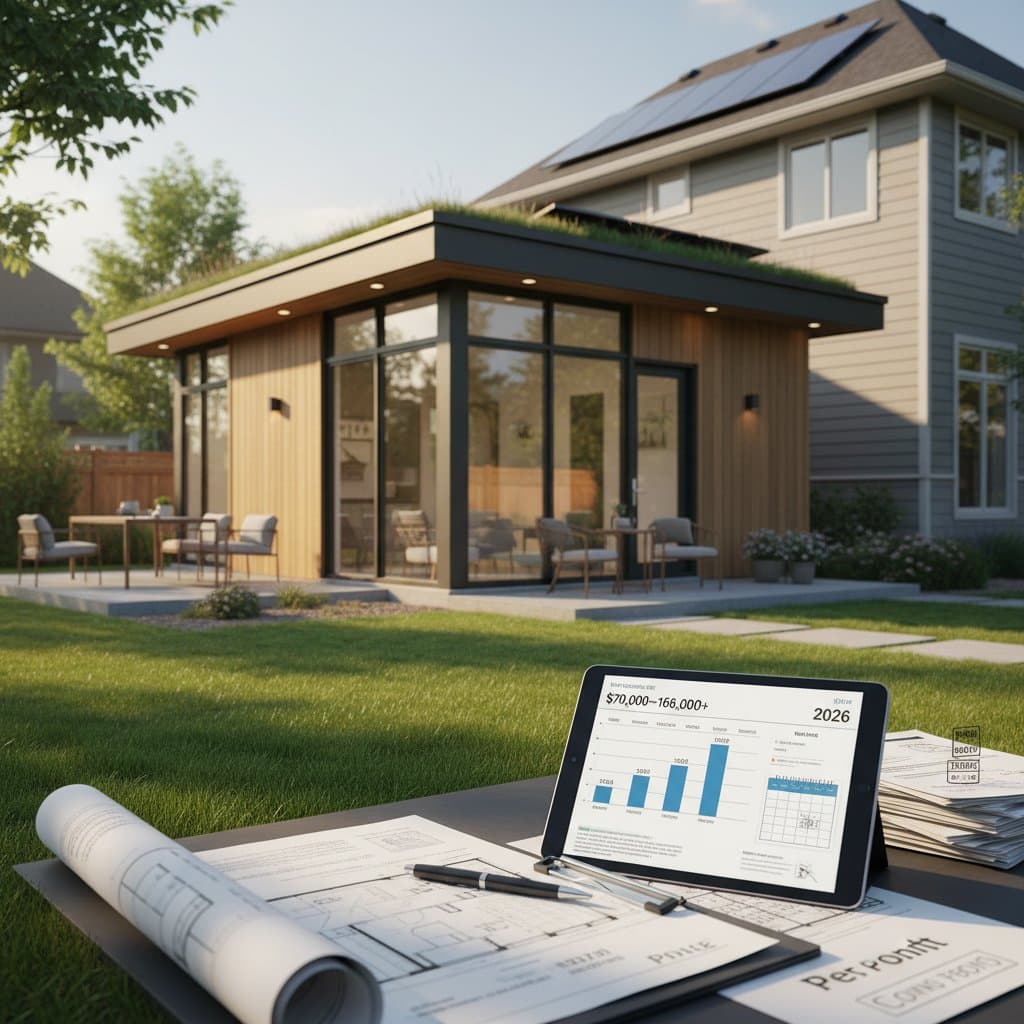
Individuals should anticipate spending $70,000 to $160,000 for a complete granny pod installation, with variations based on size, material finishes, and site preparation requirements. Permitting and zoning processes may add $2,000 to $15,000, contingent upon municipal guidelines and property configuration. Projects typically require 3 to 6 months from initial design through to occupancy, following approval acquisition.
Comparing Granny Pod Options
Selecting the appropriate granny pod type depends on priorities such as timeline, budget, and customization needs. The following table outlines key options to guide decision-making.
| Type | Description | Pros | Cons |
|---|---|---|---|
| Prefab Unit | Factory-constructed and delivered for on-site installation | Accelerated construction, minimal site disturbance, consistent pricing | Restricted personalization, potential delivery charges |
| Modular Cottage | Assembled from factory-built sections on location | Balanced pricing, flexible layouts | Necessitates crane for assembly, extended permitting phase |
| Custom Build | Fully designed and erected directly on-site | Optimal adaptability, alignment with primary residence aesthetics | Prolonged schedule, elevated expenses |
| Converted Garage or Shed | Adaptation of an existing outbuilding | Reduced expenses, minimized resource use | Possible need for reinforcements and complete utility installations |
To decide, prioritize prefab units for efficiency and straightforward execution. Opt for custom builds when aesthetic harmony with the main house or enhanced property value represents a core objective.
Permits and Zoning Explained
Municipalities enforce distinct regulations for accessory dwelling units. Begin by consulting the local planning department or reviewing the online zoning map. Inquire about eligibility for accessory dwellings on the property, along with constraints on dimensions and boundary distances.
Common stipulations encompass:
- Owner occupancy mandates, where the primary residence owner must reside on-site
- Setback distances, typically ranging from 5 to 10 feet from boundaries
- Height restrictions, generally limited to 16 to 20 feet
- Additional parking provisions, often requiring one extra space
- Utility linkage criteria, including separations for sanitation and water systems
- Fire safety measures, such as smoke detectors, escape windows, and occasional sprinkler systems
Properties in historic zones or adjacent to wetlands face extended evaluations. Certain jurisdictions demand community notices or architectural endorsements.
For efficiency, present a basic property diagram during the initial zoning consultation. Department personnel can highlight potential obstacles prior to committing resources to detailed blueprints.
DIY vs Pro Guidance
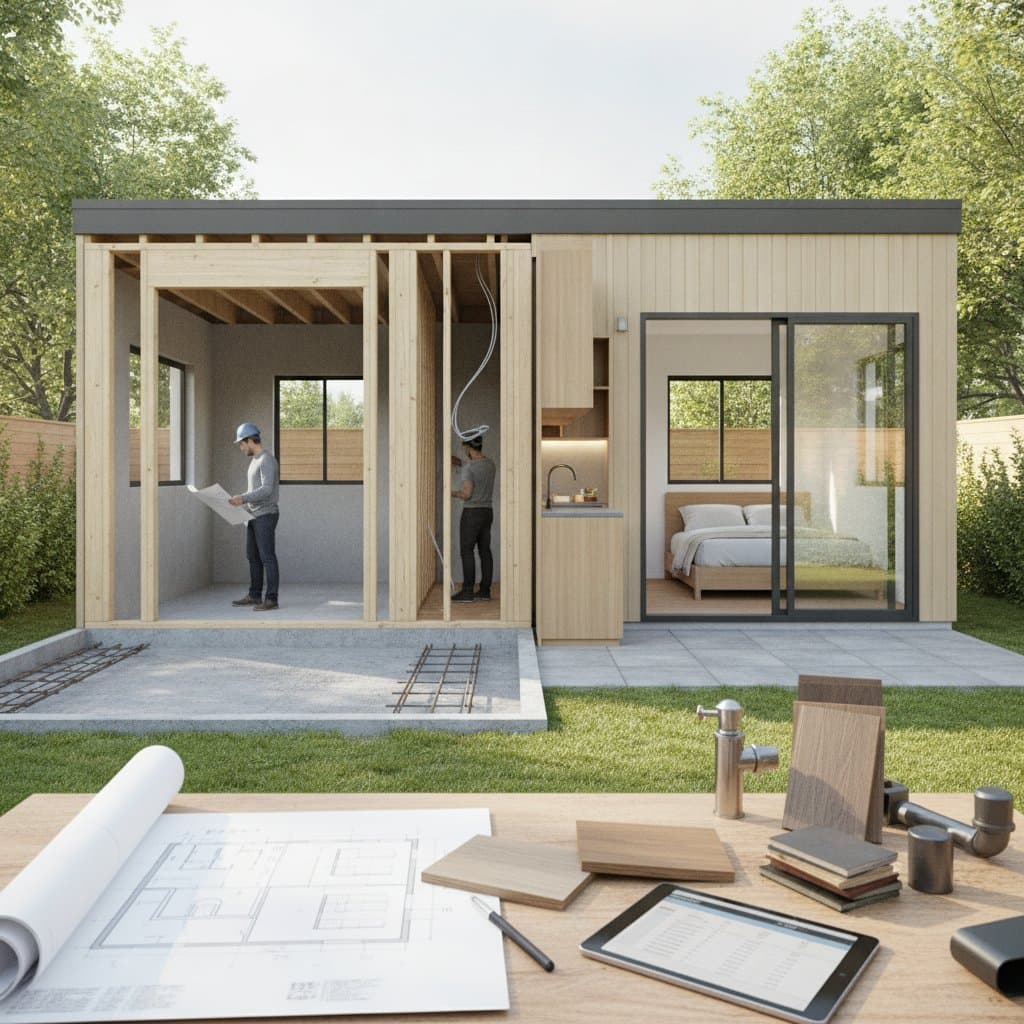
The feasibility of do-it-yourself involvement remains moderate at best. While interior detailing or landscaping falls within reach for capable individuals, core elements demand expert supervision.
- Site preparation involves basic grading for skilled participants, yet equipment-intensive drainage tasks require professionals.
- Foundation and framing construction must comply with building codes; engage certified contractors for these phases.
- Electrical and plumbing installations necessitate professional execution owing to safety protocols and permitting obligations.
- Interior finishing, including trim and painting, suits DIY efforts provided sufficient time and equipment availability.
Participants need intermediate carpentry proficiency for finishing work, estimating 20 to 40 hours for minor contributions. Professionals must handle all structural, electrical, or plumbing aspects to ensure compliance and safety.
Maintenance, Care, and Lifespan
A properly constructed granny pod endures 30 to 50 years under diligent maintenance. Essential routines include:
- Annual roof examinations to detect leaks or deterioration
- Yearly HVAC servicing to maintain operational efficiency
- Exterior coating or siding assessments every 5 to 7 years
- Plumbing inspections for leaks, plus winterization protocols during vacancy periods
- Foundation surveillance for shifts or water accumulation problems
Clearance of gutters prevents moisture-related harm. Selection of durable elements, such as vinyl-framed windows and composite decking materials, minimizes ongoing expenses.
Regional and Climate Considerations
Environmental factors influence both granny pod design and budgeting. In colder climates, incorporate enhanced insulation levels, such as R-30 for walls and R-50 for roofs, alongside frost-resistant foundations. Humid, warm areas demand robust ventilation and humidity management systems. Coastal regions often require raised foundations or wind-resistant securing mechanisms.
Zoning and permitting vary geographically. Western states frequently offer expedited accessory dwelling unit processes that shorten approval durations. Other locales classify granny pods as primary structures, mandating comprehensive inspections. Rural settings may involve septic assessments absent public sewage access.
FAQs
Can individuals rent out a granny pod?
Rental opportunities exist in many areas, though zoning may prohibit short-term arrangements. Verify municipal policies prior to marketing.
Do separate utilities prove necessary?
Separate metering does not always apply. Shared systems prevail, but select cities enforce independent water or electricity meters.
Does a granny pod addition increase property taxes?
An increase typically occurs due to expanded habitable area. The adjustment aligns with local valuation methods.
Steps to Secure Approvals and Launch Construction
To advance a granny pod project effectively, compile a preliminary budget incorporating all estimated costs and timelines. Schedule an early meeting with zoning officials to confirm compliance. Engage architects or contractors experienced in accessory dwellings for precise planning. Upon approval, monitor progress closely to adhere to schedules and mitigate unforeseen expenses. This structured approach ensures a seamless integration of the unit, enhancing family support while preserving property value.