Which Flooring Option Offers Better Value in 2026: LVP or Hardwood?
Quick Overview
- Luxury vinyl plank (LVP) typically costs $2 to $5 per square foot for materials, compared to $8 to $15 for hardwood.
- Hardwood enhances home resale value by up to 5 percent in key areas, though it requires higher initial investment and ongoing care.
- LVP excels in budget-conscious projects and high-moisture environments, while hardwood provides superior longevity for enduring appeal.
- Total project expenses, including labor at $3 to $6 per square foot for LVP versus $5 to $10 for hardwood, determine the true winner.
Advantages and Disadvantages
Luxury Vinyl Plank (LVP) Flooring
Advantages
- Affordable pricing starts at $2 per square foot, making it accessible for large areas.
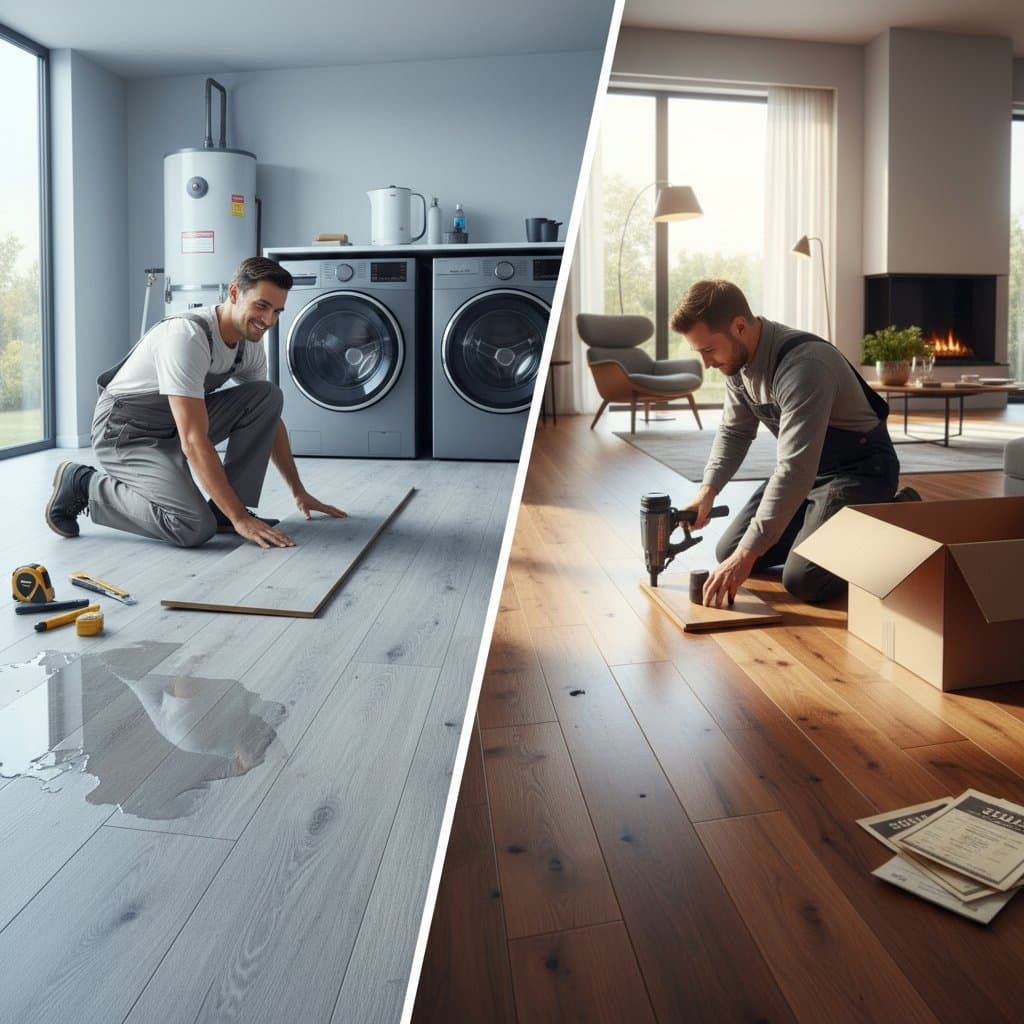
- Fully waterproof design resists spills, floods, and humidity without warping.
- Simple maintenance involves sweeping and damp mopping; resists stains from pets and children.
- Comfortable cushioning reduces noise and provides a softer surface than rigid alternatives.
Disadvantages
- Exposure to prolonged sunlight may cause color fading over 10 to 15 years.
- Surfaces cannot undergo refinishing, limiting customization after installation.
- Perceived as less premium, potentially reducing appeal to buyers seeking authentic wood.
- Inferior products may release volatile organic compounds; select low-VOC options.
Hardwood Flooring
Advantages
- Increases property value through timeless aesthetics and warmth in living spaces.
- Refinishing restores appearance up to four times, extending usability beyond 50 years.
- Durable construction withstands daily traffic when protected with proper sealants.
- Sustainable sourcing from certified forests minimizes environmental impact.
Disadvantages
- Material expenses range from $8 to $15 per square foot, plus labor costs.
- Prone to expansion or contraction in areas with fluctuating humidity levels.
- Surface prone to visible scratches from furniture or high heels without protective rugs.
- Requires professional refinishing every 5 to 10 years to maintain luster.
Guide to Evaluating Options for Your Budget
Essential Tools
- Tape measure for accurate room dimensions.
- Physical flooring samples to assess texture and color in your lighting.
- Moisture meter to detect subfloor dampness.
- Calculator for totaling expenses across materials, labor, and upkeep.
Estimated Time: 1 hour
Skill Level: Beginner
- Calculate room size. Measure length and width in feet, then multiply to determine square footage; add 10 percent extra for waste.
- Inspect subfloor condition. Level concrete slabs or repair plywood gaps, as imperfections increase labor by $1 to $2 per square foot.
- Obtain detailed quotes. Request breakdowns covering materials, underlayment, adhesives, and full installation services.
- Evaluate performance features. For LVP, verify at least 12-mil wear layer for traffic resistance; for hardwood, confirm UV-resistant finishes.
- Factor in long-term expenses. Budget $500 to $1,000 for hardwood refinishing every 7 years, versus $100 annually for LVP cleaning supplies.
- Examine warranty details. Look for 20- to 30-year coverage on LVP and lifetime structural guarantees on hardwood.
- Assess overall ownership costs. Consider 20-year projections: LVP totals $4,000 to $8,000 for a 500-square-foot room, while hardwood reaches $10,000 to $15,000 but retains higher resale.
Expected Outcome: A spreadsheet comparing upfront and lifetime costs, highlighting the best match for your needs.
Troubleshooting: If quotes vary widely, specify inclusions like old flooring removal ($2 to $4 per square foot) and baseboard adjustments.
Installation: DIY or Professional?
Suitable for DIY
- LVP with interlocking click systems over prepared subfloors.
- Floating installations that avoid permanent adhesives.
- Basic edging and threshold installations using miter saws and nails.
Recommend Professional Installation For
- Hardwood requiring glue-down or nail-down methods for stability.
- Subfloor leveling or moisture mitigation in basements.
- Compliance with building codes for underlayment and expansion joints.
Professional Expertise Includes
- Precise gap measurements to accommodate wood expansion up to 1/2 inch.
- Pre-installation moisture testing below 12 percent for hardwood.
- Application of high-quality polyurethane sealers for enhanced protection.
- Seamless integration of transitions between room types.
Other Flooring Choices
Engineered Hardwood: Combines a real wood veneer over a stable core, offering moisture resistance ideal for main levels or variable climates; costs $5 to $12 per square foot.
Laminate Flooring: Budget option at $1 to $4 per square foot with wood-like prints, suitable for low-traffic dry rooms but vulnerable to water damage.
Wood-Look Tile: Porcelain or ceramic mimics oak or walnut patterns with complete waterproofing for wet zones; priced $3 to $7 per square foot, though it feels cooler without rugs.
Frequently Asked Questions
Does high-quality LVP appear artificial?
Premium versions feature embossed grains and multi-tone patterns that replicate wood imperfections convincingly underfoot and to the eye.
Is refinishing possible on engineered hardwood?
Refinishing works one to three times, based on veneer depth of 3 to 6 millimeters.
Does LVP compatible with underfloor heating systems?
Most products support radiant heat up to 85 degrees Fahrenheit; consult specifications for maximum temperatures.
Which option endures longer?
Hardwood persists for 50 to 100 years with maintenance, whereas LVP requires replacement after 15 to 25 years.
Does hardwood improve property worth?
Homebuyers associate it with luxury, often adding 3 to 5 percent to sale prices in primary living zones.
Final Steps to Select and Install
Measure your spaces precisely and secure at least three quotes outlining complete project scopes. Weigh immediate savings and ease against enduring benefits and aesthetic elevation. Choose LVP for practical, low-maintenance living in dynamic households, or invest in hardwood for lasting elegance that appreciates over time. Your decision aligns flooring with daily routines and future plans for maximum satisfaction.