Understanding Kitchen Island Costs in 2025: Key Factors and Installation Guidance
Essential Overview
- Installed kitchen islands generally range from $2,500 to $8,000 in 2025.
- Primary cost drivers include dimensions, material selections, and integrated elements such as appliances or utilities.
- Bespoke configurations or additions like plumbing can increase expenses by up to twice the base amount.
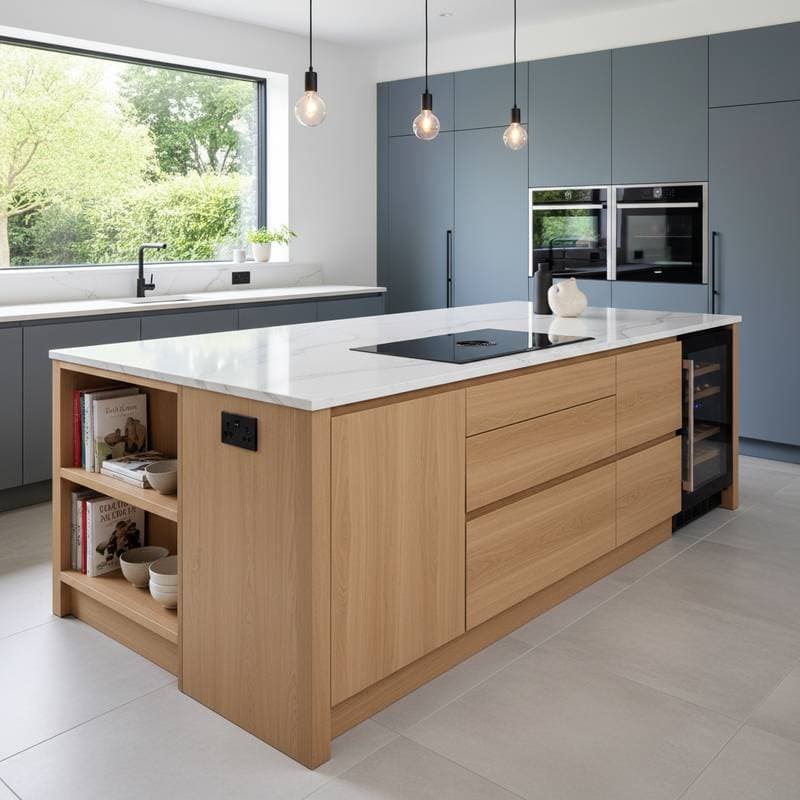
- Thoughtful design enhances storage capacity, preparation surfaces, and overall property resale potential.
This range reflects current market trends where basic prefabricated models start at the lower end, while elaborate custom pieces with premium finishes reach the upper limit. Homeowners benefit from evaluating these elements early to align investments with practical needs and long-term value.
Advantages and Drawbacks of Kitchen Islands
Advantages
- Provides additional countertop space and integrated storage solutions.
- Establishes a focal point for food preparation or casual dining.
- Accommodates functional additions such as sinks, cooktops, or electrical outlets.
- Contributes to increased home resale value through improved kitchen efficiency and appeal.
These benefits transform the kitchen into a more versatile space, supporting daily routines and social gatherings alike. For instance, an island with seating can serve as an informal hub for family meals.
Drawbacks
- Improper sizing or placement may obstruct movement within the kitchen.
- Incorporating plumbing or electrical systems elevates both expenses and installation challenges.
- Substantial islands might require floor reinforcement to handle added weight.
- High-end cabinetry paired with natural stone surfaces accelerates cost accumulation.
Addressing these potential issues during the planning phase prevents common pitfalls. Consulting structural guidelines ensures the island integrates seamlessly without compromising layout or safety.
Detailed Guide to Installing a Kitchen Island
Required Tools and Materials
- Tape measure and spirit level for precise alignment.
- Power drill with appropriate driver bits for secure fastening.
- Stud finder and lag screws to anchor into floor joists.
- Base cabinet units or a prefabricated island assembly kit.
- Selected countertop material, such as quartz or wood.
- Electrical junction boxes or plumbing components as required for utilities.
Gathering these items in advance streamlines the process and minimizes interruptions. Quality tools reduce the risk of errors during assembly.
Estimated Time and Skill Level
- Prefabricated kit installation requires 6 to 8 hours and moderate carpentry proficiency.
- Custom island with utility integrations demands 2 to 3 days and advanced technical skills.
Beginners should start with simpler projects to build confidence, while complex setups benefit from professional oversight.
1. Planning and Measurement
Outline the proposed island location using painter's tape on the floor. Maintain a minimum of 42 inches of clearance around all sides to facilitate smooth circulation. Verify that adjacent drawers and cabinet doors operate without interference.
Accurate measurements prevent costly adjustments later. Consider workflow patterns, such as proximity to the stove and refrigerator, for optimal functionality.
2. Verifying Utility Access
Identify positions of current electrical outlets and plumbing lines beneath the floor or walls. Assess the necessity of extending circuits or drain pipes to the island site. Disconnect power and water supplies prior to any alterations.
Professional consultation may be advisable for utility rerouting to comply with local regulations. This step ensures reliable performance and avoids hazards.
3. Securing the Base Structure
Fasten cabinet bases or the supporting frame to the floor using lag screws driven into underlying joists. Employ a spirit level to confirm even placement. Insert shims beneath uneven areas to achieve stability.
A firm foundation supports the entire unit's integrity. Testing for wobble at this stage allows for immediate corrections.
4. Installing the Countertop
Position the countertop in place without adhesive initially to check fit. Spread construction adhesive evenly across the base surface, then lower the top into position. Secure with clamps or underside screws, depending on the material's specifications.
Proper alignment prevents gaps or overhangs. For stone surfaces, use supportive brackets to distribute weight evenly.
5. Integrating Utilities
Route electrical wiring within protective conduit and install outlets in compliant junction boxes. For sink-equipped islands, attach the drain assembly, P-trap, and supply lines securely. Conduct thorough tests for electrical continuity and plumbing integrity to detect leaks.
Adhering to building codes during this phase safeguards against future issues. Label all connections for maintenance ease.
6. Finalizing and Sealing
Affix trim pieces, side panels, and hardware components. Apply caulk along joints and sealant to countertop surfaces, particularly stone or wood. Remove all construction residue and restore power connections.
These finishing touches enhance durability and visual cohesion. A clean, sealed surface resists moisture and wear over time.
Post-Installation Inspection
Confirm the island's stability, level positioning, and alignment with surrounding counters. Verify outlet functionality through testing. Inspect faucets and drains for absence of leaks.
Any discrepancies should prompt immediate remediation to maintain safety standards.
Cleanup Procedures
Eliminate dust from surfaces using appropriate cleaners. Wipe down all areas thoroughly. Transport packaging materials to designated recycling or disposal facilities.
A tidy workspace facilitates enjoyment of the new feature right away.
DIY Installation Versus Professional Services
Suitable DIY Projects
- Assembly of prefabricated or standard cabinet units.
- Attachment of basic countertop materials.
- Application of finishes like paint, stain, or installation of open shelving.
These tasks suit individuals with foundational skills, offering cost savings and personalization opportunities.
Scenarios Requiring Professional Expertise
- Relocation of plumbing or electrical infrastructure.
- Reinforcement of subflooring to accommodate heavy stone countertops.
- Incorporation of gas lines, exhaust systems, or embedded appliances.
Experts handle these complexities with precision, ensuring compliance and longevity.
Distinct Professional Approaches
Professionals obtain necessary permits and adhere strictly to electrical and ventilation codes. They integrate the island harmoniously with existing kitchen elements. Evaluations of load-bearing capacity and moisture protection further secure both safety and property value.
Investing in professional services often yields superior results, particularly for intricate designs.
Viable Alternatives to Full Kitchen Islands
Peninsula Configuration
Suitable for compact kitchens, this option attaches the counter extension to an adjacent wall or cabinet line. It presents lower costs and simplified wiring requirements compared to freestanding islands.
Peninsulas maximize space efficiency while providing similar preparatory and seating functions.
Mobile Kitchen Cart
Perfect for rental properties or constrained layouts, these units deliver portable storage and workspace without fixed installation.
Easily relocated, carts offer flexibility for evolving needs.
Breakfast Bar Setup
This arrangement extends seating and serving areas along an existing counter perimeter. It proves effective in spaces unable to accommodate a complete island.
Such bars foster social interaction with minimal spatial demands.
Pre-Purchase and Pre-Build Checklist
- Conduct precise kitchen measurements to validate clearance requirements.
- Determine essential features, such as seating accommodations or storage compartments.
- Establish a comprehensive budget encompassing materials, labor, and contingencies.
- Evaluate subfloor strength for supporting substantial countertop weights.
- Confirm accessibility to electrical and plumbing resources.
- Evaluate prefabricated, semi-custom, and fully custom alternatives.
- Secure permits for installations involving outlets, sinks, or gas connections.
- Procure materials well in advance to circumvent project delays.
- Incorporate lighting and ventilation planning prior to commencement.
- Arrange for inspections to verify adherence to building codes.
Following this checklist streamlines decision-making and reduces unforeseen expenses.
Executing Your Kitchen Island Project Effectively
Initiate the process by measuring available space and mapping out primary traffic routes. Opt for an island size that promotes fluid movement rather than dominating the area. Select materials aligned with usage patterns; durable quartz suits frequent cooking, while butcher block offers warmth for everyday prep.
For entertaining-focused homes, prioritize seating arrangements and power sources for appliances. Match the project's scope to personal capabilities: prefabricated kits empower skilled DIY participants capable of basic assembly and alignment tasks. Bespoke installations featuring utilities or hefty stone demand certified contractors to uphold warranties and safety protocols.
View the island as an enhancement to kitchen dynamics, beyond mere spatial filler. Anticipate ongoing care, including periodic resealing of surfaces and hardware adjustments, to preserve structural soundness. Ultimately, a strategically selected island elevates daily functionality, integrates aesthetically, and elevates home worth within reasonable financial bounds.