2026 Kitchen Island Installation Costs
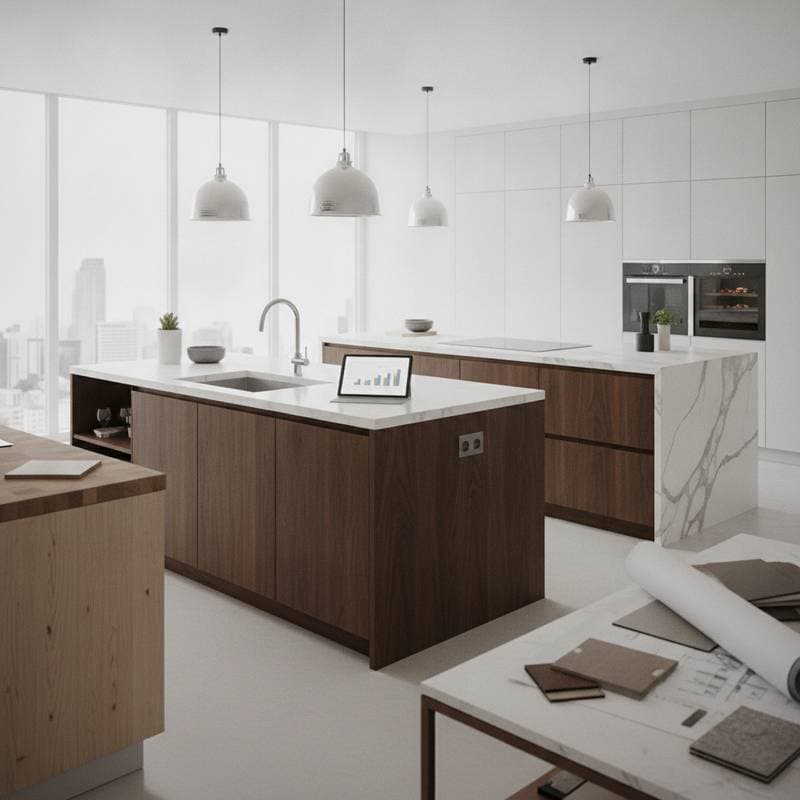
National average cost reaches 5500 dollars. Typical projects fall between 3000 and 8500 dollars. Small prefab units start near 1800 dollars without utilities. Custom builds with plumbing and power reach 15000 dollars. On site work takes 2 to 5 days after design and material lead time. Basic freestanding islands allow DIY approaches. Built in models with utilities require professional installation. Full kitchen upgrades often recover 60 to 80 percent of island costs at resale.
Key Cost Influences
Project Scope and Dimensions
A rolling cart under 4 feet wide stays below 2000 dollars with assembly. Larger built in islands that include seating, storage, and power exceed 10000 dollars. Each added feature raises both material and labor expenses.
Material Selection and Surface Quality
MDF or particleboard cabinet boxes cost less than solid wood frames. Quartz and granite countertops run two to four times the price of laminate or butcher block. Waterfall edges and decorative trim further increase totals.
Site Conditions and Access
Tight layouts, uneven floors, or utility relocation extend installation time. Cutting into concrete or subfloor work produces higher bids. Accurate site details help contractors prepare realistic quotes.
Regional Labor Rates and Timing
Urban areas charge 20 to 40 percent more than rural markets. Peak remodeling seasons stretch lead times and lift prices slightly. Off season scheduling often reduces overall expense.
Custom Fabrication and Adjustments
Curved shapes or integrated appliances require extra fabrication time. Design changes after ordering trigger restocking fees or added labor. Finalizing plans early prevents delays.
Strategies to Control Expenses
Material and Finish Alternatives
Laminate or butcher block tops save 40 to 80 dollars per square foot compared with stone. Stock cabinets painted to match existing finishes avoid the 30 percent premium of custom colors. Standard eased edge profiles replace waterfall details without visual loss.
Preparation Steps That Lower Labor
Complete flooring and wall finishes before island delivery. Clear access routes and supply precise measurements plus utility locations. Pre order fixtures so trades avoid waiting periods.
Scheduling and Project Bundling
Fall and winter months frequently offer lower demand. Pairing the island with countertop replacement or cabinet refacing reduces hourly rates by 10 to 15 percent.
Quote Evaluation Process
Request at least three detailed bids. Confirm each quote lists scope, material brands, surface prep, permits, disposal, warranty terms, and milestone payments. Ask how electrical and plumbing coordination occurs and whether countertop fabrication stays with the same contractor.
Project Timeline
Material Lead Times
Stock cabinets and prefab islands arrive in 1 to 2 weeks. Semi custom units require 3 to 6 weeks. Stone countertops need templating after cabinet placement, adding 1 to 2 weeks.
On Site Work Sequence
Cabinet setup takes 1 to 2 days. Electrical and plumbing rough in plus final connections add 1 day each. Countertop fit and finish requires a half day return visit.
Required Inspections
Utility additions trigger rough in review before walls or floors are closed. Final inspection confirms GFCI outlets and plumbing connections meet code.
Regional Price Patterns
Northeast and West Coast markets push averages above 7000 dollars due to higher labor. Midwest projects average near 4500 dollars with moderate material and labor costs. Southern regions often complete standard models below 4000 dollars thanks to contractor availability and lower delivery fees.
Next Steps for Planning
Gather measurements and utility locations first. Compare three itemized quotes that address material grades and coordination details. Schedule during slower months and bundle related work to maximize value while staying within budget.